Related Articles
Introduction: a faith on “autoplay mode”
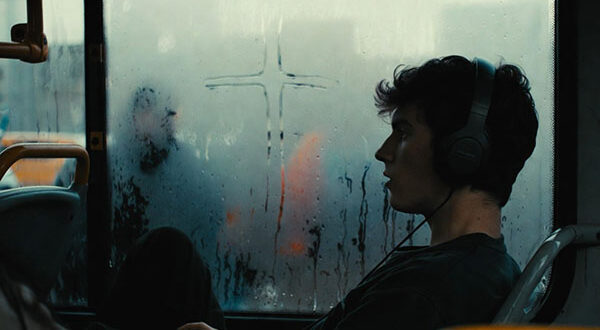
We live in the era of play. Everything is just one click away: formation, entertainment, news, spirituality. Never before have there been so many Catholic podcasts, religious YouTube channels, edifying talks, recorded homilies, and audio-visual spiritual reflections. And yet—an unsettling paradox—never has the slow reading of the Bible, silent meditation, deep spiritual reading, and personal reflection before God been so scarce.
This is not about demonizing podcasts or videos. Many are excellent, orthodox, and well-intentioned. The problem arises when they replace—instead of accompanying—the personal reading and reflection on the Word of God and on one’s own life in the light of that Word.
This article seeks to help you discern, not condemn. To order, not prohibit. To return to the center, without rejecting modern means. Because a faith nourished only through headphones runs the risk of becoming a faith that is heard, but not assimilated.
1. A historical glance: faith has always been read, ruminated, and lived
From the very beginning, biblical faith has never been conceived as fast consumption of ideas.
- In Israel, the Law was read, memorized, meditated upon, and handed down from generation to generation.
- The Desert Fathers spoke of ruminatio: “ruminating” on the Word like an animal that slowly chews its food in order to assimilate it.
- The Church developed Lectio Divina precisely to avoid a superficial relationship with Scripture.
Saint Jerome expressed it bluntly:
“Ignorance of the Scriptures is ignorance of Christ.”
He did not say “not listening to talks about Scripture,” but ignoring the Scriptures themselves.
Faith has always grown in silence, in reading, in re-reading, in interiorization. Preaching helps, yes—but it has never replaced the direct relationship of the soul with the Word of God.
2. Theological foundation: God speaks… but He wants to be heard with the heart
Sacred Scripture is not merely religious information. It is the living Word, in a certain sense sacramental, which challenges, wounds, consoles, and transforms.
📖 “The word of God is living and effective, sharper than any two-edged sword; it penetrates even between soul and spirit”
(Hebrews 4:12)
But for that Word to penetrate, it requires:
- Time
- Silence
- Interior availability
The problem with replacing reading by podcasts is not the content, but the mode. Passive listening does not demand the same level of personal engagement as reading and meditating.
Theologically speaking, we could say:
- Reading fosters interiorization
- Audio fosters external reception
- Video fosters emotional stimulation
And faith cannot be sustained by stimulation alone.
3. The spiritual risk: from disciples to consumers of Catholic content
Here lies the critical point.
When we replace personal reading and reflection with constant consumption of religious content, several dangers appear:
🔹 1. Delegated spirituality
Others think, pray, and reflect for me. I merely listen.
🔹 2. Pious superficiality
Much content, little assimilation. Much emotion, little conversion.
🔹 3. Lack of interior silence
God no longer speaks in the heart, because there is always “religious noise” in the background.
🔹 4. Confusion between formation and spiritual life
Knowing much about God is not the same as living with God.
Jesus did not say: “Listen to many commentaries about me,” but:
📖 “If you remain in my word…”
(John 8:31)
To remain means to stay, to dwell—not to skim past it like someone switching episodes.
4. Are Catholic podcasts and YouTube bad? No. Can they be dangerous? Yes.
Let us be fair:
Podcasts and videos can be valuable tools, especially for:
- People with little time
- Moments of travel or commuting
- Introduction to complex topics
- Basic doctrinal formation
The problem appears when they:
- Replace the Bible
- Replace silence
- Replace personal prayer
- Replace serious spiritual reading
It is like living on smoothies alone: they may help, but they cannot replace solid nourishment.
5. Pastoral analysis: what we see today in parishes and among the faithful
From a pastoral perspective, clear symptoms can be observed:
- Faithful who are very informed, but scarcely prayerful
- Strong religious opinions, but little sacramental life
- Much discourse, little conversion
- Much ecclesial criticism, little spiritual humility
Not because they listen to podcasts, but because they no longer read the Word nor read their own lives in its light.
Saint Augustine warned:
“I fear the Christian who prays without thinking, and the one who thinks without praying.”
Today we could add: “and the one who listens without interiorizing.”
6. Rigorous practical guide: ordering, not eliminating (theological and pastoral vision)
🧭 Fundamental principle
The Word of God, read and meditated upon, is irreplaceable.
Everything else is complementary.
📖 1. Absolute priority: Scripture
- Dedicate at least 15 minutes a day to reading the Bible.
- Better little and constant than much and sporadic.
- Begin with the Gospels.
🕯 2. Recover silence
- Not every moment needs to be accompanied by audio.
- Leave spaces without religious stimuli.
- God also speaks when voices fall silent.
📝 3. Read with a pencil, not only with headphones
- Underline
- Take notes
- Question the text
Active reading forms the soul.
🎧 4. Use podcasts as support, not as substitutes
- Listen to them after reading, not instead of reading.
- Let them illuminate what has already been meditated upon, not replace it.
✝ 5. Unite Word and life
Always ask yourself:
- What is God asking of me today?
- What must I change?
- Where is He correcting me?
🧑🦳 6. Spiritual accompaniment
Speaking with a priest or spiritual director helps avoid a merely intellectual or emotional faith.
7. Reading the Bible is reading one’s own life before God
Replacing reading and reflection with podcasts may seem practical, modern, and efficient. But spiritual life does not grow through speed, but through depth.
The Bible is not “consumed.” It is inhabited.
It is not background noise. It is a confrontation.
It is not replayed. It is lived.
📖 “Mary kept all these things, pondering them in her heart”
(Luke 2:19)
Mary had no podcasts. She had silence, memory, and heart. And with that, God worked wonders.
Conclusion: returning to the center without fleeing the present
It is not about turning off the phone, but about ordering the soul.
Not about rejecting what is modern, but about not losing what is essential.
If today you replace reflection and the reading of life with podcasts, perhaps you are not entirely off track… but you are incomplete.
God is still speaking.
The question is: do we let Him speak directly to us, or only those who speak about Him?