Related Articles


Introduction: a wound that never fully heals
There are dates that are not merely history, but a true examination of conscience. The Sack of Rome in 1527 was not just another violent episode in Europe’s long chronicle of wars. It was something far more serious and unsettling: Rome, the Holy City, was devastated by an army that was largely Christian, in the service of a Catholic emperor, Charles V. No Saracens arrived, no pagans. They were baptized soldiers, many of them even with rosaries around their necks… and with blood-stained swords in their hands.
This event shook Christendom like a spiritual earthquake. For many contemporaries, it was not only a political disaster, but a punishment from God, a call to repentance, a sign that something very deep had become corrupted in the heart of Europe.
Today, almost five centuries later, the Sack of Rome still speaks to us. And perhaps more than we would like.
1. What really was the Sack of Rome?
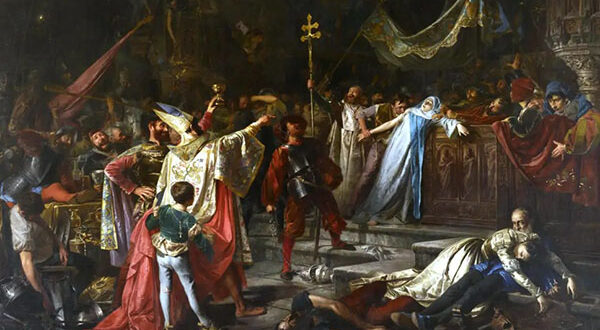
On May 6, 1527, imperial troops entered Rome and subjected it for weeks to brutal violence: murders, rapes, profanations of churches, looting of convents and palaces, humiliation of the clergy, and destruction of artistic and spiritual heritage accumulated over centuries.
Pope Clement VII, a member of the Medici family, had to take refuge in the Castel Sant’Angelo, connected to the Vatican by the famous passetto. Rome was left virtually lawless. Many chroniclers described the city as hell unleashed.
And the most scandalous facts:
- The army was made up of Spaniards, Italians, and a large number of German Lutheran mercenaries.
- The military leader, Charles of Bourbon, died during the initial assault, leaving the troops without control.
- There was no pay. The sack became their “salary.”
The result was a Rome humiliated, impoverished, and spiritually traumatized.
2. The Catholic emperor and the Pope: a broken relationship
Here the uncomfortable question arises: how could a Catholic emperor allow something like this?
Charles V was neither a heretic nor an enemy of the Church. On the contrary:
- He considered himself a defender of the faith against Protestantism.
- He ruled an empire over which “the sun never set.”
- He saw himself as a new Constantine, called to preserve Christian unity.
But his relationship with Pope Clement VII was deeply deteriorated. The Pope:
- Allied himself with France and other Italian states against the emperor (the League of Cognac).
- Feared the excessive imperial power over Italy and over the Church itself.
Charles V, for his part, felt betrayed by the Pope, who played politics like just another prince, forgetting—according to many—his spiritual mission.
The clash was inevitable. And when politics prevail over charity, faith becomes a weapon and the Church a battlefield.
3. Punishment from God? The spiritual reading of the 16th century
Many saints, theologians, and faithful interpreted the Sack of Rome as a divine judgment. Not against the Church as the Body of Christ—which is holy—but against the sins of its members.
Rome, they said, had become filled with:
- Moral corruption
- Clerical worldliness
- Political ambition
- Forgetfulness of the Cross
It is no coincidence that only a few years later the Catholic Reformation (misnamed the “Counter-Reformation”) emerged with force:
- The Council of Trent
- Reform of the clergy
- New orders such as the Jesuits
- A serious return to spiritual life
As Scripture reminds us:
“For it is time for judgment to begin with the household of God.”
(1 Peter 4:17)
Rome was wounded… in order to be purified.
4. The supreme scandal: Christians against Christians
The greatest drama of the Sack of Rome was not only the violence, but the spiritual scandal. What did the faithful think when they saw churches profaned by Christian soldiers? What did Protestants think when they saw their accusations against Rome apparently confirmed? What did the simple people think?
Here another biblical word is fulfilled with painful accuracy:
“Woe to the world for scandals! For it is necessary that scandals come, but woe to the man by whom the scandal comes.”
(Matthew 18:7)
The sack weakened the Church’s moral authority at a critical moment and showed what happens when faith is separated from coherence of life.
5. Charles V: repentance and Christian conscience
It is important to say this with justice: Charles V did not celebrate the Sack of Rome. When he learned what had happened, he was deeply affected. Years later, he reconciled with the Pope and was crowned emperor by him in Bologna.
Even more:
- Charles V ended his days by retiring to Yuste, living an austere and penitential life.
- He renounced power, something unheard of for an emperor.
- He died as a Christian aware of the vanity of the world.
His life recalls that eternal sentence:
“What does it profit a man to gain the whole world and forfeit his soul?”
(Mark 8:36)
6. What does the Sack of Rome say to us today?
This episode is not a relic of the past. It is an uncomfortable mirror for our own time.
Today we also see:
- Conflicts within the Church
- Scandals that wound the faithful
- Spiritual worldliness
- The temptation to use faith as ideology
The Sack of Rome teaches us that the greatest harm to the Church does not always come from outside, but from within, when we forget that the Cross comes before glory.
7. Practical applications: a spiritual guide for today
This historical event invites us to three concrete attitudes:
1. Humility
The Church is holy, but we are sinners. Reform always begins with oneself.
2. Prayer and penance
What is sacred is not rebuilt only with strategies, but with bent knees and converted hearts.
3. Fidelity without fanaticism
To love the Church is not to justify everything, but to seek the truth with charity, even when it hurts.
Conclusion: Rome fell, but the Church did not
Rome was sacked. The Pope humiliated. The emperor confused. Europe scandalized.
And yet… the Church survived. More than that: it was renewed.
Because the Church is not sustained by armies or emperors, but by the One who said:
“The gates of hell shall not prevail against it.”
(Matthew 16:18)
The Sack of Rome reminds us that the history of the Church is also our own history: a constant struggle between grace and sin. And that, even when everything seems lost, God continues to write straight with crooked lines.
May we know how to learn the lesson.