
Related Articles


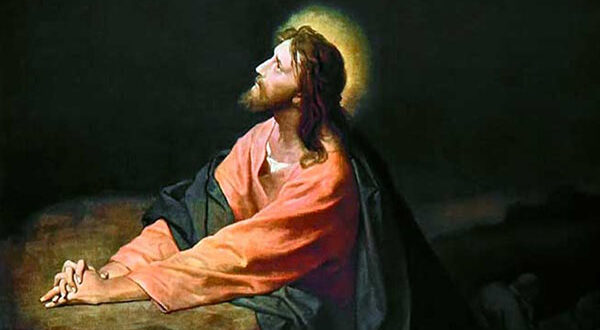
There are nights that change history. Not because of the noise of armies or the roar of crowds, but because of the silence of a soul in struggle. The night of Gethsemane—lived by Jesus Christ in the garden—was not merely the prelude to the Passion: it was the decisive moment in which the love of God and human freedom met face to face in their most dramatic form.
In that place—the Garden of Gethsemane—a phrase resounds that crosses the centuries and reaches us with striking urgency:
“Watch and pray, that you may not enter into temptation” (Mt 26:41).
This command is not a simple pious recommendation. It is a spiritual key to understanding the Christian life, the mystery of suffering, and the inner struggle of every person.
1. Gethsemane: When God Enters the Night of Man
After the Last Supper, Jesus Christ withdraws to pray. He does not flee: He prepares. He does not escape suffering: He freely embraces it.
The Gospel account is striking:
“My soul is very sorrowful, even to death” (Mt 26:38).
Here we find a theological truth of profound depth:
Christ, true God and true man, experiences fear, anguish, and loneliness.
This is not a symbolic representation. It is a real agony. Tradition has even spoken of a “spiritual agony” in which Christ contemplates the weight of the sins of the world.
And yet, in the midst of that darkness, He pronounces one of the most radical prayers ever uttered:
“My Father, if it be possible, let this cup pass from me; nevertheless, not as I will, but as You will” (Mt 26:39).
Here the heart of Christianity is revealed:
loving obedience that overcomes the sin of disobedience.
Where Adam said “no,” Christ says “yes.”
2. “Watch and Pray”: The Drama of the Disciples… and Ours
While Christ struggles, His disciples sleep.
This contrast is deeply human. They love Jesus, but they do not grasp the gravity of the moment. Their weakness is not malice: it is a lack of vigilance.
Christ warns them:
“The spirit indeed is willing, but the flesh is weak” (Mt 26:41).
From a theological perspective, this phrase reveals the condition of fallen humanity:
- We desire the good… but struggle to persevere.
- We want to be faithful… but yield to fatigue.
- We perceive the truth… but are distracted by the immediate.
Gethsemane is not only an episode of the past.
It is a mirror of our own spiritual life.
3. The Theological Meaning of Vigilance
“To watch” does not simply mean “not to sleep.” It is an interior attitude.
In the Christian tradition, vigilance implies:
a) Awareness of the Spiritual Battle
The Christian life is not neutral. There is a struggle between good and evil, between grace and sin. To watch is to live awake to this reality.
b) Attention to the Heart
To watch is to examine oneself, to recognize one’s weaknesses, not to live in self-deception.
c) Active Waiting for God
The one who watches does not live distracted. He lives in expectation, attentive to God’s presence in daily life.
4. Prayer: Not as Refuge, but as Combat
Christ does not only say “watch.” He adds: “and pray.”
Prayer in Gethsemane is not an escape. It is a battle. It is the place where the human will unites with the divine will.
Theologically, something essential is revealed here:
prayer does not change God; it transforms the one who prays.
Christ, in His humanity, passes through anguish and surrender through prayer. And we are called to do the same.
5. The Night of Gethsemane Today: A Contemporary Reading
We might think this scene belongs to another time. But it is enough to look around us—and within ourselves—to discover that Gethsemane is still alive:
- In the anxiety many experience in silence.
- In difficult decisions that require renunciation.
- In the temptation to flee from suffering at all costs.
- In the spiritual indifference that lulls the soul to sleep.
We live in a culture of constant distraction. Never has it been so easy to “fall asleep” spiritually: screens, noise, haste… everything conspires against interiority.
That is why Christ’s command is more relevant than ever.
6. Practical Applications: How to Live “Watch and Pray” Today
The greatness of the Gospel lies in the fact that it does not remain in abstract ideas. It becomes incarnate in concrete life. How can we live this teaching today?
1. Recover Moments of Silence
Silence is not emptiness: it is the space where God speaks. Setting aside a few minutes each day without distractions is already an act of vigilance.
2. Establish a Simple but Constant Prayer Life
There is no need to begin with great speeches. Fidelity is enough:
- An Our Father prayed with attention.
- A moment of sincere dialogue with God.
- The reading of a passage from the Bible.
3. Examine the Heart Each Day
Ask yourself:
- Where have I failed today?
- Where have I loved?
- What is drawing me away from God?
This is watching over oneself.
4. Accept the Small Crosses
Gethsemane teaches us that not all suffering must be avoided. There are crosses which, lived with love, transform us.
5. Remain Faithful Even in Dryness
The disciples fell asleep. Christ persevered. The spiritual life is not always emotional. Sometimes it is fidelity in darkness.
7. Gethsemane and Hope
Although the scene is deeply painful, it does not end in despair. Gethsemane is the beginning of victory.
For Christ’s surrender in that night opens the way to the Resurrection.
Here lies the great pastoral lesson:
the night does not have the final word.
Every inner struggle, every prayer in the midst of suffering, every silent act of fidelity… participates in that mystery of redemption.
Conclusion: A Personal Call
“Watch and pray” is not advice for a few. It is a universal invitation.
Each person has his or her own Gethsemane:
- a difficult decision,
- an unexpected cross,
- an inner struggle.
The question is not whether we will pass through the night.
The question is how we will live it.
Christ shows us the way:
not to flee, not to sleep, not to give up…
but to watch and pray.
And in that humble act, repeated day after day, something immense is at stake:
the transformation of the heart and participation in the redeeming love of God.