Related Articles
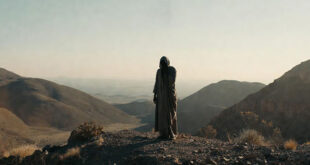
We live in an age of constant noise. Notifications, rush, obligations, screens, arguments, social uncertainty, and crises of faith. In the midst of this whirlwind, many Catholics feel a deep restlessness: “I want to pray… but I don’t know how to move forward.”
The Church, Mother and Teacher, does not leave us in the dark. The Catechism of the Catholic Church offers a masterful synthesis of the path of Christian prayer, structured in three great forms that do not oppose one another but rather complement each other: vocal prayer, mental prayer, and contemplative prayer.
They are not “levels for experts.” They are a complete itinerary. An organic path that leads from the sound of words to the transforming silence where God acts.
Today we will walk that path in theological depth and with pastoral insight, so that it may not remain mere theory… but become life.
I. Vocal Prayer: The Body That Speaks to God
1. The Incarnation Is Also Prayed
Vocal prayer is the most basic form and, paradoxically, the most underestimated in our time. It is often thought that repeating formulas is “childish” or “automatic.” But that reveals a poor understanding of Christian anthropology.
We are body and soul. We are not floating spirits. And therefore faith is expressed with lips, knees, voice, and gestures.
Sacred Scripture itself reminds us:
“With my voice I cry to the Lord; with my voice I make supplication to the Lord” (Ps 142:1).
And the Lord Himself taught us a vocal prayer: the Our Father.
If the Son of God wanted to teach us concrete words, how could we despise them?
2. History and Tradition
From the earliest centuries, Christians recited the Psalms, the Creed, and liturgical formulas inherited from Judaism. The Desert Fathers repeated short invocations such as “Kyrie eleison.”
In the Latin tradition, the Rosary became a popular school of prayer. It is not mere repetition: it is meditation accompanied by rhythm, like the beating of the heart.
Well-prayed vocal prayer educates:
- The memory.
- Interior discipline.
- Humility.
- Fidelity in dryness.
3. Practical Application Today
In a culture of dispersion, vocal prayer is an anchor.
- Praying the Rosary while walking to work.
- Reciting the Angelus at noon.
- Blessing meals.
- Making the Sign of the Cross consciously.
The problem is not repeating words. The problem is repeating them without attention. The key is not to abandon vocal prayer, but to pray it better.
II. Mental Prayer: The Dialogue of the Heart
If vocal prayer uses formulated words, mental prayer is personal dialogue with God.
Saint Teresa of Avila defined it this way:
“In my opinion, mental prayer is nothing else than an intimate sharing between friends; it means taking time frequently to be alone with Him who we know loves us.”
Here we enter the realm of personal encounter.
1. Theological Foundation
God does not want us only to recite. He wants us to converse. To open our souls to Him.
Mental prayer includes:
- Meditation on Scripture.
- Reflection on the mysteries of the faith.
- Examination of conscience.
- Spontaneous dialogue.
It fulfills what the Lord says:
“When you pray, go into your room and shut the door and pray to your Father who is in secret” (Mt 6:6).
Here we no longer merely repeat: we listen, respond, and ask.
2. Christian Meditation (Not to Be Confused)
In a world where the word “meditation” is associated with depersonalized Eastern techniques, it is essential to distinguish.
Christian meditation does not seek to empty the mind in order to dissolve the self. It seeks to fill the heart with revealed truth.
- A passage from the Gospel is meditated upon.
- The scene is imagined.
- One speaks with Christ.
- The teachings are applied to concrete life.
This is profoundly incarnational and deeply personal.
3. Contemporary Obstacles
Today the greatest enemy of mental prayer is permanent distraction.
The smartphone has invaded even interior silence.
Therefore, pastorally:
- It is necessary to establish a fixed daily time.
- Turn off devices.
- Begin with 10–15 minutes.
- Persevere even in dryness.
Mental prayer forms judgment. It purifies intention. It orders emotions.
III. Contemplative Prayer: The Silence Where God Acts
We arrive at the highest point of the path, though not in an elitist sense.
Contemplation is not a mystical privilege reserved for a few. It is the normal vocation of every baptized person: loving union with God.
1. What It Is (and What It Is Not)
It is not active imagination.
It is not mental discourse.
It is not intense emotion.
It is a gaze of faith fixed on God.
It is silent love.
It is allowing oneself to be looked upon by Him.
Saint John of the Cross spoke of the “loving knowledge” of God in the soul.
The Catechism of the Catholic Church defines it as a prayer of simplicity, where the will loves without many words.
It fulfills:
“Be still, and know that I am God” (Ps 46:10).
2. Deep Theological Dimension
Contemplation is an anticipated participation in the Beatific Vision.
Here the soul:
- Grows quiet.
- Becomes simplified.
- Is stripped.
- Surrenders.
We do not produce it ourselves. It is grace. But we can dispose ourselves through fidelity in vocal and mental prayer.
It is the passage from doing to letting oneself be acted upon.
3. Relevance in the Modern World
In a culture obsessed with productivity, contemplation is revolutionary.
It reminds us:
- We are not worth what we produce.
- Our identity lies in being loved by God.
- Silence is not emptiness: it is presence.
A Christian who contemplates does not flee the world. He transforms it from within.
IV. The Path Is One: Not Separate Compartments
This is not about choosing one and despising the others.
Vocal prayer nourishes mental prayer.
Mental prayer prepares for contemplative prayer.
Contemplative prayer purifies all the others.
The classical spiritual itinerary—described by the Fathers, developed by the mystics, and synthesized by the Magisterium—speaks of purification, illumination, and union.
It is organic growth.
Many of the faithful today give up because they want quick experiences. But the spiritual life is not instant consumption. It is slow maturation.
V. Concrete Pastoral Applications
If we want solid Christianity in times of doctrinal confusion and moral relativism, we need Christians who pray deeply.
Not nervous activists, but souls centered in God.
1. A Practical Daily Plan
Morning
- Conscious Sign of the Cross.
- Offering of the day.
- 10 minutes of meditation.
Midday
- Angelus.
- Brief interior invocation.
Afternoon
- Rosary or part of the Rosary.
Night
- Examination of conscience.
- Act of contrition.
- Brief contemplative silence.
2. In the Family
- Pray together, even if only one decade of the Rosary.
- Bless meals.
- Teach children vocal prayers.
- Gradually introduce moments of silence.
3. In the Midst of Work
You do not need a monastery.
It is enough to:
- Lift the heart.
- Offer tasks.
- Repeat an interior invocation.
Prayer transforms routine into sanctification.
VI. Conclusion: The Complete Path Toward Intimacy with God
Vocal prayer disciplines us.
Mental prayer forms us.
Contemplation transforms us.
The world needs Catholics deeply rooted in God. Not agitated activists, but centered souls.
The Lord calls us all to holiness. And holiness does not begin with great works, but with bent knees and an open heart.
If you persevere on this path, you will discover something surprising:
It is not you who is seeking God.
It is God who has been waiting for you in the silence.
And there, in that silence, true life begins.