Related Articles
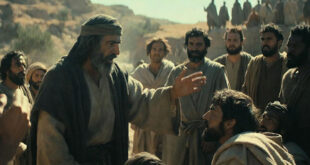


In the history of Christianity there are names that resonate with power: Peter, Paul, John… spiritual giants who founded communities and shed their blood for Christ.
But beside them appears a quieter, more discreet figure… and yet an absolutely essential one.
That man was Timothy.
A young Christian who received the trust of one of the greatest apostles of the Church and who eventually became a pastor, bishop, missionary, and model of fidelity.
His two letters in the First Letter to Timothy and the Second Letter to Timothy form part of what tradition calls the Pastoral Epistles, deeply practical texts in which Saint Paul teaches how to govern the Church, defend the faith, and live the ministry in difficult times.
And what is surprising is that, two thousand years later, their teachings seem written for our own time.
We also live in an age of doctrinal confusion, moral crisis, and Christians who need to return to what truly matters.
That is why knowing Timothy is much more than studying a biblical character.
It is discovering how to live the faith when the world is changing rapidly.
1. Who Was Timothy? The Young Disciple Who Won Paul’s Heart
Timothy appears for the first time in the Acts of the Apostles.
He was from Lystra, a city in Asia Minor (in present-day Turkey).
His family story is fascinating:
- His mother, Eunice, was a Jewish Christian.
- His grandmother, Lois, was also a believer.
- His father was Greek.
This means Timothy grew up between two cultures: Jewish and pagan.
But what truly defined his life was the faith he received at home.
Paul would later remember it with affection:
“I am reminded of your sincere faith, which first lived in your grandmother Lois and in your mother Eunice.”
(2 Tim 1:5)
Here we see a fundamental teaching:
faith is transmitted within the family.
Many saints were born because someone at home prayed for them.
2. The Encounter That Changed His Life
When Saint Paul arrived in Lystra during his second missionary journey, he found something special in Timothy.
The biblical text says that the brothers spoke well of him.
Paul saw in that young man something more than enthusiasm.
He saw a vocation.
So he took him as a companion on his mission.
From that moment on, Timothy became:
- a disciple
- a collaborator
- Paul’s spiritual son
In fact Paul repeatedly calls him:
“my true son in the faith.”
(1 Tim 1:2)
The relationship between them is one of the most beautiful spiritual friendships in the New Testament.
3. Timothy, Paul’s Closest Collaborator
Timothy accompanied Paul on many of his missions:
- Macedonia
- Corinth
- Thessalonica
- Ephesus
He is mentioned in several apostolic letters:
- Letter to the Philippians
- First Letter to the Thessalonians
- Second Letter to the Corinthians
Paul even sent him as his representative to troubled communities.
For example, he says to the Corinthians:
“I have sent to you Timothy, my beloved and faithful child in the Lord.”
(1 Cor 4:17)
This shows something important:
Timothy was not simply an assistant.
He was a leader in formation.
4. Timothy, Bishop of Ephesus
Church tradition states that Timothy eventually became bishop of Ephesus, one of the most important Christian communities of the first century.
Ephesus was a complex city:
- a commercial center
- a pagan metropolis
- filled with idolatrous cults
There stood the famous temple dedicated to the goddess Artemis.
Leading a Church in such an environment was not easy.
That is why Paul wrote his pastoral letters to help Timothy.
5. The First Letter to Timothy: How to Govern the Church
The First Letter to Timothy is one of the most important texts for understanding the structure of the early Church.
In it Paul addresses very concrete issues:
1. Defending True Doctrine
Already in the first century there were false teachers.
Paul warns:
“Command certain people not to teach false doctrines any longer.”
(1 Tim 1:3)
From the beginning the Church had to defend the revealed truth.
Not everything is valid.
Not every interpretation is acceptable.
The Christian faith has an objective content.
2. The Importance of Prayer
Paul insists that the community must pray for everyone:
“I urge, then, first of all, that petitions, prayers, intercession and thanksgiving be made for all people.”
(1 Tim 2:1)
This shows that the Church has a universal mission.
Prayer is not merely a private act.
It is intercession for the whole world.
3. The Organization of Ministry
One of the most fascinating aspects of this letter is the description of ministers in the Church.
Paul speaks about:
- bishops
- deacons
And he describes the qualities they must possess.
For example:
“Now the overseer is to be above reproach, faithful to his wife, temperate, self-controlled, respectable, hospitable, able to teach.”
(1 Tim 3:2)
This shows that from the very beginning Christian leadership was not only spiritual.
It was also moral and pastoral.
6. “Let No One Despise Your Youth”: Paul’s Timeless Advice
One of the most famous verses in this letter says:
“Let no one despise your youth, but set an example for the believers in speech, in conduct, in love, in faith and in purity.”
(1 Tim 4:12)
This advice crosses the centuries.
Being young is not an obstacle to holiness.
Many saints changed the world while still young:
- Francis of Assisi
- Thérèse of Lisieux
- Aloysius Gonzaga
Holiness does not depend on age.
It depends on fidelity.
7. The Second Letter to Timothy: Paul’s Spiritual Testament
The Second Letter to Timothy is probably the last letter written by Paul.
It was written from prison.
And it has the tone of a spiritual testament.
Here we find one of the most moving passages in the entire Bible:
“I have fought the good fight, I have finished the race, I have kept the faith.”
(2 Tim 4:7)
Paul knows his death is near.
And his words are directed to Timothy as a spiritual inheritance.
8. The Danger of Apostasy
In this letter Paul warns about something very relevant today:
“For the time will come when people will not endure sound doctrine.”
(2 Tim 4:3)
Does this not sound like our own time?
Today many people prefer:
- a comfortable religion
- a morality without demands
- a spirituality without the cross
But authentic Christianity does not adapt itself to the world.
It calls the world to conversion.
9. “Preach the Word”: The Eternal Mission of the Church
Paul gives Timothy a very clear command:
“Preach the word; be ready in season and out of season.”
(2 Tim 4:2)
This means:
the truth must be proclaimed even when it is not popular.
The Gospel is not modified to please others.
It is announced with fidelity.
10. The Martyrdom of Timothy
Tradition says that Timothy died a martyr in Ephesus around the year 97.
According to ancient accounts, he was killed by pagans while trying to stop an idolatrous procession.
Thus his life ended:
not as a famous figure…
but as a faithful shepherd to the very end.
11. What Timothy Can Teach Us Today
The figure of Timothy has enormous relevance today.
He reminds us of several essential truths.
1. Faith is transmitted at home
The story of Eunice and Lois shows the power of the Christian family.
2. The Church needs faithful disciples
Not only great leaders.
Also humble collaborators.
3. Youth can change the world
Timothy began his mission while still very young.
4. Defending the truth is a permanent mission
Every generation must safeguard the faith.
12. Practical Applications for the Spiritual Life
To live the spirit of Timothy today we can:
1️⃣ Form ourselves in the faith
Read Scripture, study doctrine, and learn the tradition.
2️⃣ Be courageous
Do not hide our faith out of fear of public opinion.
3️⃣ Cultivate the interior life
Prayer, sacraments, and spiritual guidance.
4️⃣ Transmit the faith to others
Especially to young people.
Conclusion: The Silent Disciple Who Changed History
In the history of the Church we often remember the great protagonists.
But God also works through faithful disciples.
Timothy did not write great theological treatises.
He did not found religious orders.
He did not rule empires.
But he was faithful to the Gospel.
And that fidelity changed the course of Christian history.
Perhaps the great question his life leaves us with is this:
Are we willing to be faithful disciples… even when no one sees us?
Because in the end, the only thing that matters is being able to say one day, like Paul:
“I have fought the good fight, I have finished the race, I have kept the faith.” (2 Tim 4:7)
And then we will discover that true greatness does not consist in being famous…
but in remaining faithful to Christ until the end.