Related Articles
We live in an age marked by uncertainty. Economic crises, wars, cultural persecution against the faith, moral relativism, and a constant feeling that the world is falling apart. Many Christians ask themselves: how can we remain firm? How can we live in hope without falling into fear or fanaticism?
The answer is not new. Already in the first century, a small Christian community lived through exactly the same reality. Their name resounds powerfully in the New Testament: the Thessalonians.
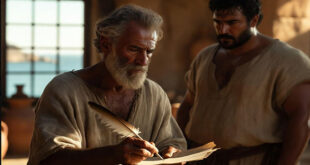
The Letters to the Thessalonians, written by Saint Paul, are probably the oldest writings of the New Testament. In them we find a vibrant spirituality, profoundly eschatological, pastorally delicate, and theologically solid. They are not merely circumstantial letters: they are a manual for Christian perseverance.
1. Thessalonica: A Church Born in Persecution
The city of Thessalonica—today Thessaloniki—was a strategic metropolis of the Roman Empire, located on the Via Egnatia, a major commercial route. It was a cultural crossroads where pagans, Jews, and Roman citizens lived side by side.
According to the Book of Acts of the Apostles (cf. Acts 17:1–9), Saint Paul preached there for three Sabbaths in the synagogue. The result was explosive: fervent conversions… and immediate persecution.
Paul had to flee suddenly. The community was left alone, without its founder, surrounded by hostility. Humanly speaking, it was a Church destined to disappear.
But it did not disappear.
2. First Letter to the Thessalonians: Faith Burning in the Midst of Suffering
The First Letter to the Thessalonians is probably the oldest New Testament writing (A.D. 50–51). It is not a cold treatise: it is the heart of a spiritual father who deeply loves his community.
From the beginning, Paul praises three fundamental virtues:
“We remember before our God and Father your work of faith and labor of love and steadfastness of hope in our Lord Jesus Christ” (1 Thess 1:3).
Here appears the tripod of Christian life:
- Faith
- Charity
- Hope
They are not abstract concepts. In Thessalonica they were concrete realities:
- Faith that endured social pressure.
- Active charity among the brethren.
- Firm hope in the second coming of Christ.
The Centrality of the Parousia
One of the key themes is the Parousia, that is, the second coming of Christ. The Thessalonians lived with a vivid awareness that the Lord could return at any moment.
But a concern arose: some brothers had died. Would they miss the final glory?
Paul responds with words that have consoled generations:
“We do not want you to be uninformed, brothers, about those who are asleep, that you may not grieve as others do who have no hope” (1 Thess 4:13).
And he adds:
“For the Lord himself will descend from heaven… and the dead in Christ will rise first… and so we will always be with the Lord” (1 Thess 4:16–17).
The teaching is clear:
- Death does not have the last word.
- The risen Christ guarantees our resurrection.
- Christian hope is not naive optimism; it is theological certainty.
3. Second Letter to the Thessalonians: Order in the Midst of Confusion
The Second Letter to the Thessalonians addresses a different problem. Some believers, convinced that the end was imminent, stopped working. They lived in a kind of apocalyptic hysteria.
Paul corrects them with pastoral firmness:
“If anyone is not willing to work, let him not eat” (2 Thess 3:10).
This phrase is not harshness without mercy; it is Christian balance. Waiting for the Lord is not an excuse for irresponsibility. Authentic eschatology generates:
- Vigilance
- Responsibility
- Faithfulness in small things
Paul also mentions the mysterious “man of lawlessness” (2 Thess 2), traditionally interpreted in theology as a reference to the Antichrist. But the central message is not fear—it is perseverance:
“Stand firm and hold to the traditions that you were taught” (2 Thess 2:15).
Here we find a profoundly Catholic affirmation: the faith is not a personal invention; it is a received tradition.
4. Theological Richness of Thessalonians
A. The Church as a Living Community
Thessalonians shows us an organic Church:
- With leaders
- With concrete moral life
- With discipline
- With real fraternity
It is not individualistic spiritualism. It is visible communion.
B. Holiness in Everyday Life
Paul insists:
“For this is the will of God, your sanctification” (1 Thess 4:3).
What does this holiness consist of?
- Moral purity.
- Self-control.
- Fraternal charity.
- Honorable conduct before pagans.
He does not speak of mystical ecstasies, but of coherent living.
C. Balanced Eschatology
Thessalonians avoids two extremes:
- Forgetting the ultimate end.
- Apocalyptic fanaticism.
It teaches us to live “with our feet on the ground and our hearts in heaven.”
5. Pastoral Applications for Today
Now comes the essential question: what does Thessalonians mean for us?
1. Persevering in a Hostile Environment
Today the Christian lives, in many places, under cultural persecution. Not always violent, but certainly ideological. Thessalonica reminds us that authentic faith:
- Does not depend on the environment.
- Does not seek approval.
- Does not dilute itself to fit in.
2. Living with Real Hope
Many people live with anxiety about the future. Thessalonian spirituality teaches us:
- Christ will return.
- History has meaning.
- Evil does not triumph definitively.
That changes how we live through suffering.
3. Working Responsibly
Waiting for Christ does not mean abandoning our obligations. In your job, in your family, in your parish community:
- Holiness is built in daily fidelity.
- Duty fulfilled is an act of love for God.
4. Safeguarding Tradition
In times of doctrinal confusion, the exhortation resounds strongly:
“Hold to the traditions.”
The Catholic faith is not moldable according to trends. It is a sacred deposit.
6. A Practical Guide to Living “Like the Thessalonians”
If you want to apply this spirituality today, here is a concrete path:
✔ Rekindle eschatological hope
Frequently meditate on Heaven, Judgment, eternal life. Not as a threat, but as a goal.
✔ Practice concrete holiness
Examine your moral life. Are there areas that need purification?
✔ Be responsible in your vocation
Well-done work, fulfilled duties, public coherence.
✔ Strengthen community life
Do not live your faith in isolation. Participate actively in your parish.
✔ Persevere under pressure
Do not negotiate what is essential.
7. Thessalonians: A Mirror for Our Generation
The Thessalonians were young in the faith, surrounded by hostility, confused about the future… and yet they became an example for all Macedonia (cf. 1 Thess 1:7).
Does that not also describe our time?
The final lesson is powerful:
- The Church flourishes in persecution.
- Christian hope is indestructible.
- Holiness is possible in any context.
- Waiting for the Lord transforms the present.
We do not know when Christ will return. But we do know how He wants to find us: faithful.
As Paul wrote:
“May He so strengthen your hearts in holiness that you may be blameless before our God and Father” (1 Thess 3:13).
May it be so in our generation.
Because the world does not need frightened Christians.
It needs Christians like the Thessalonians: firm, holy, and filled with hope.