Related Articles


1. An Encounter That Echoes Through the Ages
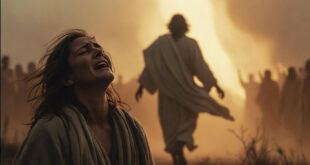
There are scenes in the Gospel that seem simple, almost brief… yet, when contemplated deeply, they confront us directly, uncomfortably, and very personally. One of them is the story of the rich young man.
This is not a distant or foreign story. It is, in reality, a mirror.
The episode appears in several Synoptic Gospels, but we find it especially clearly in the Gospel of Matthew (Mt 19:16–22). There we are introduced to a young man who, apparently, has everything: wealth, moral integrity, spiritual concern… and yet, he walks away sad.
Let us pause at the heart of the passage:
“If you would be perfect, go, sell what you possess and give to the poor, and you will have treasure in heaven; and come, follow me.” (Mt 19:21)
And the response:
“When the young man heard this, he went away sorrowful, for he had great possessions.”
Here begins one of the most profound spiritual dramas in the Gospel.
2. He Was Not Just Any Sinner
The first thing we must understand—and this is key theologically—is that this young man was not a bad person.
He was not a corrupt tax collector nor a public sinner. On the contrary:
- He kept the commandments
- He sought eternal life
- He had a genuine concern for God
- He approached Jesus with respect and sincerity
In other words: he was a “good person” by human standards… and yet, that was not enough.
Here we find a fundamental teaching:
👉 The Christian life is not reduced to “not doing evil.”
👉 It is called to something far greater: to love without reservation.
The rich young man represents many believers today: people who comply, who do no harm, who even practice their faith… but who have not taken the decisive step: to give themselves entirely to Christ.
3. The Gaze of Jesus: Love That Reveals
The Gospel of Mark adds a beautiful detail:
“And Jesus, looking at him, loved him…” (Mk 10:21)
Before asking anything of him, Jesus loves him.
This is essential to understanding Christian demands:
- God does not ask out of whim
- He does not demand to humiliate
- He does not strip us to impoverish us
👉 God asks because He loves.
Christ’s gaze does not condemn the young man: it reveals him. It shows him where his true attachment lies, his hidden idol, his inner limit.
And here emerges the great spiritual theme of the passage:
the attachment of the heart.
4. The Real Problem: It Was Not the Money
This passage is often interpreted as a condemnation of wealth itself. But theologically, the problem is not possessing goods, but being possessed by them.
The young man does not reject Jesus out of malice. He rejects Him because:
- He has too much to lose
- He does not fully trust
- He cannot let go of control
👉 His sadness is the clearest sign of his bondage.
Because the one who is truly free… can leave everything behind.
Saint Augustine would later express it with striking clarity:
“Where your love is, there is your weight.”
The rich young man was “heavy,” bound, unable to rise toward God.
5. The Sadness of a Divided Heart
There is a detail that often goes unnoticed: the young man does not leave angry… he leaves sad.
This sadness is deeply revealing:
- He does not reject what is good
- He does not despise Jesus
- He does not mock the Gospel
👉 He simply cannot take the step.
And here we find one of the most common spiritual tragedies today:
- We know what God asks of us
- We sense the right path
- We feel the inner call
But… we do not want to let go of something:
- a relationship
- a comfort
- a lifestyle
- a material security
- a social image
The result is the same: a silent, deep, existential sadness.
6. “Come, Follow Me”: The Radical Nature of Christianity
Jesus does not offer him a life improvement plan. He offers him a total transformation.
The invitation has three steps:
- Detachment: “sell what you have”
- Charity: “give to the poor”
- Discipleship: “come, follow me”
This reflects the core of Christian discipleship:
- It is not enough to give things up
- It is not enough to do good
- The center is to follow Christ personally
👉 Christianity is not merely an ethic… it is a living relationship with Jesus.
And that relationship requires interior freedom.
7. A Deeply Contemporary Reading
The rich young man is not a figure of the past. He is a portrait of modern man.
Today we live in a society marked by:
- Consumerism
- The pursuit of material security
- Fear of loss
- Self-sufficiency
We have never had so much… and yet we have never been so restless.
The Gospel confronts us with an uncomfortable question:
👉 What are you unwilling to let go of for God?
There lies your “wealth.”
There lies your idol.
There lies your spiritual limit.
8. Practical Applications for Daily Life
1. Identify Your Attachments
Make a sincere examination:
- What would you fear losing the most?
- What prevents you from being more generous?
- What keeps you from total surrender?
2. Practice Concrete Detachment
This is not about theory. Begin with real actions:
- giving alms
- sharing your time
- renouncing small comforts
- simplifying your life
👉 The heart becomes free through practice.
3. Learn to Trust
The rich young man did not trust Jesus’ promise:
“you will have treasure in heaven.”
Faith means believing that:
👉 God is never outdone in generosity.
4. Take Gradual Steps
Not everyone is called to literally sell everything.
But everyone is called to:
- live with detachment
- place God first
- avoid absolutizing material things
5. Seek a Personal Encounter with Christ
The key is not “letting go of things,” but encountering Someone.
When Christ fills the heart… everything else loses its weight.
9. What If the Young Man Had Said Yes?
The Gospel does not tell us what happened afterward.
But we can imagine:
👉 He could have been an apostle
👉 A saint
👉 A radical witness of the Kingdom
Instead, he remains a symbol of a missed opportunity.
This reminds us of something very serious from a theological perspective:
- God calls
- God offers
- God invites
But He radically respects our freedom.
10. Conclusion: The Question We Cannot Avoid
The rich young man went away sad… but you are still in time.
The story is not closed for you.
Christ continues to look, to love, and to say:
“Come, follow me.”
The real question is not what that young man had.
The question is:
👉 What do you have that you are not willing to give up?
Because right there, exactly there,
your joy… or your sadness is decided.
Spiritual Epilogue
The Christian path is not about losing, but about gaining everything in God.
The rich young man thought he had much to lose.
In reality, he lost everything by not giving himself.
You can choose differently.