Related Articles
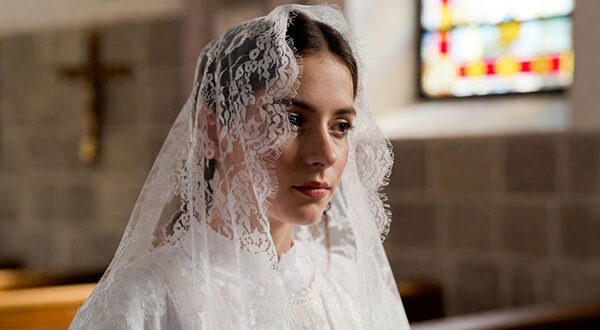
To speak about the female veil in the Church is to enter a subject that, at first glance, may seem distant, controversial, or even outdated. Yet when it is approached with serenity, theological depth, and pastoral sensitivity, the veil reveals itself as a rich spiritual key, capable of dialoguing with the heart of today’s world. It is not a lifeless relic of the past, but a sign full of meaning, which still survives in certain rites and communities and can shed light on our understanding of the body, dignity, liturgy, and the mystery of God.
This article does not seek to impose or romanticize the past, but rather to explain, contextualize, and accompany, helping us understand why the veil was so important in the early Church, what meaning it had—and still has—and how it can be understood today without caricatures or ideological reductions.
1. The Veil in Sacred Scripture: The Starting Point
The foundation for the use of the veil in the early Church is found clearly in Sacred Scripture, especially in Saint Paul’s First Letter to the Corinthians (1 Cor 11:2–16). This passage, often avoided because of its difficulty, was for centuries interpreted unanimously by Christian Tradition.
Saint Paul does not speak of the veil as a mere social convention, but as a sign with theological, liturgical, and spiritual dimensions. Several key elements appear in his argument:
- The order of creation
- The difference and complementarity between man and woman
- The relationship between the visible and the invisible in the liturgy
- The presence of angels in worship
For the Apostle, Christian prayer is not a private or purely interior act: it is a cosmic event in which heaven and earth meet. The veil thus appears as an external sign that expresses an interior attitude: reverence, modesty, and awareness of the Mystery.
2. Not a Cultural Imposition, but a Symbolic Language
It is often said that the veil was simply a cultural custom of the ancient world. Without denying that a specific cultural context existed, the early Church never understood the veil solely as a social norm.
This is proven by the fact that:
- It was maintained across very diverse cultures, not only Semitic or Greco-Roman ones.
- It was assumed liturgically, not merely in everyday life.
- It was always linked to prayer and worship, not to civil life.
Early Christianity did not eliminate cultural signs but transfigured them, endowing them with a new meaning. The veil thus became a language of the body, a silent catechesis that spoke of humility before God and of the sacredness of the person.
3. The Veil and the Liturgy: Entering the Sacred Space
One of the most forgotten aspects today is that the veil was closely linked to an awareness of the sacred. In ancient liturgy, everything spoke: gestures, silence, orientation, and clothing.
Covering one’s head when entering prayer meant:
- Acknowledging that one was in the presence of God
- Accepting that the Mystery is greater than oneself
- Ceasing to “display oneself” in order to adore
Just as the priest vests himself for the altar, the woman—as one who prays—adopted an external sign of recollection. Not to hide herself out of shame, but to manifest reverence. The veil did not say “woman is worth less,” but rather “God is infinitely greater.”
4. Mary, the Veiled Woman Par Excellence
Christian iconography has always understood the veil in the light of the Virgin Mary. Nearly all her traditional representations depict her veiled—and not by chance.
Mary is the Woman of fruitful silence, she who keeps the mystery in her heart, she who allows herself to be overshadowed by the Most High. Her veil is an image of:
- Her humility
- Her purity
- Her total availability to God
Far from being a symbol of oppression, the Marian veil is a sign of interior freedom, of one who does not need to exhibit herself because she knows who she is before God.
5. The Veil as an Expression of Dignity, Not of Submission
One of the greatest contemporary misunderstandings is identifying the Christian veil with a form of female submission. This reading, however, does not withstand serious analysis from the standpoint of traditional Catholic theology.
In the Christian vision:
- Woman is not inferior to man.
- Difference does not imply inequality.
- The body is not an object, but a temple of the Holy Spirit.
The veil precisely protected this dignity, reminding us that the female body is not merchandise, nor a spectacle, nor an object of visual consumption. In a culture—ours—obsessed with constant exposure, the veil can be read today as a deeply countercultural act.
6. Why Did the Veil Disappear from Common Practice?
For centuries, the use of the veil was universal in the Latin Church. It was not until the mid-20th century that it began to disappear, especially after the Second Vatican Council, although the Council never prohibited it.
Its disappearance was mainly due to:
- Rapid cultural changes
- Confusion between sign and obligation
- Loss of the sense of the sacred
- An impoverished understanding of liturgical symbolism
Even the former 1917 Code of Canon Law explicitly mentioned it. The current Code does not, but juridical silence does not equate to theological rejection.
7. The Veil Today: Freedom, Not Imposition
It is important to state clearly: the Church today does not require women to cover their heads. Any recovery of the veil can only be understood from interior freedom, never from coercion.
In certain contexts:
- Traditional communities
- Celebrations of the ancient Roman rite
- Eastern Catholic and Orthodox Churches
… the veil continues to be used as a personal spiritual choice, as a gesture of prayer, recollection, and love for Tradition.
When a woman chooses to veil herself today, she does so not to obey an external rule, but to express a conscious faith, a desire to enter more deeply into the Mystery.
8. A Sign That Challenges the Contemporary World
In a society marked by hyper-exposure, individualism, and the loss of modesty understood as a virtue, the veil raises uncomfortable but necessary questions:
- Must everything be shown?
- What does freedom really mean?
- How does the Christian live his or her body before God?
The veil is not the answer for everyone, but it can be a prophetic sign, a silent reminder that the human being is not exhausted by what is visible.
9. A Silent Catechesis That Still Speaks
Signs do not die when they cease to be widespread; they die when they are emptied of meaning. The veil, properly understood, still speaks today with surprising relevance.
It speaks of:
- Adoration
- Humility
- Spiritual beauty
- Respect for the Mystery
And it reminds us that the Christian faith is not lived only with words, but also with the body, gestures, and silence.
Conclusion: Covering Oneself to Reveal What Is Essential
The veil does not seek to hide women, but to reveal what is essential: that before God we are all creatures, called to communion, to respect, and to holiness.
Recovering its meaning—even if not necessarily its use—can help us rediscover a forgotten truth: that the sacred needs signs, and that Christianity does not fear symbolism, because it knows that the visible can lead to the invisible.
In a world that shows everything, the veil whispers to us that God remains Mystery… and that only those who bow in humility can truly contemplate Him.