Related Articles



History, theology, and an urgent lesson for our time
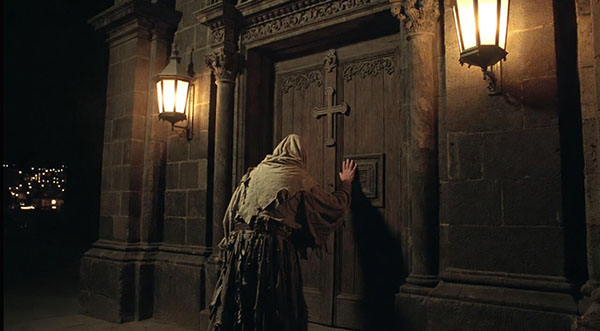
There are scenes that seem taken straight from a medieval novel: a man being pursued, wounded, out of breath, running through stone alleyways while hearing the footsteps of those who want to kill him. Suddenly, before him, he sees a great door. Not just any door. A cathedral. With his last remaining strength, he stretches out his arm and touches the knocker. That simple gesture could mean the difference between life and death.
It was not magic.
It was not superstition.
It was the Right of Asylum.
And behind that knocker there was no naïveté, but rather deep theology, canon law, evangelical mercy, and a Christian understanding of justice that we have almost completely forgotten today.
This article seeks to do three things:
👉 Explain what the right of asylum truly was
👉 Show its biblical and theological foundation
👉 Draw out an urgent spiritual guide for our modern world
1. What was the Right of Asylum? Much more than a “medieval tradition”
The ecclesiastical Right of Asylum was a juridical and spiritual institution by which a church—especially a cathedral—offered temporary protection even to criminals, preventing them from being executed or immediately punished.
In many cases, it was enough to:
- Enter the church
- Or physically touch a sacred element (the knocker, the portico, the altar)
From that moment on, civil authorities could not touch him without violating a right that had been recognized for centuries.
⚠️ Important:
This did not mean impunity, but rather a suspension of violence.
Asylum did not deny justice.
It humanized it.
2. Cathedrals were not shelters for criminals… they were barriers against bloodshed
In the medieval mindset, private vengeance was common. A crime could trigger lynchings, family feuds, or summary executions.
The Church, fully aware of human fragility, stepped in as a sacred barrier against immediate violence.
The logic was clear:
- A man who has sinned is still made in the image of God
- Even the guilty have a right to time, repentance, and conversion
- Blood is not cleansed with more blood
Thus, the cathedral became a space where justice paused in order to listen to mercy.
3. Why was touching the knocker enough? The symbolism is powerfully Christian
The knocker was not a decorative object.
It was a theological symbol.
👉 Striking the door of a cathedral meant:
- Publicly acknowledging one’s own misery
- Asking for help not from human power, but from God
- Accepting submission to a judgment higher than that of vengeance
This connects directly with the Gospel:
“Knock, and it shall be opened unto you.” (Mt 7:7)
The criminal who touched the knocker was, consciously or not, making an act of supplication, a kind of desperate prayer.
4. The biblical foundation of the Right of Asylum
This did not originate in the Middle Ages.
It was born in Sacred Scripture.
📖 The Old Testament and the cities of refuge
God Himself established places of asylum:
“You shall appoint cities of refuge, to which the slayer who kills a person unintentionally may flee.”
(Numbers 35:11)
These cities served to:
- Prevent unjust revenge
- Guarantee a fair trial
- Protect life while guilt was discerned
The Church inherited this divine logic:
first protect life, then judge with justice
5. Jesus Christ: the true Asylum of the sinner
Every Christian right of asylum ultimately points to Christ Himself.
Jesus does not deny sin.
He denies condemnation without mercy.
“Let him who is without sin among you be the first to throw a stone.” (Jn 8:7)
When the Church opened its doors to the criminal, it was saying:
“Here, no one throws the first stone. Here, we first listen, accompany, and call to conversion.”
The cathedral thus became a visible image of the Heart of Christ.
6. What happened next? Asylum was not the end, but the beginning
The refugee:
- Could not leave freely
- Could not continue committing crimes
- Remained under ecclesiastical custody
In many cases:
- A more just penalty was negotiated
- The death sentence was commuted to exile
- The possibility of penance was offered
The Church did not protect crime.
She protected the possibility of redemption.
7. Why was the Right of Asylum lost?
With the rise of the modern State:
- The Church was displaced from the juridical sphere
- Justice became more technical and less moral
- Mercy came to be seen as weakness
Today:
- Punishment is swift
- Exposure is public
- Reputations are destroyed before anyone listens
There are no longer knockers to touch.
And that should deeply concern us.
8. A spiritual application for today: where can the modern sinner find refuge?
Perhaps we no longer run to a cathedral pursued by swords…
but we are still fleeing from:
- Guilt
- Shame
- Sins that overwhelm us
The question is painfully relevant:
👉 Is the Church today a place where someone can knock without being lynched?
Every parish, every confessor, every Christian should be:
- A knocker
- A door
- A space where life pauses before being destroyed
9. A practical spiritual guide: living the spirit of the Right of Asylum
🔹 For you
Learn to knock on God’s door before running farther away. The sacrament of Confession remains the asylum par excellence.
🔹 For the Church
To recover the language of mercy without diluting the truth.
🔹 For society
To remember that justice without mercy becomes tyranny.
Conclusion: The knocker is still there
There may no longer be medieval chases,
but the human soul is still running, wounded, searching for a door.
The Right of Asylum reminds us of something essential:
The Church does not exist to condemn first, but to save whenever possible.
As long as there is an open door,
as long as someone can knock,
there is still hope.