Related Articles



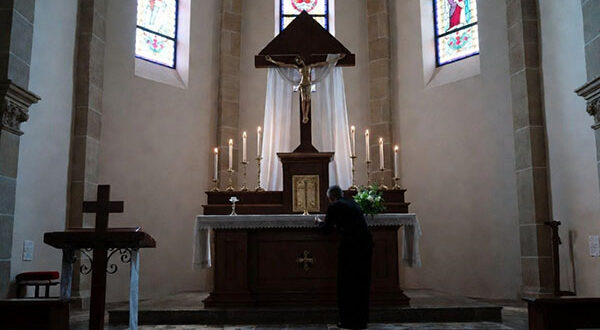
In a culture accustomed to color, noise, and constant visual stimulation, it may seem strange that the Church established such strict rules about something apparently simple like flowers on the altar. Yet for centuries, the prohibition — or severe limitation — of floral decorations on the altar during Lent was not merely an aesthetic rule, but a profound spiritual pedagogy.
This liturgical discipline, far from being an empty formality, expresses a theology of sacrifice, detachment, and Christian hope. Understanding it allows us to rediscover the true meaning of Lent and its immense spiritual richness for believers today.
The Spiritual Language of Beauty in the Liturgy
The liturgy has never considered beauty something secondary. In the tradition of the Catholic Church, art, architecture, music, and ornamentation form part of the language through which the mystery of God is communicated.
The temple teaches.
Colors speak.
Silence preaches.
For this reason, even the absence of visible beauty can carry theological meaning.
In the liturgical calendar, the Church uses sensible signs — colors, music, images, flowers — to guide the faithful interiorly along the spiritual journey of the Christian year. Lenten austerity is not an arbitrary deprivation: it is a visible catechesis about conversion.
Lent: A Time of Stripping Away and Penance
Lent emerged in the early centuries of Christianity as preparation for Easter. Inspired by Christ’s forty days of fasting in the desert, it became a time of interior purification.
The Gospel reveals the profound meaning of this period:
“Jesus was led by the Spirit into the wilderness to be tempted by the devil. After fasting forty days and forty nights, he was hungry” (Mt 4:1–2).
The biblical desert is the place of encounter with God, but also of emptiness, silence, and detachment. The Church symbolically reproduces this experience through:
- fasting and abstinence
- a reduction of liturgical solemnity
- musical silence (such as the absence of the Gloria)
- visual austerity in the church
It is within this context that the limitation of flowers arises.
The Historical Origin of the Prohibition of Flowers on the Altar
The Discipline in Liturgical Tradition
From the earliest Christian times, Lenten worship was characterized by strong sobriety. Although specific norms developed gradually, the principle was clear: to reduce every manifestation of festive joy.
During the Middle Ages, the practice of removing superfluous decorations during Lent became established, including:
- flowers on the altar
- abundant decorations
- exuberant use of musical instruments
- excessive ornamentation
This tradition was later reflected and systematized in Roman liturgical discipline, especially after the reforms promoted by the Council of Trent, which emphasized the pedagogical and doctrinal character of liturgical signs.
The Current Liturgical Norm
Today this discipline remains in force, although expressed in more nuanced terms in the General Instruction of the Roman Missal, which establishes:
- During Lent, the decoration of the altar with flowers is permitted only with moderation.
- Every appearance of festivity is to be avoided.
- Exceptions are allowed on solemnities, feasts, and the Fourth Sunday of Lent (Laetare).
The norm does not seek to eliminate beauty, but to adapt it to the penitential spirit.
Why Does the Church Limit Flowers? A Deep Theological Meaning
1. The Pedagogy of Emptiness
The human being fully appreciates light only after experiencing darkness.
The Church deliberately creates a contrast:
- Christmas → abundance and visible joy
- Easter → an explosion of life
- Lent → stripping away and waiting
The absence of flowers creates a concrete spiritual experience:
- the altar appears more austere
- the church feels more sober
- the atmosphere invites interior reflection
This exterior “emptiness” leads to interior examination.
2. Visible Penance
Lent is not merely an invisible interior attitude; Christian tradition has always valued external signs of penance:
- bodily fasting
- ashes
- the color purple
- liturgical sobriety
The absence of flowers reminds us that the Christian is called to real conversion, not merely symbolic change.
As the prophet teaches:
“Rend your hearts and not your garments” (Jl 2:13).
The austere temple invites us to rend our hearts.
3. Waiting for Easter
Austerity prepares joy.
Without an intense Lent, Easter loses its force.
When at the Easter Vigil the church is filled with light, flowers, and music, the contrast visibly expresses Christ’s victory over death. The prior deprivation makes the experience of the Resurrection fully meaningful.
4. Detachment from the Superficial
The prohibition of ornamentation reminds us that Christian faith is not founded on aesthetics but on the Cross.
Christianity does not avoid suffering or disguise it. It passes through it.
Lenten liturgy educates the believer in:
- interior sobriety
- freedom from consumerism
- detachment from the ornamental
- the search for what is essential
An extraordinarily relevant message in a culture dominated by appearances.
The Spirituality of the Desert Applied to the Modern Person
Lenten tradition has enormous relevance today.
We live in a society marked by:
- hyper-consumption
- digital overstimulation
- excess noise
- fear of silence
- rejection of sacrifice
Liturgical austerity responds prophetically to this situation.
The absence of flowers reminds us that the soul needs silence, space, and purification in order to encounter God.
The Symbolic Meaning of Flowers in Christian Tradition
To better understand the prohibition, we must grasp the positive meaning of flowers in the liturgy.
Flowers symbolize:
- new life
- spiritual joy
- the glory of God
- the beauty of creation
- the Resurrection
For this reason, their absence during Lent is not contempt, but waiting.
Flowers return with force at Easter as a visible sign of Christ’s victory.
Laetare Sunday: A Pause in Austerity
In the midst of Lent comes a singular moment: the fourth Sunday, called “Laetare” (“Rejoice”).
On that day:
- flowers may be used more freely
- the color rose may be used
- the joy of Easter is anticipated
This respite in penance reveals the balance of Christian spirituality: penance is never despair, but hope.
Lenten Aesthetics as a Spiritual School
Catholic tradition understands that the body educates the soul. What is visible transforms what is invisible.
The austerity of the church teaches the believer to:
1. Practice sacrifice
Renounce what is superfluous.
2. Rediscover silence
Listen to God.
3. Value authentic beauty
Not superficial appearance.
4. Prepare for the Resurrection
Pass through the Cross.
Practical Applications for the Believer Today
This ancient liturgical norm offers very concrete lessons for daily life.
Practicing “Lenten Aesthetics” at Home
- reduce superfluous decorations
- simplify living spaces
- avoid visual excess
- create sober spaces for prayer
The environment influences the spirit.
Practicing a Fast from Stimuli
Just as the church reduces ornamentation, Christians may:
- limit social media
- reduce excessive entertainment
- cultivate silence
- practice sobriety in consumption
This reproduces the Lenten spirit.
Recovering the Meaning of Sacrifice
The austerity of the altar reminds us that true love involves renunciation. In a culture that flees from sacrifice, this pedagogy is revolutionary.
Rediscovering the Wisdom of Tradition
Many contemporary Catholics view these norms as secondary details or mere aesthetic formalities. Yet liturgical tradition contains profound anthropological and spiritual wisdom.
The Church understands that human beings need:
- visible signs
- sacred rhythms
- bodily experiences
- symbolic pedagogy
The prohibition of flowers is not a restriction, but a guide toward conversion.
The Christian Paradox: The Beauty of Stripping Away
Christianity reveals a surprising truth: there is beauty in poverty, silence, and sacrifice.
The Cross — the ultimate sign of suffering — becomes the greatest sign of love.
Lenten austerity, expressed even in something as simple as the absence of flowers, proclaims this paradox: only those who empty themselves can be filled with God.
Conclusion: When the Liturgy Educates the Heart
The prohibition or moderation of flowers on the altar during Lent is not an insignificant aesthetic rule, but a profound spiritual school that teaches:
- conversion
- penance
- hope
- detachment
- preparation for Easter
In a world saturated with stimuli, this ancient discipline offers an urgent spiritual remedy: rediscovering the value of silence, sacrifice, and waiting.
When we understand these signs, the liturgy ceases to be a set of rules and becomes a path of interior transformation.
And then we discover the true meaning of Lent: emptying the heart so that Christ may fill it with new life.