Related Articles

At certain moments in the history of the Church, uncomfortable questions, suspicions, and narratives emerge that cause concern among the faithful. One such episode is related to the so-called “Pecorelli List” and the alleged “Vatican Grand Lodge” that supposedly operated during the Second Vatican Council (1962–1965).
For many Catholics, this topic appears wrapped in mystery, controversy, and conflicting theories. Some present it as evidence of Masonic infiltration at the heart of the Church; others consider it a mixture of speculation, politics, and sensationalist journalism.
When faced with issues like these, a Christian should neither react with fear nor with naïveté. Catholic tradition invites us to something deeper: discernment, love for truth, and trust in God’s providence.
This article seeks precisely that: to explain the historical context, analyze its theological relevance, and offer spiritual guidance for living the faith amid debates and controversies within the Church.
1. The Origin of the So-Called “Pecorelli List”
The so-called “Pecorelli List” emerged during the turbulent context of Italy in the 1970s, a period marked by political crisis, terrorism, and power struggles known as the “Years of Lead.”
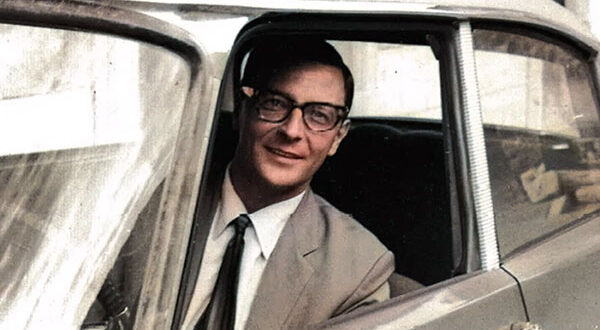
Italian journalist Mino Pecorelli, director of the magazine OP – Osservatore Politico, published information in 1978 claiming that there existed a list of members of Freemasonry within the Vatican.
According to his claims, some clergy and high-ranking ecclesiastical officials allegedly belonged to a supposed “Vatican lodge.”
However, it is important to understand several fundamental points:
- The list was never proven with verifiable evidence.
- Its documentary origin could not be conclusively confirmed.
- Historians and analysts believe it may have been political leaks, rumors, or even disinformation.
The matter became even more obscure because Pecorelli was murdered in 1979, which fueled conspiracy theories in various circles.
But from a rigorous historical perspective, there is no academic consensus confirming the authenticity of this list.
2. The Second Vatican Council and the Climate of Change
To understand why this story had such impact, we must remember the context of the Second Vatican Council.
This council was convened by Pope Saint John XXIII and continued by Pope Saint Paul VI with the aim of:
- renewing the pastoral language of the Church
- engaging in dialogue with the modern world
- deepening the Church’s evangelizing mission
It was not meant to change the essential doctrine of the Church, but rather to present it in a way understandable to the contemporary world.
However, every process of renewal generates tensions. After the council there emerged:
- liturgical debates
- theological conflicts
- radical or rupture-oriented interpretations
This climate of discussion made it easier for some to interpret the transformations as the result of external influences or ideological infiltrations.
From this environment arose theories such as that of the “Vatican Grand Lodge.”
3. Freemasonry and the Historical Position of the Church
To address this subject seriously from a theological standpoint, we must remember a clear fact: the Catholic Church has historically condemned membership in Freemasonry.
Since the eighteenth century, numerous papal documents have warned about its incompatibility with the Christian faith.
The main reasons include:
1. Religious relativism
Freemasonry promotes a vision in which all religions are considered equivalent.
2. A naturalistic conception of God
It speaks of a “Great Architect,” but without acknowledging the revelation of Christ.
3. Secrecy and internal oaths
These have been considered problematic from a Christian ethical perspective.
For this reason, the Church has clearly taught that a Catholic cannot belong to Freemasonry.
The Code of Canon Law and subsequent doctrinal statements have reaffirmed this.
4. Was There Really Infiltration in the Church?
From a serious historical perspective, the answer is more complex than the polarized narratives often suggest.
There are three truths that must be held together.
1. The Church has always faced attempts of external influence
Throughout history there have been political, ideological, and cultural pressures upon the Church.
This is nothing new.
Empires, kings, ideologies, and movements have tried to influence it.
2. Specific accusations require evidence
In the case of the so-called “Pecorelli List,” there is no solid historical confirmation that allows us to affirm that this list represents verifiable facts.
Therefore, repeating names or accusations without proof would be contrary to justice and Christian charity.
3. The Church belongs to Christ
The central point of Catholic theology is this:
The Church is not merely a human institution.
It is the Body of Christ.
Jesus Himself promised it:
“You are Peter, and upon this rock I will build my Church, and the gates of hell shall not prevail against it.”
(Matthew 16:18)
This means that even in moments of crisis, Christ protects His Church.
5. The Real Spiritual Battle
When debates arise about conspiracies, infiltrations, or internal crises, the risk is losing sight of what is essential.
The Church’s primary struggle is not political or institutional.
It is spiritual.
Saint Paul explains this clearly:
“For our struggle is not against flesh and blood, but against the rulers, against the authorities, against the powers of this dark world.”
(Ephesians 6:12)
This means Christians must look more deeply.
Visible crises often reflect deeper spiritual battles.
6. What This Episode Teaches Catholics Today
Regardless of the historical accuracy of the list, this episode leaves several important spiritual lessons.
1. Love the truth
A Christian must not spread rumors or accusations without evidence.
Truth is a demand of the Gospel.
2. Avoid sensationalism
Conspiracy theories can become distractions that pull us away from the spiritual life.
3. Trust in providence
The history of the Church is filled with difficult moments:
- persecutions
- heresies
- scandals
- divisions
And yet the Church still exists two thousand years later.
Not because of human strength, but because of God’s faithfulness.
7. How to Live the Faith in Times of Confusion
More important than debating lists or theories is asking:
How should a Catholic live during times of uncertainty within the Church?
The spiritual tradition gives very clear answers.
1. Deepen prayer
Prayer gives us light for discernment.
2. Love the Church even in her wounds
The Church is holy because of Christ, even though her members are sinners.
3. Seek solid formation
Many conflicts arise from theological ignorance.
Studying:
- Scripture
- the Catechism
- the tradition
protects us from confusion.
4. Maintain charity
Even in ecclesial debates, Christians must remember:
without charity, truth becomes a weapon.
8. The Mystery of the Church: Divine and Human
The Church is a mystery that combines two realities:
- it is divine, because Christ is its head
- it is human, because it is formed by imperfect people
This explains why in its history there are:
- extraordinary saints
- and also human mistakes
But the core remains.
Christ continues to act within her.
9. The True Reform of the Church
Throughout the centuries there have been many authentic reforms.
Interestingly, they almost always began not with political theories, but with saints.
Saint Francis of Assisi
Saint Catherine of Siena
Saint Ignatius of Loyola
All of them transformed the Church through personal holiness.
That remains the path today.
10. Conclusion: Faith Beyond Controversies
The history of the “Pecorelli List” will likely continue to be the subject of historical debates and political analysis.
But for the Christian there is a deeper truth.
The Church is not sustained by conspiracies or human strategies.
It is sustained by Christ.
And because of this, believers can walk with serenity even amid controversies.
As the Lord says in the Gospel:
“Do not let your hearts be troubled. Believe in God; believe also in me.”
(John 14:1)
In times of noise, suspicion, and arguments, the safest path remains the one that has always existed:
- truth
- prayer
- fidelity to Christ
- and love for the Church
Because in the end, history is not written by conspiracies.
History is written by God.