Related Articles

We live in an age that constantly pushes us toward greatness: great achievements, great goals, great changes. Yet in the midst of that noise, a young Carmelite nun from the 19th century whispers a truth that overturns all our expectations: holiness is not found in doing extraordinary things, but in doing ordinary things extraordinarily well.
This is the heart of the “Little Way” of Saint Thérèse of the Child Jesus: a deeply revolutionary spiritual path… precisely because it is radically simple.
🕊️ 1. Who was Saint Thérèse and why is her message so relevant today?
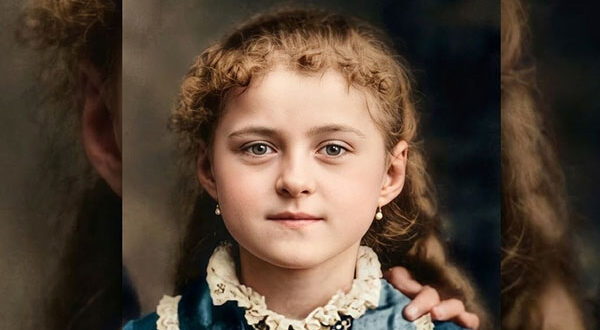
Saint Thérèse of the Child Jesus (1873–1897), also known as Thérèse of Lisieux, was a young French Carmelite who died at just 24 years old. She did not found religious orders, did not preach to crowds, did not perform spectacular miracles during her life… and yet she was proclaimed a Doctor of the Church by John Paul II.
Why?
Because she discovered—and lived—one of the deepest truths of the Gospel: God looks not so much at what you do, but at how much love you put into it.
Her autobiography, Story of a Soul, has transformed millions of lives. In it, she reveals her “Little Way,” a path to holiness accessible to everyone—even to those who feel small, weak, or incapable of great heroic deeds.
🌱 2. What does the “Little Way” consist of?
The “Little Way” is not a technique or a formula, but an attitude of the soul. It can be summarized in three fundamental pillars:
✨ a) Spiritual childhood: becoming small before God
Thérèse understood that she could not climb the mountain of holiness by her own strength. So she did something brilliant: she chose to let herself be carried by God like a small child in the arms of a loving Father.
Here the Gospel resounds powerfully:
“Unless you become like little children, you will never enter the Kingdom of Heaven” (cf. Matthew 18:3)
Spiritual childhood is not immaturity, but absolute trust. It is the humble recognition: “I cannot do it alone… but God can do it in me.”
❤️ b) Doing everything out of love
For Thérèse, there were no insignificant actions. A smile, a hidden act, patiently enduring a difficulty… everything could become an act of love.
She herself said:
“Picking up a pin out of love can save a soul.”
This perspective radically transforms daily life. The ordinary becomes extraordinary when it is filled with charity.
🔥 c) Offering everything, even weakness
Here lies one of the most theologically profound aspects of her path: we offer not only our virtues… but also our miseries.
Instead of despairing over her faults, Thérèse turned them into occasions of abandonment to God. This connects with a central Christian truth:
“When I am weak, then I am strong” (cf. 2 Corinthians 12:10)
Because grace does not act despite our weakness… but precisely through it.
📖 3. The theological foundation of the Little Way
The “Little Way” is not sentimentalism or superficial spirituality. It is deeply rooted in Catholic theology:
🩸 a) The primacy of grace
Thérèse understood that holiness is, above all, the work of God. This fully aligns with the Church’s teaching: grace precedes, accompanies, and perfects every human act.
It is not we who sanctify ourselves… it is God who sanctifies us if we allow Him to.
🕯️ b) The universal call to holiness
Centuries later, the Second Vatican Council would solemnly proclaim that all the faithful are called to holiness, not only priests or religious.
Thérèse anticipated this teaching: her path is not for a select few, but for everyone.
🌿 c) Charity as the center of everything
In her spiritual search, Thérèse discovered her ultimate vocation:
“In the heart of the Church, I will be love.”
This reflects the teaching of Saint Paul:
“If I have not love, I am nothing” (1 Corinthians 13:2)
The Little Way is nothing other than living charity radically in the concrete details of life.
🧭 4. Practical applications: how to live the Little Way today
This is where her message becomes especially relevant. In a fast-paced, competitive, and often superficial world, the Little Way is profoundly countercultural.
🏠 a) In daily life
- Offer your daily tasks (work, family, studies) with love.
- Make small, hidden sacrifices without seeking recognition.
- Care for the details: a kind word, silent patience.
😔 b) In inner struggles
- Do not despair over your falls.
- Offer them to God with humility.
- Trust more in His mercy than in your own perfection.
🤝 c) In relationships
- Love even when you are not appreciated.
- Forgive without conditions.
- Serve without expecting anything in return.
🙏 d) In spiritual life
- Pray simply, as one speaks to a Father.
- Avoid overcomplicating things: God does not need speeches, but your heart.
- Practice abandonment: “Jesus, I trust in You.”
⚠️ 5. Risks and misunderstandings
The Little Way can be misunderstood if not properly grasped:
- ❌ It is not spiritual mediocrity
- ❌ It is not passivity
- ❌ It is not “doing little”
On the contrary: it is a hidden heroism, a silent holiness that demands great interior fidelity.
🌍 6. Why is this path urgent today?
Because we live in a culture of performance, ego, and appearance. The Little Way frees us from all of that:
- It teaches us that our worth does not depend on our achievements.
- It reminds us that God loves what is small.
- It restores peace in the midst of chaos.
In a world that shouts “do more,” Thérèse gently whispers:
“Love more.”
🌹 7. Conclusion: holiness within everyone’s reach
The Little Way of Saint Thérèse of the Child Jesus is one of the most precious treasures of Catholic spirituality.
You do not need to change your life… you need to change the way you live it.
You do not need to do great things… you need to make small things great with love.
You can begin today:
- In that work that feels difficult
- In that challenging person
- In that weakness you cannot overcome
There… precisely there… your Little Way begins.
🙏 Final prayer inspired by the Little Way
“Lord, teach me to be small.
To trust without reserve,
to love without measure,
and to offer You every moment,
even if it seems insignificant in my eyes.
Make my ordinary life
an extraordinary act of love.
Amen.”