Related Articles
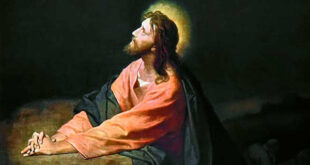

We live in an age marked by haste, superficiality, and a growing loss of the sense of the sacred. What was once perceived as mystery is now trivialized; what was once an object of adoration is reduced to a symbol or mere custom. In this context, the Eucharist, the beating heart of Christian life, runs the risk of being lived without awareness, without wonder, without living faith.
Yet, precisely in times like these, the Eucharist emerges more powerfully than ever as God’s answer to the emptiness of modern man. Rediscovering its institution, its theological depth, and its impact on daily life is not merely an intellectual task, but a spiritual urgency.
1. The night when everything changed: the institution of the Eucharist
The Eucharist was born at a profoundly significant moment: the Last Supper of Jesus Christ with His disciples, within the context of the Jewish Passover. It was not an improvised gesture, but the fulfillment of a long history of salvation.
The Synoptic Gospels transmit this moment with solemnity:
“And as they were eating, he took bread, and after blessing it broke it and gave it to them, and said, ‘Take; this is my body.’ And he took a cup, and when he had given thanks he gave it to them, and they all drank of it. And he said to them, ‘This is my blood of the covenant, which is poured out for many’” (Mk 14:22–24).
At that moment, Christ not only anticipates His sacrifice on the Cross, but makes it sacramentally present for all time. The Eucharist is not a symbolic remembrance: it is a living memorial, a real actualization of the redemptive sacrifice.
What happens at the Last Supper is therefore a silent revolution: God remains with man under the appearances of bread and wine.
2. The theological heart: real presence and sacrifice
To understand the Eucharist in its depth, we must enter into two fundamental pillars:
a) The Real Presence
The Church has always taught that in the Eucharist Christ is really, truly, and substantially present. It is not a metaphor, nor a simple evocation. It is He Himself: His Body, His Blood, His Soul, and His Divinity.
This mystery is expressed with the term “transubstantiation”: the substance of bread and wine is transformed into the substance of Christ, although the external appearances remain.
In a world that tends to reduce everything to what is visible and measurable, this truth demands faith. But it also offers an incomparable certainty: God is truly with us.
b) The perpetuated sacrifice
The Eucharist is inseparable from the sacrifice of the Cross. It is not a new sacrifice, but the same sacrifice of Christ made present in an unbloody manner.
Each Mass does not repeat the Cross, but draws us into it. It is Calvary made present, accessible here and now.
Thus, participating in the Eucharist means entering into the supreme act of God’s love. We are not spectators, but participants.
3. The crisis of the sacred: a necessary diagnosis
Today we witness a progressive loss of the sense of the sacred. This manifests itself in many ways:
- Lack of silence and recollection in churches
- Reduction of the Mass to a social or routine act
- Ignorance of the Eucharistic mystery
- Loss of the sense of adoration
In many cases, the Eucharist is received without preparation, without prior confession, without awareness of what is truly being received.
This crisis is not only liturgical, but profoundly spiritual. When the sense of the sacred is lost, the sense of God is also lost… and consequently, the sense of man himself.
4. Rediscovering wonder: the Eucharist as an answer to emptiness
Faced with this situation, the response is not discouragement, but rediscovery.
The Eucharist is the remedy for the existential emptiness of modern man because it:
- Responds to the hunger for the infinite: man seeks fullness, and Christ gives Himself as food
- Heals loneliness: we are not alone, God dwells among us
- Gives meaning to suffering: it unites us to the redemptive sacrifice
- Transforms daily life: the ordinary becomes a place of encounter with God
To return to the Eucharist is to return to the center.
5. Practical applications: living eucharistically in today’s world
Theology cannot remain at the level of concepts. It must be translated into life. How can we live the Eucharist in our daily lives?
a) Preparing interiorly
Before receiving Communion:
- Examine your conscience
- Go to the sacrament of reconciliation if necessary
- Arrive early to Mass
The Eucharist is not an automatic act, but a personal encounter.
b) Recovering silence and adoration
Silence is not emptiness; it is presence.
Spending time in Eucharistic adoration transforms the heart. Before the Tabernacle, the soul learns to listen, to love, to surrender.
c) Living what is received
Receiving Christ implies allowing oneself to be transformed by Him.
- Be more charitable
- Forgive
- Serve others
- Live with coherence
The Eucharist does not end at Mass: its effect begins there in life.
d) Educating in the mystery
In a secularized world, it is essential to transmit the value of the Eucharist:
- To children
- To young people
- To those who have drifted away
Not through imposition, but through witness.
6. An urgent call: returning to what is essential
The loss of the sense of the sacred is not irreversible. It is a call to awaken.
The Eucharist remains what it has always been: the greatest gift of God to man. It has not lost its power; it is we who need to rediscover it.
As Christ Himself said:
“I am the living bread that came down from heaven; if anyone eats of this bread, he will live forever” (Jn 6:51).
Conclusion: the Mystery that sustains us
Amid noise, haste, and confusion, the Eucharist remains as a silent beacon.
There is Christ, waiting.
Waiting to be recognized, loved, and received with faith.
To rediscover the Eucharist is not just another option in Christian life: it is a return to the source, to the origin, to the ultimate meaning of everything.
In times of loss of the sacred, the Eucharist is not only necessary… it is absolutely vital.