Related Articles



When today we hear the word Inquisition, the collective imagination runs wild: damp dungeons, endless torture, religious fanaticism, and a Church thirsty for blood. It is an image repeated so often that almost no one stops to ask whether it is historically honest.
But history —as almost always— is more complex, more human… and also more uncomfortable for our prejudices.
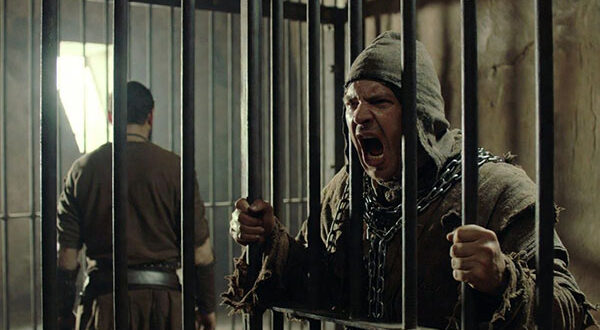
One of the most surprising, and at the same time least known, facts is this: many common prisoners deliberately committed blasphemy so they would be transferred to inquisitorial prisons.
Yes, you read that correctly.
Why would anyone want to end up in the hands of the Holy Office?
The answer forces us to rethink not only history, but also our modern way of understanding justice, mercy, and human dignity.
1. A modern myth versus a medieval reality
The so-called Black Legend of the Inquisition was built, to a large extent, centuries after its real operation. It was fueled by political interests, religious conflicts, and anti-Catholic propaganda, especially during the 18th and 19th centuries.
This does not mean denying abuses —there were some, as in every human institution— but it does mean rejecting the caricature.
The Inquisition was not born as an instrument of terror, but as a juridical-religious court in a context where:
- The modern separation between civil crime and moral offense did not exist
- Faith was considered a common good, not merely a private matter
- Social order was deeply linked to religious truth
Within that framework, the Inquisition operated —at least in theory— with procedures more protective of the accused than many civil courts of its time.
2. Civil prisons: the real daily hell
To understand why a prisoner would blaspheme in order to be judged by the Inquisition, we must first look at what medieval civil prisons were like.
Typical characteristics:
- Extreme overcrowding
- Lack of hygiene and medical care
- Constant abuse by jailers
- Scarce food (if you had no family bringing you food, you went hungry)
- Indefinite pretrial imprisonment, often without a clear trial
Prison was not a punishment in itself, but a place of waiting… often worse than the sentence.
In that context, ecclesiastical prisons were surprisingly different.
3. What were the prisons of the Inquisition like?
Here comes the great historical paradox.
Inquisitorial prisons usually offered:
- Individual cells or far less overcrowding
- Regular meals
- Basic medical attention
- A ban on unauthorized physical abuse
- Access to confession and spiritual assistance
- Written records of trials and sentences
Moreover, the primary goal was not punishment, but correction and reconciliation.
The repentant heretic was not an enemy to be destroyed, but a child to be recovered.
“I take no pleasure in the death of the wicked, but rather that they turn from their ways and live.”
(Ezekiel 33:11)
4. Blasphemy as a “survival strategy”
Here we encounter one of the most revealing facts.
Some common prisoners, condemned for theft, violence, or civil crimes, publicly blasphemed or declared themselves suspected of heresy so that their case would be transferred to the inquisitorial court.
Why?
Because they knew that:
- They would receive a more orderly legal process
- They would be treated with greater human dignity
- They could even save their lives, since inquisitorial penalties were often spiritual or penitential
This fact completely dismantles the image of the Inquisition as the worst possible fate.
No one commits blasphemy to escape hell… unless hell is somewhere else.
5. The theological logic behind the Holy Office
From traditional Catholic theology, the Inquisition operated within a logic that today is almost incomprehensible:
the soul is more important than the body.
This did not justify everything, but it did establish priorities.
The sin of heresy was not seen merely as an intellectual error, but as:
- A wound to the Body of Christ
- A scandal to the faithful
- A spiritual danger to the community
For this reason, the goal was conversion, not elimination.
Saint Paul expresses this clearly:
“If someone is caught in a sin, you who live by the Spirit should restore that person gently. But watch yourselves, or you also may be tempted.”
(Galatians 6:1)
6. Mercy, penance, and justice: a forgotten balance
Inquisitorial penalties often consisted of:
- Fasting
- Pilgrimages
- Prayers
- Public acts of penance
- Temporary wearing of penitential garments
- Confinement accompanied by spiritual guidance
From our modern mentality this may seem harsh, but compared with:
- Mutilations
- Summary executions
- Collective punishments
…it was a surprisingly moderate system for its time.
It was not perfect.
But neither was it the monster we have been told about.
7. What does all this tell us today?
This is where the subject stops being merely historical and becomes deeply relevant today.
1. About justice
Today we punish a great deal… but we heal very little.
We lock up bodies, but we do not accompany souls.
2. About human dignity
The Church, even in harsh contexts, maintained the idea that no one ceases to be a person, not even the guilty.
3. About truth
We live in times when dissent can cost you “social exile.” Cancellation, media lynching, quick labels.
Are we really that different, deep down?
8. Spiritual guidance: learning from this uncomfortable history
This story invites us to several very concrete spiritual attitudes:
🔹 Historical humility
Before judging the past, we should ask ourselves whether our present is as enlightened as we believe.
🔹 Real mercy
Not the kind that excuses everything, but the kind that seeks to redeem the sinner without denying the truth.
🔹 Personal conversion
The feigned blasphemy of those prisoners reminds us that even from human misery… God can open paths of grace.
“Where sin increased, grace increased all the more.”
(Romans 5:20)
9. A final reflection
The real question is not whether the Inquisition was perfect (it was not).
The question is: are we today more just, more merciful, and more humane?
Perhaps that is why this story is so uncomfortable.
Because it breaks the easy narrative and forces us to look in the mirror.
And because, in the end, the Church —with all her shadows— continues to remind us of something profoundly Christian:
👉 no human being is beyond redemption
👉 no truth is defended through hatred
👉 and no justice is authentic without charity