

Related Articles


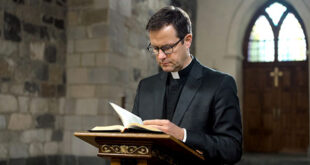
A historical, theological, and pastoral lesson for our time
1. Introduction: when faith encounters conflicting interpretations
Throughout the history of the Church, there have been moments when the defense of the faith has been intertwined with cultural, religious, and even political tensions. One of these episodes is the so-called Disputation of Paris of the year 1240, also known as the Trial of the Talmud.
This event, though distant in time, continues to raise deeply relevant questions today:
- How can we discern the truth amid differing interpretations?
- How can we defend the faith without losing charity?
- How can we understand the relationship between Christianity and Judaism from a perspective faithful to the Gospel?
This article seeks not only to explain what happened, but to illuminate it through a theological and pastoral lens that helps today’s believer grow in truth and love.
2. Historical context: a deeply Christian Europe
In the 13th century, Europe was shaped by a profoundly Christian worldview. Faith was not merely a private matter, but the foundation of the social, cultural, and political order. In this context, any teaching considered contrary to the Christian faith was seen as a threat not only spiritually, but also socially.
The Talmud—a compilation of rabbinic commentaries on Jewish law—began to attract controversy in Christian circles, especially when some converts from Judaism claimed that it contained passages offensive to Jesus Christ and the Christian faith.
One of these converts, Nicholas Donin, presented formal accusations before Pope Gregory IX, which led to the convening of a public disputation in Paris.
3. The Disputation of Paris: development of the trial
The disputation took place before ecclesiastical and academic authorities, including theologians from the University of Paris. On one side, Nicholas Donin presented a series of accusations against the Talmud. On the other, Jewish rabbis, such as Yechiel of Paris, defended their tradition.
The trial revolved around several questions:
- Whether the Talmud contained teachings contrary to Sacred Scripture.
- Whether it included expressions considered offensive toward Jesus Christ.
- Whether its use should be permitted within a Christian society.
The outcome was the condemnation of the Talmud, which led to the public burning of numerous manuscripts in 1242.
4. On the accusations: a necessary theological precision
This is where we must be especially prudent and rigorous. Historically, the accusations included interpretations of certain passages of the Talmud which, according to the accusers, contained:
- Critical or negative references toward figures identified with Jesus.
- Interpretations of the law that differed radically from Christianity.
- Comments considered irreverent toward Christian beliefs.
However, it is essential to understand several points from a serious and contemporary theological perspective:
- Interpretive context:
The Talmud is a complex text, composed of debates, diverse opinions, and very specific historical contexts. Not all passages carry a literal or uniform meaning. - Problems of translation and reading:
Many of the medieval accusations were based on partial translations or polemical interpretations. - Distinction between error and ill intent:
From a Catholic theological perspective, it is crucial to distinguish between erroneous doctrines and a conscious will to blaspheme.
Therefore, it is neither appropriate nor faithful to the truth to repeat accusations in a simplistic or unqualified manner. Today, the Church calls us to a deeper and more respectful discernment.
5. Theological key: the fullness of revelation in Christ
To understand the deeper background of this disputation, we must return to the center of the Christian faith: Jesus Christ as the fullness of revelation.
The Gospel reminds us:
“I am the way, and the truth, and the life. No one comes to the Father except through me.” (John 14:6)
From this certainty, the Church has always affirmed that all truth finds its fullness in Christ. This implies that any religious system or interpretation that does not recognize Christ as the Son of God remains, from the Christian perspective, incomplete.
Yet this affirmation must never become a cause for pride or contempt, but rather a call to humility and witness.
6. A pastoral reading for today: truth without charity is not Christian
If there is something we must learn from episodes such as the Disputation of Paris, it is that the defense of truth cannot be separated from charity.
Saint Paul expresses this clearly:
“If I have not love, I am nothing.” (1 Corinthians 13:2)
In today’s world, where multiple religions and worldviews coexist, the Christian is called to:
- Know his faith deeply
Not from a spirit of controversy, but from a love for truth. - Avoid superficial judgment
Especially regarding traditions we do not fully understand. - Bear witness through a coherent life
The best defense of Christianity is not argument, but holiness. - Engage in dialogue without renouncing truth
Authentic dialogue does not dilute faith; it purifies and strengthens it.
7. Spiritual lessons: discernment, humility, and fidelity
This historical episode leaves us with several profound spiritual teachings:
1. The importance of discernment
Not everything that appears contrary to the faith truly is. It is necessary to study, understand, and pray before judging.
2. The danger of zeal without charity
Defending truth without love can lead to hardness of heart.
3. The centrality of Christ
Amid debates, controversies, and tensions, the Christian must not lose sight of what is essential: a personal relationship with Jesus Christ.
8. Practical applications for today’s believer
How can we apply these teachings in our daily lives?
- Solid formation: Dedicate time to knowing the Bible, the Catechism, and the tradition of the Church.
- Prayer for unity: Pray for all those who do not know Christ.
- Charity in speech: Avoid speaking with contempt or superiority about other religions.
- Silent witness: Live in such a way that others wonder about the source of your peace.
9. Conclusion: between history and eternity
The Disputation of Paris is not merely an episode of the past. It is a mirror in which we can see ourselves today.
It reminds us that truth is a precious gift, but it must be safeguarded with humility. That faith is firm, but the heart must remain gentle. That Christ is the center, yet the path toward Him always passes through love.
In a world marked by division, the Christian is called to be a bridge, a light, and a witness.
For in the end, we will not be judged by how much we argued… but by how much we loved.


