Related Articles
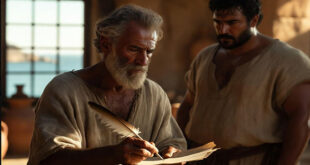
We live in an age fascinated by power: political power, economic power, media power, technological power. And yet, we rarely pause to reflect on an essential truth: power without God becomes destruction, but power submitted to God becomes an instrument of salvation.
The so-called Books of the Kings—which in the Hebrew tradition form a single historical work and in the Christian Bible are known as First and Second Kings—are a spiritual X-ray of human power. In them we do not merely find the political history of Israel and Judah; we discover the eternal drama of the human heart before God.
This article seeks to help you understand them not only as ancient history, but as a mirror of your own life.
1. What Are the Books of the Kings?
The Books of the Kings continue the narrative begun in the books of Samuel. They recount the history of the people of Israel from the reign of Solomon to the fall of Jerusalem and the exile in Babylon (6th century B.C.).
Among the central figures we encounter are:
- Solomon
- Elijah
- Elisha
- Ahab
- Jezebel
But beyond the characters, the true protagonist is God Himself: the Lord who guides history and judges the hearts of rulers.
2. The Splendor and Fall of Solomon: The Danger of Lukewarmness
The account begins with the reign of Solomon, son of David. Solomon is presented as the wise king par excellence. To him is attributed the construction of the Temple in Jerusalem, the spiritual center of the people of Israel.
His famous prayer is deeply moving:
“Give your servant therefore an understanding heart to govern your people, that I may discern between good and evil” (1 Kings 3:9).
Here we find a fundamental theological lesson: true wisdom is not human intelligence, but docility to God.
And yet the same Solomon who began in humility ended in deviation:
“When Solomon was old his wives turned away his heart after other gods” (1 Kings 11:4).
Spiritual lukewarmness, compromise with the world, religious relativism… these are not modern problems. They were already present then.
Practical application:
How many times do we begin a vocation, a marriage, an apostolate with fervor… and little by little grow comfortable? Solomon teaches us that the greatest danger is not sudden error, but the slow erosion of the heart.
3. The Division of the Kingdom: When Sin Fractures Unity
After Solomon’s death, the kingdom is divided:
- The Northern Kingdom (Israel)
- The Southern Kingdom (Judah)
This political fracture is a direct consequence of spiritual sin.
Theologically, this reveals a profound truth:
sin does not affect only the individual; it disintegrates communities, families, and nations.
We see this clearly today: ideological divisions, polarization, cultural clashes… The root is always the same: when God ceases to be the center, man takes His place—and everything fragments.
4. Elijah: The Voice of God in Times of Apostasy
One of the most powerful moments in the Books of the Kings is the confrontation between the prophet Elijah and the prophets of Baal on Mount Carmel.
Elijah proclaims:
“How long will you go limping between two different opinions? If the Lord is God, follow him; but if Baal, then follow him” (1 Kings 18:21).
This question pierces the centuries.
One cannot live with a divided heart. One cannot serve God and the idol of success, money, pleasure, or prestige.
Pastoral perspective:
Elijah represents the prophetic mission of the Church in today’s world. The Church is not called to please power, but to remind it of its limits. The Christian, in his workplace or family, is also called to be a voice of conscience.
5. Ahab and Jezebel: When Power Becomes Idolatry
The reign of Ahab and Jezebel is among the darkest.
Jezebel officially introduces the worship of Baal. The prophets are persecuted. Justice is manipulated. The case of Naboth’s vineyard (1 Kings 21) is paradigmatic: abuse of power, judicial corruption, concealed murder.
Does it not sound familiar?
When power loses the fear of God:
- Law becomes an ideological tool.
- Truth is relativized.
- Human life loses its value.
The Books of the Kings clearly teach that no human power escapes the judgment of God.
6. Elisha: Mercy in the Midst of Chaos
After Elijah arises Elisha, a prophet of miracles and compassion.
He multiplies oil for a widow, raises the Shunammite’s son, and heals Naaman the Syrian.
In the midst of political corruption, God continues to act quietly through mercy.
Theologically, this is fundamental:
history is not dominated by evil; it is sustained by the silent fidelity of God.
In times of ecclesial or social crisis, many despair. But the Books of the Kings remind us that God always preserves a “faithful remnant.”
7. The Fall of Jerusalem: Judgment and Hope
The book culminates with the destruction of Jerusalem and the exile in Babylon.
At first glance, it appears to be a total defeat. Theologically, it is not.
Exile is purification. It is divine pedagogy. It is a call to conversion.
God allows the fall, but He does not abandon His people.
Here we find one of the deepest spiritual keys of these books:
God’s punishment is not revenge; it is medicine.
How often do our personal crises—a sickness, a failure, a loss—become the path of return to God?
8. Profound Theological Keys
1. God Is Lord of History
Empires do not rule. Ideologies do not rule. God rules.
2. Fidelity Brings Blessing; Idolatry Brings Ruin
This is not superstition; it is a spiritual law.
3. Power Is Service
When it ceases to be service, it becomes tyranny.
4. God Always Raises Up Prophets
Even if the world refuses to listen.
9. Practical Applications for Your Life
✔ Examine Your “Idols”
What occupies the place of God in your heart?
✔ Pray for Rulers
Saint Paul will ask for this centuries later. Politics is not foreign to faith.
✔ Be a Prophet in Your Environment
Not through aggression, but through coherence.
✔ Remain Faithful in the Small Things
Elisha did not begin with great gestures, but by serving Elijah.
✔ Interpret Your Crises in the Light of Providence
Nothing is outside God’s plan.
10. An Urgent Message for Our Time
The Books of the Kings are not an ancient chronicle without relevance. They are a mirror of the 21st century.
We live amid:
- Technological idolatry
- Institutional corruption
- Moral relativism
- Crisis of authority
And yet the solution is not new:
to place God back at the center.
As Elijah asked:
“How long will you go limping between two different opinions?”
Conclusion: The Story Continues… in You
The Books of the Kings end with a spark of hope: King Jehoiachin is released in Babylon. The Davidic dynasty is not extinguished. The promise remains alive.
Centuries later, that promise will be fulfilled in Christ, the definitive King.
But in the meantime, the history of the Kings is written each day in the heart of every believer.
You too govern a small kingdom: your family, your work, your conscience.
The question is the same that runs through these books:
Will you reign according to the heart of God, or according to the idols of your time?
May the Books of the Kings be not only biblical reading, but an examination of conscience, a call to conversion, and a school of fidelity.
For when man forgets God, history darkens.
But when man returns to God, true restoration begins.