Related Articles


Science, faith, and contemplation of the cosmos as a path to God
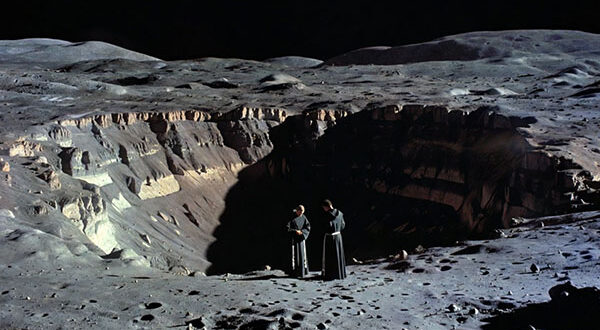
When we look at the Moon on a clear night, we usually see it as a distant, mysterious, and beautiful celestial body. However, few people know that several of its craters bear the names of Catholic priests, especially members of the Society of Jesus. This is neither a coincidence nor a symbolic gesture without foundation: it is recognition of the enormous scientific contribution that the Jesuits made in the field of astronomy.
Behind this reality lies a fascinating story in which faith and reason do not oppose each other, but rather illuminate one another. This topic not only reveals a little-known dimension of the Church but also offers a profound spiritual lesson for contemporary humanity: contemplating the universe can bring us closer to God.
In this article, we will explore the history of Jesuit astronomers, the theological meaning of their work, and how this vision can inspire our daily lives.
The Church Looking to the Heavens: Science as a Christian Vocation
From its origins, Christianity has seen creation as a path toward knowing God. The Bible itself invites us to contemplate the universe:
“The heavens declare the glory of God; the firmament proclaims the work of his hands.”
(Psalm 19:1)
For the Catholic tradition, studying nature has never been a threat to faith, but rather a form of praise. The universe does not compete with God: it reveals Him.
Within this context, the Society of Jesus—founded in 1540 by Ignatius of Loyola—embraced science as part of its evangelizing and educational mission. The Jesuits understood that understanding the cosmos was also a way of understanding the Creator more deeply.
For this reason, they established observatories, universities, and research centers throughout the world. Among their many contributions, astronomy stands out in a special way.
Why Are There Lunar Craters Named After Jesuits?
Many lunar craters were named in honor of scientists who contributed to humanity’s knowledge of the cosmos. Among them are several Jesuit priests who revolutionized modern astronomy.
Some Jesuits with Craters on the Moon
🌕 Christoph Clavius (1538–1612)
One of the most influential mathematicians of the Renaissance. He played a key role in the reform of the Gregorian calendar (the calendar we use today). His astronomical work was so decisive that one of the largest craters on the Moon bears his name: Clavius.
He also defended scientific precision as a service to the Church, showing that faith requires intellectual rigor.
🌕 Giovanni Battista Riccioli (1598–1671)
Author of one of the most important lunar maps in history. Interestingly, he himself proposed the system for naming lunar features that is still in use today.
The crater Riccioli honors his contribution to lunar cartography and the study of the motion of celestial bodies.
🌕 Angelo Secchi (1818–1878)
A pioneer of modern astrophysics and founder of the spectral classification of stars. His research on the composition of celestial bodies transformed astronomy into a modern science.
The crater Secchi commemorates his universal scientific legacy.
🌕 Christoph Scheiner (1573–1650)
He studied sunspots and contributed to the development of optical instruments. His observations helped demonstrate that the heavens were not static but dynamic.
The crater Scheiner bears his name.
🌕 Francesco Maria Grimaldi (1618–1663)
He discovered the diffraction of light and was one of the first to seriously study the lunar surface.
The crater Grimaldi is one of the most visible from Earth.
More Than Science: The Spiritual Meaning of Studying the Universe
The deepest question is not why Jesuits studied the stars, but why they did so as priests.
1. The Cosmos as Revelation of God
Catholic theology teaches that God manifests Himself in creation. The beauty, order, and intelligibility of the universe point toward its Author.
For the Jesuits, studying the heavens was a form of intellectual prayer. Astronomy was contemplation.
2. The Unity of Faith and Reason
The Church teaches that faith and reason come from the same God and cannot contradict one another. The Thomistic tradition expresses this clearly: truth is one.
The work of the Jesuits shows that faith does not fear science, but rather encourages it.
Today, in a culture that often presents religion and science as enemies, this witness is profoundly relevant.
3. Humility Before Divine Greatness
The study of the universe reveals the smallness of the human being and the immensity of creation. This experience leads to humility and adoration.
The cosmos reminds us that we are not the center of the universe, yet we are loved by its Creator.
The Church’s Astronomical Tradition Today
This vocation continues in institutions such as the Vatican Observatory, one of the oldest astronomical research centers in the world.
Far from being a relic of the past, the Church continues to investigate the origin of the universe, stellar evolution, and modern cosmology, showing that the search for truth is part of her mission.
What Does This Teach Us for Our Daily Lives?
This topic is not merely scientific history. It has profound spiritual applications.
⭐ 1. Recover the Capacity for Wonder
We live in a culture saturated with information but poor in contemplation. Looking at the sky teaches us to pause and recognize God’s presence.
Practical application: dedicate a few minutes to silently contemplate nature.
⭐ 2. Integrate Faith and Knowledge
Believers should not fear study or science. Intellectual pursuit is part of spiritual growth.
Practical application: seek formation, read, learn, and study the world as God’s creation.
⭐ 3. Live with a Sense of Mission
Jesuits saw their research as service to God and humanity. Every vocation—scientific, family, professional—can be lived as a path to holiness.
Practical application: offer daily work as an act of love for God.
⭐ 4. Cultivate Humility
The universe reminds us that we are small but called to eternity.
Practical application: live with gratitude and trust in divine providence.
A Lesson for the Contemporary World
Today humanity seeks answers in technology, science, and progress, yet often loses the transcendent meaning of existence. The story of Jesuit astronomers offers a luminous synthesis:
- Science without God can become cold.
- Faith without reason can become superficial.
- Together, they lead to the fullness of truth.
Lunar craters named after priests are a powerful symbol: the Christian faith not only looks to the heavens to pray, but also to understand.
Conclusion: Looking at the Moon as a Path to God
The next time you contemplate the Moon, remember that its surface bears the names of men who united prayer and science, reason and contemplation, intelligence and faith.
Their legacy invites us to live with eyes open to mystery, to seek truth with humility, and to discover God in the immensity of the universe.
For, as Scripture reminds us:
“When I consider your heavens, the work of your fingers, the moon and the stars which you have set in place… what is mankind that you are mindful of them?”
(Psalm 8:3–4)
In this question lies the heart of Christian spirituality: wonder before an infinite God who reveals Himself both in human smallness and in the grandeur of the cosmos.