Related Articles

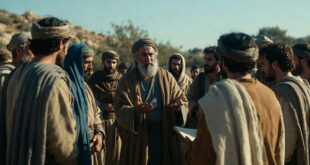
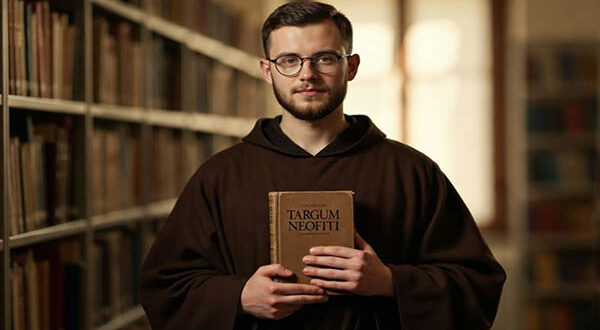
There are hidden treasures in the Tradition of the Church and in ancient Judaism which, when discovered, illuminate our faith in a way that is surprisingly current. One of these treasures is Targum Neofiti, a nearly secret, millennia-old text that allows us to contemplate the Word of God with a depth that is both new and ancient. It is as if a forgotten window opens in our soul, letting us see Scripture through the eyes of those who first lived it.
This article wants to be a doorway: an invitation to know, love, and be inspired by Targum Neofiti, one of the most striking testimonies of how the People of God understood, proclaimed, and celebrated the Word.
1. What Is Targum Neofiti? The Veiled Gospel in Aramaic
Targum Neofiti is an Aramaic translation of the Pentateuch (the first five books of the Bible). It is the most extensive, complete, and theologically rich of the known targums.
- It was discovered in 1956 in the Vatican Library, inside the Neofiti family collection (hence its name).
- Although the manuscript copy is medieval, its content is much older, probably dating between the 1st and 3rd centuries, and it even preserves traditions older than Christianity.
- It was used in the synagogue for the popular proclamation of Scripture, since Aramaic was the language of the people, while Hebrew remained the sacred, liturgical language.
This means that Targum Neofiti allows us to hear how the Jews contemporary with Jesus understood the Bible.
For Christians, this makes it invaluable: it reveals the cultural, spiritual, and theological background in which the Gospel was born.
In a certain way, it is an echo of the Word as it would have been heard by the Holy Family in Nazareth.
2. The “Memra”: A Mystery that Foreshadows the Incarnate Word
The most striking thing about Targum Neofiti is not its antiquity, but its theology, which is surprisingly close to Christianity.
To avoid pronouncing the Divine Name, the targums used the term Memra (“Word”).
But in Neofiti, the Memra is not just a figure of speech:
it acts, creates, saves, guides, reveals itself, and even dwells among the people.
It is impossible for a Christian to read these passages without thinking of the Prologue of Saint John:
“In the beginning was the Word…
and the Word became flesh and dwelt among us” (Jn 1:1,14)
Indeed, Neofiti contains statements like:
- “The Word of the Lord created man.”
- “The Word of the Lord went before them.”
- “The Word of the Lord spoke to Moses from the bush.”
A beautiful intuition emerges here:
the Jews already understood that God related to His people through a living, active, personal Word.
For Christians, that Word is Jesus Christ.
This makes Targum Neofiti a powerful lens showing the continuity between the Old and New Testaments.
There is no rupture—there is fulfilment.
3. The Targum and the Church: Why Does It Matter Today?
In an age of confusion, fragmented spirituality, and widespread biblical ignorance, Targum Neofiti gives us three essential gifts:
1. Recovering a living reading of Sacred Scripture
The targums are not cold translations; they are oral interpretations, catechetical, intended for the people.
They remind us that the Bible is not read only with the mind, but also with the heart, with life, and with the community.
2. Discovering the theological background of Christianity
The Memra, the divine presence, the messianic interpretation…
All of this helps us understand how Jesus and the Apostles announced the Kingdom.
Knowing how a first-century Jew heard Scripture allows us to understand why Christ’s message had such power.
3. Recognising God’s faithfulness throughout history
The Targum shows that God does not change:
His Word continues walking with us, just as it walked with Israel.
In a world with a crisis of identity, this certainty sustains us.
4. A Journey Through the Five Books: Theological Pearls of Neofiti
Genesis: Creation in a Christological Key
In Neofiti, the Memra creates, shapes, and blesses.
When we read:
“Let us make man in our image” (Gen 1:26)
the Targum comments that the Word takes part in that act.
This deeply resonates with Christian tradition:
all things were created through Christ and for Christ (Col 1:16).
Exodus: The Word That Liberates
When God leads Israel out of Egypt, Neofiti places the Memra in the foreground:
it passes through the land, liberates, protects, accompanies, and judges.
It is almost impossible not to see here a foreshadowing of the Paschal Mystery.
Leviticus and Numbers: Holiness Made Close
The Targum emphasises that the Word of God dwells among the people, purifying and sanctifying them.
It is a perfect catechesis for understanding the sacraments, especially the Eucharist, where God still dwells in our midst.
Deuteronomy: The Word That Teaches and Transforms
Neofiti turns Moses’ teaching into a true spiritual pedagogy:
the Word forms, educates, enlightens, and prepares the heart to enter the promised land.
5. What Targum Neofiti Teaches Us for Today’s Spiritual Life
1. God continues to speak in a language we understand
Targums were born so that ordinary people could understand Scripture.
God still does the same: He speaks in our language, within our circumstances.
2. Christ is the eternal Word present throughout history
Neofiti helps us see the Bible as a unified whole in which Christ is present “before Abraham” (cf. Jn 8:58).
3. Faith needs community
The targums were born in the synagogue liturgy.
They remind us that faith is not only individual: it needs Church, worship, encounter, and shared Word.
6. Practical Guide: How to Use Targum Neofiti to Grow in Faith
This guide aims to help any Christian—regardless of biblical knowledge—integrate the richness of Neofiti into their spiritual life.
A. From a Theological Perspective
- Read the passages where the Memra appears
- You will see how God acts through His Word.
- Connect this with Christ as the eternal Logos.
- Seek parallels in the New Testament
- Especially in John, Hebrews, and Paul.
- Ask yourself: How would a first-century Jew have understood this passage?
- Meditate on the continuity between the Old and New Covenants
- The Targum shows that Christ does not break anything: He brings everything to fulfilment.
B. From a Spiritual Perspective
- Use the Targum as a commentary for your lectio divina
- Read a passage from the Pentateuch.
- Then read how Neofiti explains it.
- Ask yourself:
What is God telling me today through this living Word?
- Pray with the idea of the Memra
- Silently say: “Lord Jesus, eternal Word, walk before me today.”
- Find Christ in all Scripture
- You will see how the Bible becomes a burning torch.
C. From a Pastoral Perspective
- Catechesis:
Use the Targum to explain the link between Jews and Christians, showing continuity and respect. - Liturgy:
Help the faithful understand that the Word proclaimed at Mass has the same living power it had in the synagogue. - Spiritual direction:
Teach people to discover that God also speaks in the everyday, just as He spoke in the simple Aramaic of Neofiti.
7. Conclusion: An Ancient Voice, a Forever-New Fire
Targum Neofiti is not merely an archaeological document.
It is a witness, a flame, an invitation.
It reminds us that the Word of God is not a dead text but Someone living who walks with us.
In times of confusion, relativism, and spiritual superficiality, this ancient Aramaic targum offers us a compass:
- God speaks.
- God acts.
- God dwells.
- God saves.
- And His Word—Jesus Christ—is still among us.
“Your Word is a lamp for my feet and a light for my path” (Ps 119:105)
May the echo of Targum Neofiti awaken in us a renewed love for Scripture, a heart docile to the Word, and a faith capable of recognising, in every page of the Bible, the living presence of the Lord.