Related Articles
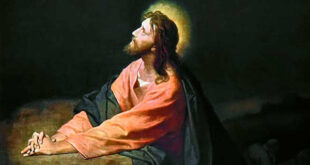
In an age obsessed with success, visibility, and recognition, the life of Saint Thérèse of Lisieux resounds as a radical and profoundly timely challenge. Without preaching to crowds, without founding congregations, without performing spectacular miracles during her lifetime, this young French Carmelite was proclaimed a Doctor of the Church and remains today one of the most influential saints in Catholicism.
How did a cloistered nun, who died at 24 in a small Norman convent, become Patroness of the Missions and a universal teacher of spirituality?
The answer lies in her “Little Way”: a path of trust, abandonment, and total love for God in the ordinary. A deeply theological and pastoral message that, more than ever, must be rediscovered.
I. An In-Depth Biography: A Brief Life, An Immense Light
1. A Childhood Marked by Grace and Suffering
Saint Thérèse was born on January 2, 1873, in Alençon, France, as Marie-Françoise-Thérèse Martin. Her parents, Louis Martin and Zélie Martin, now canonized, formed a deeply Christian home where faith was not a cultural ornament but the living center of family life.
Thérèse was the youngest of nine children; four died in infancy. From an early age she grew up in an atmosphere of tenderness, prayer, and sacrifice. Yet at the age of four she experienced a decisive wound: the death of her mother. This loss deeply marked her emotional sensitivity.
After moving with her family to Lisieux, Thérèse was surrounded by the loving care of her older sisters, several of whom would embrace religious life.
2. A Precocious and Audacious Vocation
From a very young age, Thérèse felt called to the Carmelite life. At 15—below the required age—she asked to enter the Carmelite convent of Lisieux. When her request was initially denied, she took an extraordinary step: during a pilgrimage to Rome, she personally asked Pope Leo XIII for permission to enter the convent.
This gesture was not rebellion, but the expression of a fervent and mature vocation. She was finally admitted to the Carmel in 1888.
There she lived nine years of hidden life, marked by prayer, fraternal community, small daily humiliations, spiritual dryness, and an intense interior life.
3. The Night of Faith and Total Self-Offering
In 1896, Thérèse began to experience a profound spiritual trial: a night of faith that plunged her into interior darkness. She felt the temptation of atheism, the painful experience of God’s apparent absence. Paradoxically, this trial united her deeply with those who doubt.
Instead of being overwhelmed by anguish, she offered her suffering for sinners and for non-believers. She understood that her mission was not to accomplish great deeds, but to love intensely in small things.
She died on September 30, 1897, consumed by tuberculosis, pronouncing her final words: “My God, I love You!”
II. The Theological Heart of Her Message: The “Little Way”
Thérèse’s spirituality is not sentimentalism; it is lived theology.
Her doctrine rests on three essential pillars:
1. Spiritual Childhood
Inspired by the Gospel, especially Christ’s words:
“Unless you turn and become like little children, you will never enter the Kingdom of Heaven” (Mt 18:3).
Thérèse understood that holiness does not consist in visible heroic exploits, but in absolute trust in divine mercy. A child does not claim merits; he abandons himself.
Theologically, this expresses a profound understanding of grace. Salvation is not the fruit of self-sufficient human effort, but of God’s loving initiative.
2. Radical Trust in Mercy
In her autobiographical work, Story of a Soul, Thérèse wrote:
“It is confidence and nothing but confidence that must lead us to Love.”
This affirmation possesses extraordinary doctrinal depth. In a certain sense, Thérèse anticipates the Church’s later emphasis on Divine Mercy. Her theology is not voluntaristic; it is profoundly Christ-centered.
She understood that holiness consists in allowing oneself to be loved by God and responding with love.
3. The Sanctification of the Ordinary
In a world that idolizes the extraordinary, Thérèse discovered that every small act—smiling when it is difficult, listening patiently, fulfilling one’s daily duties—can become an offering.
This is deeply rooted in the theology of the Mystical Body of Christ: every act performed in a state of grace has redemptive value.
Saint Paul expresses it this way:
“Whatever you do, do everything for the glory of God” (1 Cor 10:31).
III. Doctor of the Church: The Doctrinal Depth of a Young Carmelite
In 1997, Pope Pope John Paul II proclaimed her a Doctor of the Church. Why?
Because her doctrine sheds light on central questions:
- The relationship between grace and freedom.
- The theology of suffering.
- The universality of the call to holiness.
- Filial trust as a theological path.
Thérèse did not write academic treatises, yet her experience constitutes a true existential theology. In her, contemplation and mission are united.
IV. The Relevance of Her Message Today: What Does She Say to Us Now?
We live in times marked by:
- Constant anxiety.
- Social comparison.
- A compulsive search for recognition.
- A crisis of faith and secularization.
Thérèse responds with a revolutionary proposal:
1. In the Face of Perfectionism: Abandonment
You do not need to be perfect for God to love you. God does not love an improved version of you; He loves you now.
2. In the Face of Despair: Trust
In a culture that doubts everything, Thérèse teaches us to trust even when we feel nothing.
3. In the Face of Individualism: Offering Oneself for Others
Her life reminds us that no one lives for himself alone. Suffering offered with love possesses immense missionary value.
V. Practical Applications for Daily Life
Thérèse’s spirituality is not merely contemplative; it is deeply pastoral.
1. Living the “Little Way” at Home
- Offer household tasks with intention.
- Smile when it is difficult.
- Avoid unnecessary criticism.
2. Turning Work into an Altar
Each workday can become an offering if lived with right intention.
3. Living Trust in Prayer
Do not measure prayer by emotions, but by fidelity.
4. Accepting One’s Own Limitations
Thérèse did not seek to be great. She discovered that her littleness was the space where God could act.
VI. A Profoundly Missionary Spirituality
Although she never left her convent, she was declared Patroness of the Missions. This reveals a profound theological truth: mission is born of love, not geography.
Apostolic fruitfulness does not depend on external activity, but on union with Christ.
VII. Conclusion: A Holiness Within Reach
Saint Thérèse of Lisieux shows us that holiness is not a privilege reserved for spiritual heroes, but a universal call.
In times of noise, she proposes silence.
In times of anxiety, trust.
In times of pride, littleness.
Her message is clear: it is not about doing extraordinary things, but about doing ordinary things extraordinarily well.
If today you feel small, limited, or invisible, remember that in the Kingdom of God, littleness is the soil where grace flourishes.
And as she said with prophetic simplicity:
“I will spend my heaven doing good on earth.”
May her “Little Way” become yours as well. 🌹