Related Articles
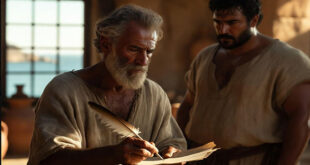
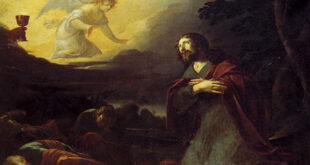
In a world marked by anxiety, polarization, economic uncertainty, and constant noise, few texts are as timely as the Letter to the Philippians. Written almost two thousand years ago, from a prison cell, by a man chained and humanly defeated, this epistle is—paradoxically—a vibrant hymn to joy.
Its author is the Apostle to the Gentiles, Saint Paul. Its recipients were the Christian community of Philippi, a Roman colony located in the region of Macedonia, now part of Greece. And its message is not superficial religious optimism: it is a profound theology of joy that springs from union with Christ.
Today, more than ever, we need to rediscover Philippians.
1. Historical Context: A Letter Written in Chains
Saint Paul founded the Christian community of Philippi during his second missionary journey (cf. Acts 16). There he converted, among others, Lydia, the seller of purple goods, and the jailer who had guarded his prison. From the very beginning, this community showed a particular closeness to the Apostle.
Years later, Paul finds himself imprisoned—most likely in Rome, though some scholars suggest Ephesus. From that prison he writes a deeply affectionate letter. It is not an epistle of severe correction (like Galatians), nor a systematic doctrinal treatise (like Romans). It is an intimate, grateful, and spiritual letter.
And here the first surprising fact appears: the word “joy” and its derivatives appear repeatedly. How can a man deprived of freedom speak about joy?
Because his freedom did not depend on his circumstances.
2. The Theological Heart of Philippians: Christ as the Absolute Center
The Letter to the Philippians contains one of the most profound Christological hymns in the entire New Testament: the so-called “Hymn of the Kenosis” (Phil 2:6–11).
“Though he was in the form of God, he did not count equality with God a thing to be grasped, but emptied himself, taking the form of a servant…” (Phil 2:6–7)
This passage is a theological jewel.
Here the mystery of kenosis—the “self-emptying” of the Son of God—is revealed. Christ, true God, humbles Himself, lowers Himself, assumes our flesh, becomes obedient unto death—even death on a cross.
What does this teach us?
- That Christian greatness does not consist in imposing oneself, but in serving.
- That true exaltation comes after humility.
- That the Christian path is configuration to Christ crucified.
Saint Paul does not propose a comfortable Christianity. He proposes a cruciform Christianity.
In a culture that idolizes success, image, and self-assertion, Philippians reminds us that the model is Christ humbled.
3. “I Can Do All Things Through Him Who Strengthens Me”: A Misunderstood Phrase
One of the most quoted—and sometimes misinterpreted—verses is:
“I can do all things through him who strengthens me” (Phil 4:13).
It is not a statement of motivational self-empowerment. It does not mean that God guarantees material success or the fulfillment of personal dreams.
Paul says this in the context of poverty and need:
“I have learned in whatever situation I am to be content. I know how to be brought low, and I know how to abound…” (Phil 4:11–12)
Christian strength does not consist in mastering circumstances, but in remaining faithful in every circumstance.
Today many live frustrated because they confuse faith with prosperity. Philippians corrects this vision: the true wealth is Christ.
4. Christian Joy: A Spiritual Decision
“Rejoice in the Lord always; again I will say, rejoice” (Phil 4:4).
Paul is not speaking of a passing emotion. He speaks of a spiritual attitude. Christian joy is not the denial of suffering, but trust in God’s sovereignty.
From a theological perspective, this joy has three foundations:
1️⃣ Union with Christ
The Christian lives “in Christ.” This expression appears constantly in the letter. The believer’s identity is not found in profession, marital status, or reputation, but in belonging to Christ.
2️⃣ Eschatological Hope
Philippians has a strong eschatological dimension: “Our citizenship is in heaven” (Phil 3:20). For a city proudly Roman like Philippi, this statement was revolutionary.
Today it is as well. Our definitive homeland is not this world.
3️⃣ Trust in Providence
“In everything, by prayer and supplication with thanksgiving, let your requests be made known to God” (Phil 4:6).
Modern anxiety finds its antidote here: trusting prayer.
5. Unity in the Face of Division: An Urgent Need Today
Paul exhorts the community to live in unity, even mentioning by name Euodia and Syntyche (Phil 4:2), two women in conflict.
Division is not a new phenomenon. But today it has acquired global dimensions: ideological divisions, ecclesial divisions, family divisions.
Philippians offers a clear pastoral criterion:
“Have this mind among yourselves, which is yours in Christ Jesus” (Phil 2:5).
Christian unity is not based on uniformity of opinions, but on humble charity.
From a pastoral point of view, this implies:
- Listening.
- Renouncing pride.
- Seeking the common good.
- Making Christ central, not the ego.
6. Practical Applications for Today
How do we live Philippians in the 21st century?
📌 1. Practice Daily Kenosis
Renounce pride, serve without seeking recognition, accept humiliations with a Christian spirit.
📌 2. Cultivate Spiritual Joy
It does not depend on news or circumstances. It depends on prayer and the sacraments.
📌 3. Fight Anxiety with Concrete Prayer
Phil 4:6 is a program of life: every worry brought before God.
📌 4. Reorder Our Priorities
“For to me to live is Christ” (Phil 1:21). Could we say the same?
📌 5. Live as Citizens of Heaven
Without fleeing the world, but without absolutizing it.
7. The Mystical Dimension: Knowing Christ
One of the most moving passages states:
“I count everything as loss because of the surpassing worth of knowing Christ Jesus my Lord” (Phil 3:8).
This is not the voice of an academic theologian. It is the voice of a man in love.
From the perspective of spiritual theology, Philippians teaches us that Christianity is not merely morality nor merely doctrine. It is a living relationship with Christ.
And this deeply challenges today’s Catholic:
Do we know Christ, or do we only know things about Christ?
8. A Letter for Difficult Times
Philippians is a letter written in crisis. And perhaps that is why it is so timely.
We live in times of economic uncertainty, crisis of faith, moral relativism, and spiritual fatigue. Many Catholics experience weariness.
Paul was also weary. But not defeated.
His secret was not human optimism. It was configuration to Christ.
Conclusion: The Silent Revolution of Joy
The Letter to the Philippians does not offer political solutions or sociological strategies. It offers something more radical: interior transformation.
Christ humbled.
Christ exalted.
Christ as center.
Christ as strength.
Christ as goal.
If today’s Christian rediscovers Philippians, he will discover that holiness does not consist in fleeing suffering, but in living it with hope.
Because the true victory is not avoiding the cross.
It is embracing it with Christ.
And then—and only then—we will be able to say with Saint Paul:
“For to me to live is Christ, and to die is gain” (Phil 1:21).
There begins authentic freedom.