Related Articles
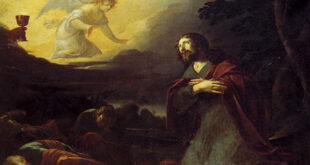

Few scenes in the New Testament are as striking, as human, and at the same time as theologically profound as the confrontation between Saint Peter and Saint Paul narrated in the Letter to the Galatians. Two giants of the early Church, two apostolic pillars… and yet a public, tense, and decisive disagreement that would forever shape the Catholic understanding of truth, authority, charity, and fraternal correction.
This episode is not an uncomfortable anecdote to be hidden away. On the contrary: it is a living lesson, deeply current and profoundly pastoral for the Church of every age — including our own.
1. The Context: A Nascent Church Under Tension
We are in the first century. The Church is growing rapidly, but also facing enormous challenges. One of the most delicate is this:
👉 Must Christians of pagan origin observe the Jewish Law in order to be saved?
Circumcision, dietary rules, ritual separations… are these obligatory or not?
This debate is not secondary. It touches the very heart of the Gospel:
Are we saved by Christ or by the works of the Law?
Saint Paul, apostle to the Gentiles, holds a clear and firm conviction:
“A man is not justified by works of the Law but through faith in Jesus Christ” (Gal 2:16).
Saint Peter, the first Pope, doctrinally shares this truth — he has already confessed it at the Council of Jerusalem — but in Antioch his behavior causes confusion.
2. The Incident at Antioch: The Key Text of Galatians
Saint Paul does not mince words. He recounts it with an almost uncomfortable frankness:
“But when Cephas came to Antioch, I opposed him to his face, because he stood condemned. For before certain men came from James, he used to eat with the Gentiles; but when they came, he drew back and separated himself, fearing those of the circumcision”
(Galatians 2:11–12)
Peter, out of human fear, stops eating with Christians of pagan origin so as not to scandalize the more rigorous Judeo-Christians. He does not preach heresy, but his conduct contradicts the truth he professes.
And this is precisely what Paul cannot tolerate.
3. Was Peter “Corrected”? An Essential Theological Key
Here it is crucial to be very precise, especially from a traditional Catholic perspective.
🔹 Peter was not corrected in doctrine, but in conduct.
🔹 Infallibility does not guarantee impeccability.
🔹 The Pope can err as a man, but not as the definitive teacher of the faith.
Saint Paul expresses it clearly:
“When I saw that they were not walking straight according to the truth of the Gospel…”
(Gal 2:14)
The problem is not false teaching, but a practical scandal: a gesture that, in the concrete life of the Church, obscures the Gospel of grace.
This is key for today.
4. A Lesson on Authority in the Church
This passage dismantles two opposing errors that are very common in our time:
❌ Error 1: “Peter was wrong, therefore authority does not matter”
False. Peter remains Peter. He remains the rock. No one questions his primacy.
❌ Error 2: “Authority can never be corrected”
Also false. Saint Paul does so out of charity and fidelity to the truth, not out of rebellion.
Here we see the authentic Catholic balance:
- Respect for authority
- Primacy of truth
- Fraternal correction when the Gospel is at stake
5. The Theological Relevance: Faith, Works, and Coherence
The core of the conflict is this:
👉 One cannot live as if salvation depended on the Law while preaching that it depends on Christ.
Saint Paul states it forcefully:
“If justification were through the Law, then Christ died for nothing”
(Gal 2:21)
This episode teaches us that:
- Orthodoxy (right doctrine) requires orthopraxy (right living).
- Pastoral inconsistency can be just as damaging as doctrinal error.
- The Gospel is betrayed not only by words, but also by silences and gestures.
6. Applications for the Church Today
This passage is almost uncomfortably relevant.
a) For pastors and leaders
- Fear of public opinion cannot condition the proclamation of the Gospel.
- Pastoral ambiguity confuses the faithful.
- Charity without truth becomes sentimentalism.
b) For the lay faithful
- Not all criticism is rebellion.
- Defending the truth with respect is also an act of love for the Church.
- Fidelity is not servility; it is communion in truth.
c) For personal spiritual life
- Do I live what I believe, or do I adapt my faith to my surroundings?
- Am I consistent in public and in private?
- Do I remain silent out of fear when I should bear witness?
7. A Practical Theological and Pastoral Guide
1️⃣ Discern before speaking
Not every disagreement is like Paul’s.
Ask yourself:
- Is the truth of the Gospel at stake?
- Is there real scandal for the faithful?
2️⃣ Correct with charity, not with pride
Saint Paul corrects out of love for Christ, not to humiliate Peter.
👉 Christian correction seeks to save, not to win.
3️⃣ Distinguish between person and office
Peter remains worthy of respect even when he is reproached.
The institution is never attacked; a concrete action is corrected.
4️⃣ Preserve communion
The episode does not break the Church.
On the contrary: it strengthens and purifies her.
5️⃣ Apply it to one’s own life
Before pointing out the inconsistencies of others, examine your own:
- Do I preach one thing and live another?
- Does my conduct confirm or contradict my faith?
8. A True Church, Not an Idealized One
The confrontation between Peter and Paul does not weaken the Catholic faith. It makes it more credible.
It shows us a Church that is:
- Holy, yet formed by fragile men.
- Guided by the Spirit, yet tested by real tensions.
- Faithful to Christ, even when she must correct herself.
And it leaves us with a final lesson, luminous and demanding:
The truth of the Gospel is worth more than personal prestige, fear, or comfort.
May Saint Peter teach us the humility to accept correction.
May Saint Paul teach us the courage to defend the truth.
And may today’s Church learn, once again, to walk in unity, charity, and fidelity to the Gospel of Christ.