
Related Articles
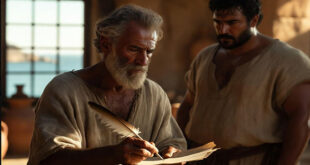
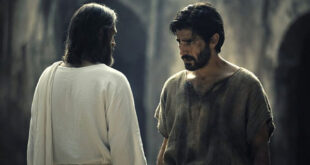
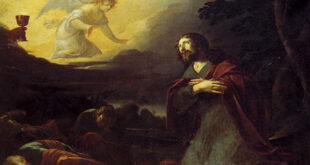
There are phrases in the Gospel that, by their power, echo across the centuries as something both unsettling and deeply relevant. One of them is this, spoken by Jesus Christ as He contemplated the Temple of Jerusalem:
“Do you see all these things? Truly I tell you, not one stone here will be left on another; every one will be thrown down.” (Matthew 24:2)
At first glance, it may seem like just another historical prophecy. But in reality, it contains a theological, spiritual, and pastoral depth that directly challenges modern man. Because this phrase is not only about a building… it is about the human heart, about the structures we trust in, and about God’s judgment on everything that is not founded on Him.
1. The historical context: a fulfilled prophecy
To understand the magnitude of these words, we must place ourselves in the first century. The Temple of Jerusalem was not merely a place of worship: it was the religious, political, and emotional center of the Jewish people. It symbolized the presence of God.
When Christ announces its destruction, He is pointing to something unthinkable.
And yet, it happened.
In 70 A.D., the Roman army, under the command of Titus, razed Jerusalem. The Temple was destroyed down to its foundations. That prophecy was fulfilled with striking precision.
But Christ was not speaking only about history.
2. The theological meaning: when God brings down what is not eternal
The phrase “not one stone will be left upon another” has a deeply theological dimension: it reveals that everything not founded on God is, ultimately, fragile.
The Temple, though sacred, had been corrupted by human interests: power, commerce, religious hypocrisy. Let us recall how Christ expelled the merchants. It was not merely a moral critique, but a spiritual judgment.
God does not destroy out of caprice. God purifies.
This divine logic is repeated throughout salvation history:
- The Tower of Babel, a symbol of human pride, is scattered.
- Sodom and Gomorrah, morally corrupted, are judged.
- Israel itself is purified through exile.
At the heart of all this lies an uncomfortable but liberating truth:
God allows our false securities to fall in order to offer us something infinitely more solid: Himself.
3. Christ, the new Temple: the true foundation
After announcing the destruction of the Temple, Christ introduces a new reality:
He Himself is the new Temple.
“Destroy this temple, and I will raise it again in three days.” (John 2:19)
It is no longer about a building of stone, but about His Body, His living presence. And by extension, we too are temples of the Holy Spirit.
This radically changes the perspective:
- It is no longer the external that matters most, but the internal.
- It is no longer about visible structures, but about communion with God.
- It is no longer stone that sustains faith, but Christ Himself.
Here lies the heart of the message: everything not built upon Christ will eventually fall.
4. “Not one stone will be left upon another” today: a contemporary reading
If we look at the modern world, this warning takes on striking force.
We live in a culture that has built new “temples”:
- Professional success
- Money
- Public image
- Self-sufficiency
- Ideology
And yet, we increasingly witness collapse:
- Deep personal crises
- Broken families
- Disoriented societies
- Loss of meaning
It is not difficult to recognize that many of these structures are not built upon the truth of the Gospel.
And so, the words of Christ echo once more:
“Not one stone will be left upon another.”
Not as a threat, but as a loving warning.
5. Spiritual application: what are you building your life on?
This passage forces us to ask a radical question:
👉 What am I building my life on?
Because we are all building something:
- Relationships
- Projects
- Identity
- Faith (or its absence)
But not everything withstands time, suffering, or death.
Christ Himself gives us the key in another teaching:
“Everyone who hears these words of mine and puts them into practice is like a wise man who built his house on the rock.” (Matthew 7:24)
Here lies the difference:
- Sand → what is superficial, immediate, emotional
- Rock → Christ, His word, His will
6. A divine pedagogy: God allows crises
From a pastoral perspective, this message is of great importance: often, the “collapses” in our lives are not punishments, but calls from God.
When something falls apart:
- A job
- A relationship
- A project
- An inner security
We can react with despair… or with faith.
Because perhaps God is removing stones that should never have supported our lives.
In that sense, “not one stone will be left upon another” can become a grace:
👉 the opportunity to rebuild from Christ.
7. Practical keys to living this message today
How can we bring this teaching into daily life? Here are some concrete keys:
1. Examine your “personal temples”
Make a sincere assessment:
- What occupies the center of your life?
- What gives you security?
- What do you fear losing?
There you will find your “stones.”
2. Strengthen your spiritual foundation
- Daily prayer
- Reading the Gospel
- Sacramental life
Not as an obligation, but as a root.
3. Learn to accept crises with faith
When something collapses, ask yourself:
👉 “What is God trying to teach me here?”
4. Build from what is eternal
Invest in:
- True love
- Family
- Charity
- Interior life
These do not collapse.
5. Live with an eschatological perspective
Christ was not only speaking about the past, but also about the end times.
Everything temporal will pass away.
But what is in God remains.
Conclusion: from collapse to hope
The phrase “not one stone will be left upon another” may seem harsh, even unsettling. But in reality, it is profoundly hopeful.
Because it frees us from illusions.
Because it reminds us of what is essential.
Because it invites us to build on rock.
In a world where everything changes, where everything seems to tremble, Christ does not promise stability in things… but in Himself.
And that changes everything.
Today, more than ever, this word is not just a prophecy: it is an invitation.
👉 To let fall what is not true.
👉 To rebuild from Christ.
👉 To live a faith that does not collapse.
Because when everything falls…
only God remains.