Related Articles
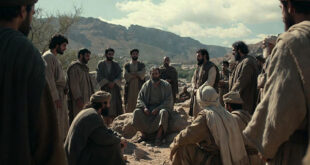
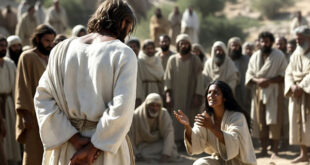
There are phrases in the Gospel that pierce through the centuries because they contain, in a concentrated form, the entire mystery of the human heart. One of them is the one spoken by Martha of Bethany before Jesus Christ:
“Lord, if you had been here, my brother would not have died” (Jn 11:21).
In these words we find the drama of suffering, the apparent absence of God, wounded faith… and also the beginning of a hope that does not fade. This passage—the raising of Lazarus—is not only a moving story, but a true spiritual school for every believer who has experienced loss, pain, or the silence of God.
Today more than ever, in a world that avoids suffering and is incapable of facing death, Martha becomes a teacher. She teaches us how to believe when everything seems lost.
1. The context: Bethany, the place of friendship with Christ
The scene takes place in Bethany, the home of three siblings: Martha, Mary, and Lazarus. There, Jesus is not only a Teacher—He is a friend. The Gospel states it with striking clarity:
“Jesus loved Martha and her sister and Lazarus” (Jn 11:5).
This is key to understanding everything that follows. Because the drama does not occur in a context of distance, but of deep love. And precisely for that reason, it hurts more.
When Lazarus falls ill, they send word to Jesus. But He does not arrive immediately. He delays. And when He finally appears… Lazarus has already been in the tomb for four days.
Here arises the great question:
Why does God seem to arrive late?
2. Martha’s cry: wounded faith, not lost faith
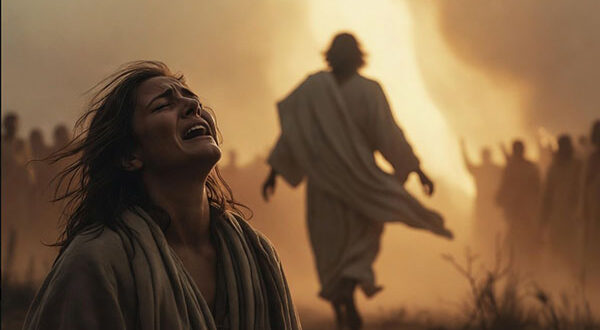
When Martha goes out to meet Jesus, she holds nothing back. She does not adopt a pious tone nor disguise her pain:
“Lord, if you had been here…”
It is not a direct accusation, but neither is it a neutral phrase. Within it there is a mixture of faith and reproach, of trust and confusion.
What does Martha really express?
- She believes in Jesus’ power (“my brother would not have died”)
- But she does not understand His absence
- She suffers deeply from the loss
- And she dares to say it
This is profoundly human… and profoundly Christian.
A key lesson
God is not scandalized by our questions.
In a superficial spirituality, we have been led to believe that faith consists in not doubting, not questioning, not feeling pain. But the Gospel shows the opposite:
True faith does not eliminate suffering; it passes through it with God.
3. Christ’s response: from death to hope
Jesus does not respond with a theoretical explanation. He does not justify His delay. He does something much deeper:
“Your brother will rise again” (Jn 11:23).
Martha interprets this in a future, theological, correct—but limited—sense:
“I know that he will rise again in the resurrection on the last day.”
Then Jesus lifts the horizon to a revolutionary truth:
“I am the resurrection and the life; whoever believes in me, though he die, yet shall he live” (Jn 11:25).
Deep theological key
Here we are not speaking only of a particular miracle. Jesus does not say: “I am going to raise your brother”, but:
“I am the resurrection.”
This changes everything:
- Eternal life is not only a future event
- It is a present Person
- It is Christ Himself
To believe is not only to accept a doctrine.
It is to adhere to a Person who conquers death.
4. Martha: a faith that grows in the midst of pain
After her initial complaint, Martha takes an extraordinary step:
“Yes, Lord; I believe that you are the Christ, the Son of God” (Jn 11:27).
This confession is one of the highest in the Gospel, comparable to Peter’s.
And yet… it is born in the midst of grief.
Fundamental spiritual teaching
Mature faith is not the one that has never suffered,
but the one that has learned to trust in the midst of suffering.
Martha does not understand everything.
But she believes.
And that is enough for Christ to act.
5. The silence of God: abandonment or divine pedagogy?
One of the most disconcerting aspects of the passage is Jesus’ delay. The text says:
“When he heard that Lazarus was ill, he stayed two days longer” (Jn 11:6).
This seems incomprehensible… until its meaning is revealed:
- God does not arrive late
- He arrives at the moment that allows for a greater good
Theological key
God permits evil not because He wills it, but because He knows how to bring a greater good from it.
In this case:
- Illness leads to death
- Death allows the manifestation of God’s glory
- And that glory strengthens the faith of many
Present-day application
How many times have we thought:
- “God could have prevented this”
- “If He had intervened earlier…”
- “Why did He do nothing?”
Martha’s story teaches us:
God’s silence is not absence. It is mystery at work.
6. Practical applications for daily life
This passage is not only to be contemplated, but to be lived. How can we apply Martha’s experience today?
1. Speak to God with honesty
Do not hide your pain in prayer.
You can say:
- “Lord, I do not understand”
- “Where were you?”
- “This hurts”
God prefers a sincere prayer to an empty devotion.
2. Hold on to faith even without answers
There will not always be immediate explanations.
Faith does not consist in understanding everything,
but in trusting the One who knows everything.
3. Remember that Christ is Life
In a culture that flees from death, the Christian lives with hope:
- Death is not the end
- It is a passage
- And Christ has already conquered it
4. Accompany the suffering of others
Jesus not only teaches—He also weeps.
“Jesus wept” (Jn 11:35)
This is revolutionary:
God weeps with us.
Let us learn to:
- be present
- listen
- console without giving easy answers
5. Discover faith as a journey, not perfection
Martha moves from complaint to confession.
Such is the spiritual life:
- not linear
- not perfect
- but profoundly transformative
7. A final word for the wounded heart
Perhaps today you too could say:
“Lord, if you had been here…”
In the face of a loss, an illness, an injustice, a family wound…
And yet, the Gospel responds to you:
Christ is there.
Even if not as you expected.
Even if not when you wanted.
But He is there.
And He asks you the same question He asked Martha:
“Do you believe this?”
It is not a cold question.
It is an invitation to trust beyond pain.
Conclusion: from reproach to hope
Martha begins with a complaint…
and ends with a confession of faith.
That is the Christian path.
It is not about avoiding suffering.
It is about not ceasing to believe in the midst of suffering.
Because in the end, the final word does not belong to death,
but to Christ.
And where He is, even the tomb becomes a promise of life.