
Related Articles
A profound catechesis about the light that transforms the heart
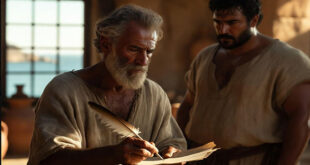
There are scenes in the Gospel that possess a special power. They do not merely recount a miracle; they reveal the very mystery of Christ and the spiritual drama of the human person. One of these is the healing of the man born blind, narrated in chapter 9 of the Gospel of John.
This is not just any miracle. In reality, it is a complete catechesis about faith, spiritual blindness, and the light of Christ. In this episode, two worlds confront each other: that of the one who recognizes his need for light and that of those who believe they see, yet live in the darkness of pride.
Today, in a world saturated with information but starving for truth, this evangelical scene is more relevant than ever.
Because the true drama of our time is not the lack of external light…
but the blindness within the human heart.
1. The encounter that changes a life
The Gospel begins with an ordinary scene. Jesus passes by and sees a man who had been blind from birth. It is important to emphasize this: he had never seen in his entire life. There was no memory of colors, shapes, or faces.
The disciples then ask a question typical of the religious thinking of the time:
“Rabbi, who sinned, this man or his parents, that he was born blind?”
(Jn 9:2)
It was a widely held belief: that illness was a direct punishment for sin.
But Christ breaks this logic.
“Neither this man nor his parents sinned; it is so that the works of God might be made visible through him.”
(Jn 9:3)
Here a profound teaching already appears: suffering is not always punishment; it can become the place where grace is manifested.
In the Christian vision, pain can be transformed into a path of redemption.
2. The gesture of Christ: clay and a new creation
The miracle is not performed with a simple word. Jesus performs a surprising gesture:
“He spat on the ground and made clay with the saliva, and smeared the clay on the man’s eyes.”
(Jn 9:6)
This gesture immediately recalls the account of creation in the Book of Genesis, where God forms man from the dust of the earth.
The symbolism is extraordinary.
Christ acts as the Creator who reshapes the human being.
The clay represents humanity; the saliva, coming from Christ, represents the divine life that heals and recreates.
This is not only about restoring sight.
It is about creating a new humanity.
3. The washing in Siloam: a figure of baptism
After this gesture, Jesus says something unexpected:
“Go wash in the pool of Siloam.”
(Jn 9:7)
The man goes, washes… and returns seeing.
The evangelist adds a significant detail: Siloam means “Sent.”
The tradition of the Church has seen here a clear image of baptism.
The parallel is profound:
- the man is in darkness
- Christ intervenes
- the man washes in water
- and receives the light
For this reason, in the ancient liturgy, this Gospel was read during the catechumenal journey toward baptism.
Because baptism is not merely a symbolic ritual.
It is the illumination of the soul.
In fact, the first Christians called baptism “photismos,” meaning illumination.
4. The true miracle is not physical
Curiously, the physical healing occupies only a few lines in the narrative. What follows takes up almost the entire chapter.
Because the real miracle is the faith that gradually awakens in the heart of the healed man.
The spiritual process is fascinating.
First, he speaks of Jesus as:
“The man called Jesus.”
Then he says:
“He is a prophet.”
Later he declares:
“If this man were not from God, he could do nothing.”
And finally, when Jesus reveals Himself to him, he proclaims:
“I do believe, Lord.”
(Jn 9:38)
And he worships Him.
This spiritual journey describes the experience of every believer.
Faith does not always appear instantly.
Often it grows little by little.
First curiosity.
Then admiration.
Then trust.
And finally adoration.
5. The other blindness: that of the Pharisees
While the blind man begins to see, the Pharisees sink deeper and deeper into darkness.
Here a very profound theological irony appears.
Those who see physically fail to recognize Christ.
And the one who could not see ends up recognizing the Son of God.
The reason is spiritual.
The most dangerous blindness is not that of the body.
It is that of the proud heart.
Jesus explains this at the end of the chapter with a striking phrase:
“I came into this world for judgment, so that those who do not see might see, and those who do see might become blind.”
(Jn 9:39)
What does this mean?
It means that only those who recognize their need for light can receive it.
Spiritual pride, on the other hand, blocks grace.
6. Christ, the true Light of the World
Before the miracle, Jesus pronounces a key phrase:
“While I am in the world, I am the light of the world.”
(Jn 9:5)
This statement connects with the entire symbolism of light present in the Gospel of John.
Light represents:
- truth
- life
- grace
- divine revelation
Christ does not merely bring light.
He is the light.
In a world where many ideologies promise to enlighten humanity — science, politics, progress, technology — the Gospel reminds us of a fundamental truth:
only God can illuminate the human heart.
Because the deepest darkness is not outside.
It is within the human person.
7. The spiritual blindness of our time
The Gospel narrative perfectly describes the cultural situation of our age.
We live in a society that claims to see clearly, yet often has lost its reference to transcendent truth.
There is much talk of freedom… but without truth.
Much talk of progress… but without meaning.
Much talk of tolerance… but without wisdom.
The result is a paradox:
never have we had so much information
and never has there been so much moral confusion.
The Gospel reminds us of something essential:
without Christ, the human person ultimately walks in darkness.
Not because intelligence is lacking, but because spiritual light is missing.
8. The humility that opens the eyes
There is a beautiful detail in the story: the blind man obeys.
Jesus tells him to wash… and he goes.
He could have argued.
He could have doubted.
But he trusts.
And that trust opens the path to the miracle.
The same happens in the spiritual life.
Grace often enters through the door of humility.
Those who believe they know everything close themselves to God.
Those who recognize their need open themselves to the light.
9. The price of seeing: persecution
The story ends in an unexpected way.
When the man begins to defend Jesus, the religious leaders expel him from the synagogue.
In other words, he pays a price for his faith.
This reminds us of something important: seeing the truth sometimes brings social discomfort.
The same happens today.
In many environments, living the Christian faith coherently can provoke misunderstanding, ridicule, or marginalization.
Yet the Gospel shows that it is worth it.
Because at the end of the story something wonderful happens: Jesus goes in search of the man who has been expelled.
And He reveals Himself to him as the Son of Man.
10. Practical applications for Christian life
This Gospel is not merely a story from the past.
It is a spiritual mirror.
Every Christian can ask himself:
1. Do I recognize my own blindness?
We all have blind spots: pride, resentment, superficiality, spiritual indifference.
Grace begins when we admit:
“Lord, I need to see.”
2. Do I seek the light of Christ?
Today the mind is saturated with opinions.
But the Christian must nourish himself with:
- Scripture
- prayer
- the sacraments
- the teaching of the Church
It is there that the light of Christ illuminates the path.
3. Do I defend the truth with charity?
The healed blind man does not become an aggressive polemicist, but neither does he remain silent.
He bears witness with simplicity.
That is precisely what Christians are called to do today.
11. A prayer to ask for the true light
We can conclude this reflection with a simple prayer:
Lord Jesus,
true Light who enlightens every person,
open my eyes to see your truth.
Heal my blindness,
my pride and my fears.
Teach me to walk in your light
and to reflect it in the world.
Amen.
Conclusion: from darkness to light
The healing of the man born blind is far more than a physical miracle.
It is a parable of salvation.
We are all born with a certain spiritual blindness.
Christ comes to meet us.
He touches us with His grace.
He leads us to the water that purifies.
And then the true miracle happens:
we begin to see.
To see God.
To see the truth.
To see the meaning of life.
And to discover that, in the midst of the shadows of the world, Christ remains the only light that never fades.