Related Articles
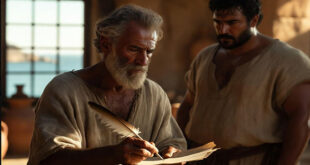
Few books in the Bible possess the depth, poetic beauty, and spiritual power of the Book of Isaiah. For many Christians, reading it is like contemplating the Old Testament illuminated from within by the light of the Gospel. It is no coincidence that the Fathers of the Church called it “the fifth Gospel.”
Within its pages we find prophecies about the Messiah, the Virgin, redemption, the suffering of Christ, and the final hope of the Kingdom of God. Isaiah was not only a prophet who spoke to his own time; he was a man who saw the mystery of Christ centuries in advance.
In an age of political crisis, moral decline, and religious confusion—not so different from our own—Isaiah proclaimed a message that still echoes with power today: God does not abandon His people, but He calls them to conversion.
This article is a guide to understanding the Book of Isaiah from a historical, theological, and spiritual perspective, and to discovering how its message can illuminate our lives today.
1. Who Was the Prophet Isaiah?
Isaiah lived approximately between 740 and 700 B.C. in the Kingdom of Judah, in Jerusalem. He was a contemporary of several kings, including Uzziah, Jotham, Ahaz, and Hezekiah.
He likely belonged to an influential family in Jerusalem, which allowed him access to the royal court. However, his mission was not to flatter power, but to denounce sin—even when it came from the king himself or from the religious elites.
The decisive moment of his life was his prophetic calling, described in chapter 6 of the book.
“I saw the Lord seated on a high and lofty throne…
The seraphim were calling to one another:
Holy, holy, holy is the Lord of hosts;
the whole earth is full of his glory.”
(Isaiah 6:1–3)
This passage holds enormous importance in Christian liturgy. The “Holy, Holy, Holy” sung during the Mass comes from this vision.
Isaiah experiences the absolute holiness of God and, at the same time, his own unworthiness:
“Woe is me! I am lost!
For I am a man of unclean lips.”
(Isaiah 6:5)
But God purifies him and sends him:
“Whom shall I send?”
Isaiah replies:
“Here I am. Send me.”
(Isaiah 6:8)
From that moment on, his mission begins: to be the voice of God to a people who do not want to listen.
2. The Historical Context: Crisis, War, and Spiritual Decline
To understand Isaiah, we must understand the world in which he lived.
The Kingdom of Judah was under threat from great powers such as Assyria, which was expanding its empire across the ancient Near East.
There were three major problems.
1. Social corruption
The powerful were exploiting the poor.
Isaiah denounces this injustice with great severity:
“Woe to those who add house to house
and join field to field.”
(Isaiah 5:8)
2. Superficial religion
The people continued to perform sacrifices and rituals, but without true conversion of heart.
God says through the prophet:
“This people honors me with their lips,
but their hearts are far from me.”
(Isaiah 29:13)
3. Lack of trust in God
The kings preferred political and military alliances rather than trusting in the Lord.
Isaiah warns them that salvation will not come from politics, but from God.
3. The Structure of the Book of Isaiah
The book is one of the longest in the Bible and contains 66 chapters. Traditionally, it is divided into three major sections.
1. Proto-Isaiah (chapters 1–39)
These chapters contain the prophecies of Isaiah himself.
They speak about God’s judgment upon Judah and the nations, but they also introduce the hope of the Messiah.
2. Deutero-Isaiah (chapters 40–55)
Written in the context of the exile in Babylon.
It announces God’s consolation and the future liberation of the people.
Here we find one of the most beautiful phrases in the entire Bible:
“Comfort, comfort my people.”
(Isaiah 40:1)
3. Trito-Isaiah (chapters 56–66)
These chapters reflect on the restoration of Jerusalem and the eschatological hope of God’s Kingdom.
4. Isaiah and the Announcement of the Messiah
One of the most striking aspects of Isaiah is the clarity of his prophetic vision regarding Christ.
Many passages that Christians hear at Christmas or during Holy Week come from this book.
The Prophecy of the Virgin
One of the most famous passages states:
“The virgin shall conceive and bear a son,
and shall call his name Emmanuel.”
(Isaiah 7:14)
The Gospel of Matthew clearly identifies this prophecy with the birth of Jesus.
The Child Who Will Bring Peace
Another deeply well-known prophecy:
“For to us a child is born,
to us a son is given.The government shall be upon his shoulder.
And his name shall be called
Wonderful Counselor, Mighty God,
Everlasting Father, Prince of Peace.”
(Isaiah 9:6)
For Christian tradition, this text describes the divine identity of the Messiah.
The Suffering Servant: The Prophecy of the Passion
Perhaps the most astonishing passage is Isaiah 53.
It describes, centuries in advance, the redemptive suffering of Christ.
“He was despised and rejected by men,
a man of sorrows…Surely he has borne our griefs
and carried our sorrows.”
(Isaiah 53:3–4)
And it continues:
“He was pierced for our transgressions,
crushed for our iniquities.The punishment that brought us peace
was upon him.”
(Isaiah 53:5)
Many scholars note that this passage is one of the most precise descriptions of Christ’s Passion in the entire Old Testament.
5. The Great Theology of Isaiah
The book contains some of the deepest theological ideas in the Bible.
1. The absolute holiness of God
For Isaiah, God is radically holy.
He is not just one god among many, but the Lord of the universe.
This vision completely transforms humanity’s relationship with God:
we cannot live superficially before Him.
2. The necessity of conversion
Isaiah constantly insists that the people’s problem is not political, but spiritual.
Sin destroys society.
Therefore he proclaims:
“Wash yourselves; make yourselves clean;
remove the evil of your deeds from before my eyes.”
(Isaiah 1:16)
3. The hope of the Messiah
Despite the sin of the people, God promises salvation.
Isaiah announces a just King from the line of David who will bring peace to the world.
4. The universality of salvation
One of the most surprising aspects of the book is that Isaiah already speaks of salvation for all nations.
“My house shall be called a house of prayer for all peoples.”
(Isaiah 56:7)
This verse is quoted by Jesus when He cleanses the temple.
6. Isaiah and Christian Spirituality
For centuries, the Church has used Isaiah during key moments of the liturgical year.
During Advent
Many readings come from this book because it announces the coming of the Messiah.
At Christmas
The prophecies of the child who is born.
During Holy Week
The songs of the Suffering Servant.
This reveals something profound: Isaiah connects the entire history of salvation.
7. Why Isaiah Is So Relevant Today
Although it was written nearly 2,700 years ago, its message seems directed to the modern world.
1. It denounces social injustice
Isaiah reminds us that a society that abandons the poor ultimately destroys itself.
2. It criticizes superficial religion
Today many people maintain a cultural religiosity without real conversion.
Isaiah reminds us that God desires the heart.
3. It invites trust in God during times of crisis
The modern world lives with political, economic, and cultural anxiety.
Isaiah proclaims that true security is not found in human systems but in God.
8. How to Apply Isaiah’s Message in Daily Life
The book is not just history; it is a school of spiritual life.
1. Learn to contemplate the holiness of God
Isaiah’s vision invites us to rediscover awe before God.
In a world that trivializes the sacred, we need to return to worship and adoration.
2. Live an authentic faith
External practices alone are not enough.
Isaiah reminds us that true religion includes:
- justice
- mercy
- interior conversion
3. Maintain hope
Even in the midst of sin and crisis, God promises salvation.
Isaiah teaches that God always prepares a future for His people.
4. Trust in Christ as the true Messiah
All the promises of Isaiah find their fulfillment in Jesus.
For this reason, for Christians, reading Isaiah means discovering the face of Christ in the Old Testament.
9. One Verse from Isaiah That Can Change Our Lives
Among all the verses in the book, one summarizes its spiritual message:
“Seek the Lord while he may be found;
call upon him while he is near.”
(Isaiah 55:6)
This invitation is urgent.
God is not an abstract idea: He is a living presence who desires to encounter us.
Conclusion: Isaiah, the Prophet of Hope
Isaiah was not simply a religious writer of the past. He was a man who saw history from God’s perspective.
He denounced sin with courage.
He announced the suffering of the Messiah.
And he proclaimed a hope that reaches all the way to our own time.
In a world full of noise, uncertainty, and spiritual confusion, his voice still repeats the same message:
God is holy.
Humanity needs conversion.
And salvation has come in Christ.
Reading Isaiah reveals that God was already preparing the story of redemption long before we existed.
And it also reveals something deeply consoling:
God is still speaking today.