Related Articles



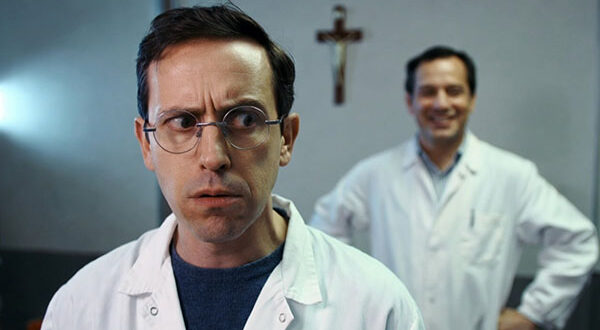
We live in a fascinating age. Never before has humanity reached such a level of scientific knowledge, technological advancement, and capacity to explore the universe. Yet, paradoxically, we are also living through a deep crisis of meaning. More and more people repeat with conviction—and sometimes with a certain pride—this phrase: “I can’t believe in God because I believe in science.”
But… are faith and science really incompatible? Do we have to choose between God or the laboratory? Or are we facing a false opposition born from a profound misunderstanding?
This article seeks to walk with you—calmly, rigorously, and closely—through the dismantling of this myth, to illuminate the relationship between faith and reason from the Catholic tradition, and to offer a concrete spiritual guide for living today an intelligent, solid, and deeply human faith.
1. The origin of the conflict: a war that never existed
The idea that science and faith are at odds is relatively recent. It does not originate from Christianity, but from modern philosophical currents such as 19th-century positivism, which claimed that only what can be measured and experimentally verified is valid.
However, history tells a very different story:
- The first universities were born within the Church.
- Many fathers of modern science were believers: Copernicus, Mendel (a monk), Pascal, Newton…
- The very notion that the universe is ordered, intelligible, and governed by laws comes from a Christian vision of creation.
The conflict, therefore, is not real at its root. It is more of a cultural caricature.
2. Science and faith: two different paths to truth
Here lies the key to dismantling the statement:
👉 Science and faith do not compete because they do not answer the same questions.
- Science studies the how: how the universe works, what its laws are, how natural processes evolve.
- Faith responds to the ultimate why: why something exists rather than nothing, what the meaning of life is, what is good, what is love.
Confusing these dimensions leads to frustration.
It is like using a microscope to search for justice or a telescope to measure love: they are simply not designed for that.
3. The underlying error: reducing reality to what is measurable
When someone says “I only believe in science,” they are actually making a philosophical statement, not a scientific one.
Because science itself cannot prove things such as:
- That truth exists
- That reason is reliable
- That good and evil are real
- That human dignity has value
And yet, we all live as if these things were real.
👉 Scientism (not science) is the true ideology at play.
And it is insufficient to explain the fullness of human experience.
4. Reason open to God: the Christian proposal
The Catholic faith does not ask you to turn off your intelligence. On the contrary:
👉 It invites you to take reason to its ultimate consequences.
If everything that exists has a cause…
does that not point to a first cause?
If the universe has precise mathematical laws…
does that not suggest an ordering intelligence?
If the human being endlessly seeks truth and love…
does that not speak of a transcendent origin?
The Christian tradition, especially through Saint Thomas Aquinas, has always maintained that:
👉 God is not an alternative to science, but the ultimate foundation of all reality.
5. “The heavens declare the glory of God” (Psalm 19:2)
The Bible is not a scientific book, but it is profoundly realistic about the world.
“The heavens declare the glory of God; the firmament proclaims the work of His hands.” (Psalm 19:2)
This verse does not deny science; on the contrary, it inspires it.
Every scientific discovery—from DNA to galaxies—can be read as a trace of the Creator, not as His negation.
6. Why, then, do many reject God in the name of science?
Here we enter a more human than intellectual terrain.
Many times, this statement does not arise from scientific arguments, but from life experiences:
- Unexplained suffering
- Bad witness from believers
- A distorted image of God
- A desire for absolute autonomy
In other words, it is not only a matter of “reason,” but also of the heart.
And here the answer is not only to argue… but to accompany.
7. A mature faith: integrating science and spirituality
The Christian of the 21st century is called to move beyond simplifications.
It is not about choosing between:
- Faith or science
but about living: - Faith and science in harmony
This implies:
✔ Intellectual formation
Knowing both the faith and scientific advances.
✔ Avoiding fundamentalism
Neither denying science nor absolutizing it.
✔ Contemplating the world with wonder
Science explains… but wonder opens us to mystery.
✔ Living a personal relationship with God
Faith is not a theory: it is an encounter.
8. Practical applications for your daily life
How do we bring all this down to earth?
1. Ask deep questions
Do not settle for superficial answers. Ask about meaning, not just mechanism.
2. Do not be afraid of doubt
Sincere doubt does not destroy faith; it can purify it.
3. Seek truth with honesty
Without prejudice, without ideology.
4. Pray… even if you are not sure
A simple prayer:
“God, if you exist, reveal Yourself to me.”
5. Look at reality with new eyes
Beauty, order, love… are not meaningless accidents.
9. The great synthesis: faith and reason need each other
Saint John Paul II expressed it masterfully:
👉 “Faith and reason are like two wings on which the human spirit rises to the contemplation of truth.”
Separating them impoverishes the human being.
Uniting them elevates him.
Conclusion: you do not have to choose between God and science
The phrase “I can’t believe in God because I believe in science” is based on a false dilemma.
Not only can you believe in both…
👉 but, in fact, they illuminate each other.
Science without God risks losing meaning.
Faith without reason can fall into error.
But together…
👉 they open the human being to the fullness of truth.
A final invitation
Do not close the door too soon.
Because perhaps, in the end, you will discover that:
- Science explains the universe…
- But God is the One who gives it meaning.
And then you will no longer have to choose.
But simply… to contemplate, to understand, and to believe.