Related Articles

There are days in life that mark a before and an after. But in the Christian calendar, there is one day that not only marks history… it redeems it. A day that is not celebrated, but contemplated. A day when heaven seems to fall silent and the earth trembles: the most solemn day of the liturgical year.
We are speaking of Good Friday.
It is not just any day. It is not a symbolic commemoration. It is the very heart of the Christian mystery. And yet, in our fast-paced, noisy, and superficial world, this day risks going unnoticed or being lived merely as a cultural tradition.
But if we live it well… it can change our lives.
1. A Day the Church Does Not “Celebrate,” but Contemplates
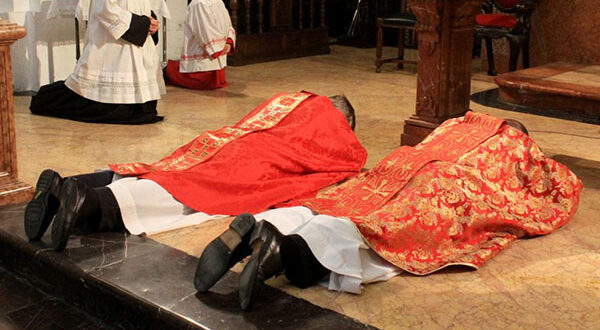
Good Friday is unique in the entire year. The Church does not celebrate the Eucharist. The altar is stripped. There is no Gloria. There is no consecration. Everything is enveloped in radical sobriety.
Why?
Because the Church is not “doing something,” but uniting herself to what Christ did once and for all.
There is no repetition here. There is participation in the redemptive sacrifice.
As Scripture says:
“He was pierced for our transgressions, crushed for our iniquities; the punishment that brought us peace was upon him, and by his wounds we are healed” (Isaiah 53:5)
Good Friday is not just the memory of an unjust death. It is the moment when the sin of the world is conquered… from within.
2. The Seriousness of Love: the Cross as Revelation
We call this day “solemn” not simply because it is sad, but because it reveals the seriousness of God’s love.
Today everything seems light, relative, emotional. But the Cross tells us otherwise:
- Sin is real
- Evil wounds deeply
- And true love costs blood
On the Cross, Christ does not improvise. He is not the victim of a historical accident. He freely gives His life:
“No one takes it from me, but I lay it down of my own accord” (John 10:18)
Here lies the theological key: the Cross is not a failure, it is the supreme act of obedient love.
And that changes everything.
3. History and Tradition: How the Church Has Lived This Day
From the earliest centuries, Christians have lived Good Friday with a unique intensity:
- Strict fasting: not only physical, but also spiritual
- Prolonged prayer: especially the reading of the Passion
- Veneration of the Cross: a deeply symbolic gesture
The current liturgy preserves these essential elements:
- Liturgy of the Word (with the Passion according to St. John)
- Universal Prayer (for all humanity)
- Veneration of the Cross
- Holy Communion with hosts consecrated the day before
Everything is austere. Everything points to what is essential.
4. Silence as the Language of God
One of the most forgotten aspects today is the silence of Good Friday.
We live surrounded by noise: social media, news, constant opinions… But this day invites us to be silent.
Why?
Because there are mysteries that are not explained… they are contemplated.
The silence of Good Friday is not empty. It is a silence full of meaning:
- It is the silence of Christ before His accusers
- It is the silence of Mary at the foot of the Cross
- It is the silence of the Father who gives the Son
In that silence, God speaks in the deepest way.
5. Practical Applications: How to Live Good Friday Today
Here is the key question: how do we live this day in the modern world?
1. Practice a true fast
Not only from food, but also from:
- Social media
- Entertainment
- Unnecessary noise
Fasting opens interior space. It makes us available to God.
2. Read and meditate on the Passion
Take time to slowly read the Passion, especially in the Gospel of John (chapters 18–19).
Not as just another text, but as a story in which you are present.
Ask yourself:
- Where am I in this scene?
- Am I Peter, who denies?
- Am I Pilate, who washes his hands?
- Or am I the beloved disciple, who remains?
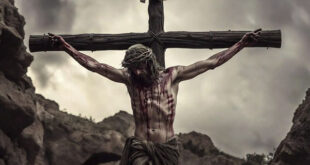
3. Contemplate the Cross
Not as a decorative symbol, but as the place where God loved me to the end.
Look at a crucifix. Remain in silence. Let it speak to you.
4. Unite your suffering to Christ’s
Good Friday sheds light on the mystery of human suffering.
Your wounds, your struggles, your crosses… are not meaningless if you unite them to Christ.
“I complete in my flesh what is lacking in Christ’s afflictions” (Colossians 1:24)
This does not mean that something is lacking in redemption, but that we are invited to participate in it.
5. Practice concrete charity
The love we contemplate on the Cross must be translated into action:
- Forgive someone
- Help someone who is suffering
- Listen to someone who is alone
The Cross is not theory. It is life given.
6. Mary at the Foot of the Cross: the School of Faithful Love
We cannot live Good Friday without looking at the Virgin.
She does not flee. She does not cry out. She does not understand everything… but she remains.
Mary teaches us:
- To be present when everything seems lost
- To trust when there are no answers
- To love without conditions
She is the first to have fully lived this day.
7. A Hidden Hope
Although Good Friday is the most solemn day, it is not the end.
In the midst of darkness, light is already beating.
The Cross is not the final word. It is the necessary passage toward the Resurrection.
Therefore, the Christian does not live this day in despair, but with a silent hope.
Conclusion: A Day Not to Pass By
The greatest risk of Good Friday is not suffering it too deeply… but not living it at all.
This day invites us to stop, to look directly at the mystery of evil and love, and to let ourselves be transformed by it.
Because on the Cross we do not only see what happened to Christ…
we see what God is willing to do for us.
And that demands a response.