

Related Articles

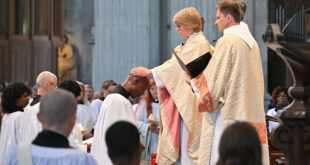

Each year, Good Friday breaks into our lives like an uncomfortable mirror. It is not a joyful celebration, nor an empty ritual we can pass through without being touched within. At its core, it is a direct question to the heart: what kind of relationship do we truly have with Christ?
Because there is a profound—though often imperceptible—difference between admiring Jesus and truly following Him.
And Good Friday, in all its starkness, allows no self-deception.
1. The Drama of Good Friday: More Than a Memory, a Judgment on Our Faith
Good Friday is not simply the commemoration of an unjust execution that took place more than two thousand years ago. It is the living re-presentation of the mystery of the Cross, where both the infinite love of God and the ambiguous response of humanity are revealed at once.
In the Passion, we encounter every possible face of faith:
- Those who acclaimed Jesus on Palm Sunday… and days later cry out “Crucify Him!”
- Those who follow Him from a distance, like Peter
- Those who abandon Him, like most of the disciples
- Those who observe without acting, like Pilate
- And those who remain faithful, like Mary and the beloved disciple
This mosaic is not merely history. It is a portrait of our own soul.
The Gospel gives us a clear warning:
“Not everyone who says to me, ‘Lord, Lord,’ will enter the kingdom of heaven, but the one who does the will of my Father” (Matthew 7:21)
Here lies the key: authentic faith is not mere admiration, but obedience, self-giving, and real discipleship.
2. Admiring Christ: A Comfortable… but Insufficient Faith
We live in a time where Jesus is widely accepted… as long as He does not disturb too much.
He is admired as:
- A great moral teacher
- A symbol of love
- A defender of the poor
- An inspiring figure
But this kind of relationship with Christ, though seemingly positive, can be profoundly superficial.
Admiration does not imply commitment.
We can admire without changing our lives.
We can admire without renouncing sin.
We can admire without carrying the cross.
And here lies the danger: a faith reduced to sympathy is a faith that does not save.
Jesus Himself makes this clear:
“Whoever wants to be my disciple must deny themselves and take up their cross daily and follow me” (Luke 9:23)
Following implies:
- Renunciation
- Conversion
- Sacrifice
- Faithfulness in what is hidden
It is not enough to be moved by the Cross. One must climb onto it with Christ.
3. Following Christ: A Faith That Transforms Life
To follow Christ means to enter into a real, living, and demanding relationship with Him.
It is not an idea.
It is not a passing emotion.
It is a daily decision.
From a theological perspective, following Christ means participating in His Paschal Mystery:
- Dying to sin
- Living for God
- Being conformed to Him
Saint Paul expresses this with striking radicality:
“I have been crucified with Christ and I no longer live, but Christ lives in me” (Galatians 2:20)
This is the core of Christian life: interior transformation.
Good Friday reminds us that:
- There is no Christianity without the Cross
- There is no true love without sacrifice
- There is no resurrection without prior death
4. The Cross Today: The Great Scandal of Our Time
In a society that flees from suffering, sacrifice, and any form of limitation, the Cross becomes uncomfortable—even scandalous.
Today people seek:
- Success without effort
- Love without commitment
- Freedom without truth
But the Cross dismantles all these illusions.
It tells us that:
- Authentic love costs
- Truth demands
- A full life passes through self-giving
That is why many prefer an “adapted” Christ, without demands. A Christ who inspires… but does not transform.
Yet Good Friday brings us back to the real Christ:
- Wounded
- Rejected
- Given completely to the end
A Christ who did not come to please, but to save.
5. Where Are We in the Passion?
This is the great pastoral question of Good Friday.
It is not enough to contemplate the scene.
We must place ourselves within it.
Are we like:
- Peter, who promises fidelity but fails in the test?
- Pilate, who recognizes the truth but does not act?
- The crowd, carried away by dominant opinion?
- Or Mary, who remains faithful in suffering?
The answer must not be theoretical. It must be existential.
Because every day we have the opportunity to:
- Defend Christ or deny Him
- Choose truth or comfort
- Love to the end… or withdraw
6. Practical Applications: Living Good Friday Every Day
Good Friday does not end when we leave the church. It continues in daily life.
a) In the family
To love when it is difficult. To forgive when it hurts. To remain when it would be easier to leave.
b) At work
To act with integrity, even when it has consequences. Not to betray one’s conscience.
c) In spiritual life
- To pray even when nothing is felt
- To be faithful in small things
- To seek God’s will above one’s own
d) In suffering
To accept the cross without despair, uniting it to Christ’s.
As Scripture says:
“If we died with Him, we will also live with Him; if we endure, we will also reign with Him” (2 Timothy 2:11–12)
7. A Faith That Moves from Admiration to Self-Giving
The great fruit of Good Friday should be this: to move from spectators to disciples.
It is not enough to say:
- “How beautiful the Gospel is”
- “What an admirable example”
We must take the decisive step:
- “Lord, I want to truly follow You”
This implies:
- Leaving comfort zones
- Breaking with sin
- Reordering priorities
- Living for God and not for oneself
Conclusion: The Silence of the Cross Calls Us
Good Friday ends in silence. Christ dies. Everything seems lost.
But within that silence lies a powerful truth:
God has loved to the very end. Now it is our turn to respond.
The Cross does not ask for applause.
It asks for conversion.
It does not seek admirers.
It seeks disciples.
And the question remains open, direct, unavoidable:
When everything grows dark, when following Christ becomes difficult, when faith demands…
do we follow Christ… or do we only admire Him?