Related Articles
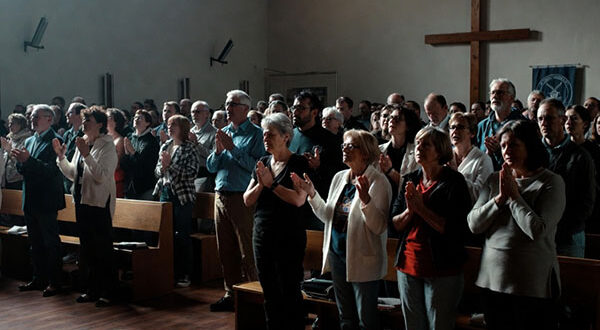
In a world wounded by spiritual exhaustion, haste, and superficiality, millions of Catholics have rediscovered a living experience of God through what is known as the Charismatic Renewal. For some, it is a fresh breath of the Holy Spirit. For others, a cause of bewilderment. What is the Charismatic Renewal really? Is it fully Catholic? What biblical and theological foundation does it have? And how can it transform our spiritual life today without falling into sentimentalism?
This article seeks to offer a profound, rigorous, and pastoral look at this ecclesial phenomenon, rooted in fidelity to the Tradition and Magisterium of the Church.
What Is the Charismatic Renewal?
The Catholic Charismatic Renewal (CCR) is a spiritual movement that arose in the Church in the twentieth century and promotes a personal experience of the Holy Spirit and an actualization of the charisms described in the New Testament, especially in chapters 12–14 of the First Letter to the Corinthians.
It is not a new doctrine.
It is not a parallel Church.
It is not a spirituality foreign to Catholicism.
At its core, it is a call to rediscover the living action of the Holy Spirit received in Baptism and Confirmation.
Its most characteristic feature is what is called the “Baptism in the Holy Spirit”: a conscious and existential renewal of the sacramental graces already received. It does not add a new sacrament. It does not replace anything. It is a spiritual reactivation.
Historical Origins: From Pentecost to the Twentieth Century
The Biblical Root: Pentecost
The Charismatic Renewal finds its model in the event of Pentecost, narrated in Acts 2. There we read:
“And they were all filled with the Holy Spirit and began to speak in other tongues as the Spirit gave them utterance” (Acts 2:4).
The phenomenon was not merely emotional. It was a transformative outpouring that turned fearful men into courageous apostles.
Contemporary Emergence
In 1967, at Duquesne University in the United States, a group of Catholic students experienced what they described as an outpouring of the Holy Spirit during a spiritual retreat. From there, the experience spread rapidly through universities, parishes, and dioceses around the world.
Far from being a rupture, the Church examined the phenomenon. Over the years, various pontiffs—including Pope Paul VI, Pope John Paul II, and Pope Benedict XVI—recognized in the Renewal a gift of the Spirit for the contemporary Church, provided it remained in communion with the hierarchy and faithful to doctrine.
Theological Foundation: The Charisms in the Church
What Are Charisms?
Saint Paul writes:
“There are different kinds of gifts, but the same Spirit” (1 Cor 12:4).
Charisms are special graces granted by the Holy Spirit for the common good of the Church. They are not rewards for personal holiness. They are not automatic signs of spiritual perfection. They are forms of service.
Catholic theology distinguishes between:
- Sanctifying grace (which makes us children of God).
- Charisms (gifts given to build up the community).
The Charismatic Renewal emphasizes the actualization of charisms such as:
- Prayer of praise
- Gift of tongues
- Prophecy
- Healing
- Discernment of spirits
But it is crucial to understand: a charism never replaces sacramental life nor ecclesial obedience. The Holy Spirit does not contradict Himself.
Emotion or Authentic Spiritual Life?
Here we enter a delicate and necessary point.
Spiritual life is not measured by emotional intensity. The mystical tradition—from Saint John of the Cross to Saint Teresa of Ávila—teaches us that God can act both in consolation and in dryness.
The Charismatic Renewal runs the risk—when disordered—of identifying the presence of the Spirit with strong sensible experience. However:
- The Spirit also acts in silence.
- Holiness is measured by charity, not by extraordinary phenomena.
- The authentic fruit is moral and sacramental conversion.
Jesus Himself warned:
“You will know them by their fruits” (Mt 7:16).
Relevance in the Current Context
We live in a secularized, relativistic, and spiritually scattered culture. Many baptized Catholics live as if God did not exist. In this context, the Renewal has served as:
- A gateway back for those who were distant
- A school of living prayer
- A space for rediscovering the Holy Spirit
- A driving force for evangelization
It has helped many move from a cultural faith to a personal faith.
In times when Christianity risks being reduced to social ethics or activism, the Renewal reminds us that the Church is, above all, a supernatural mystery.
Risks and Pastoral Discernment
A serious analysis must also acknowledge the dangers:
- Disordered emotionalism
- Lack of doctrinal formation
- Tendency toward group self-sufficiency
- Confusion between charism and authority
For this reason, the Church insists on three criteria:
- Fidelity to the Magisterium
- Centrality of the Eucharist
- Solid sacramental life
Where these elements are present, the Renewal flourishes in a healthy way. Where they are lacking, it weakens.
Practical Applications for Daily Life
The Charismatic Renewal is not only for prayer meetings. Its principles can be lived daily:
1. Rediscover the Holy Spirit
Many Christians live as if the Spirit were “the great unknown.” Invoking Him daily transforms prayer.
A simple practice:
“Come, Holy Spirit, renew in me the grace of my Baptism.”
2. Prayer of Praise
Praise does not depend on mood. It is an act of faith—even in difficulty.
3. Spiritual Discernment
Ask for light before important decisions.
Not every enthusiasm comes from God.
4. Community Life
Christianity is not spiritual individualism. Prayer groups can be supportive, but always integrated within the parish.
5. Concrete Charity
The true visible “charism” is to love more and love better.
Renewal and Tradition: Opposition or Complementarity?
A false dichotomy opposes the charismatic to the traditional. But the Church is simultaneously:
- Hierarchical and charismatic
- Institutional and mystical
- Liturgical and spontaneous
The same Spirit who inspired the Desert Fathers is the One who blows where He wills today.
The key is not to choose between tradition or charism. It is to live the charism within tradition.
A Call to Spiritual Maturity
The Charismatic Renewal is a gift when it leads to:
- More frequent confession
- More Eucharistic devotion
- Greater obedience
- Everyday holiness
- Deeper love for the Church
It is not an end in itself. It is a means.
The Holy Spirit does not seek to produce spectacular experiences, but saints.
Conclusion: What Should We Do Today?
Perhaps the reader wonders: Should I participate in the Renewal?
The answer is not automatic. Not everyone is called to the same spiritual expressions. But all are called to live in the Spirit.
More than ever, we need:
- Christians who are inwardly on fire
- A faith that is lived, not merely inherited
- Spirit and truth
The Charismatic Renewal reminds us of something essential: God is not an idea from the past. He is a living presence.
And as at Pentecost, He continues to blow.
The question is not whether the Spirit acts.
The question is: Are we allowing Him to act within us?