Related Articles



The Passion of Jesus Christ is not just an ancient story filled with drama. It is the beating heart of the Christian faith. In it, a profound mystery is revealed: the same Lord shows Himself as King, as Servant, and as Son. Three faces, seemingly contradictory, which in reality form a single divine truth capable of transforming the life of anyone who contemplates it with faith.
Today more than ever—in a world marked by power without service, suffering without meaning, and disobedience disguised as freedom—we need to rediscover these three faces of Christ. Not as abstract ideas, but as concrete paths for living.
1. Christ the King: a throne made of the Cross
When we think of a king, we imagine power, glory, dominion. However, in the Passion, Christ completely redefines kingship.
The Gospel according to Gospel of John presents a striking scene: Jesus before Pilate.
“My kingdom is not of this world” (Jn 18:36)
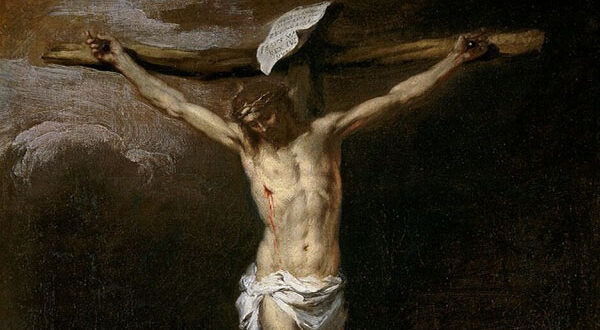
And yet, He is proclaimed king… but crowned with thorns, clothed in a robe of mockery, and enthroned upon a cross.
The paradox of divine kingship
Christ does not renounce His condition as King; rather, He reveals it in its purest form:
- He does not dominate, He gives Himself
- He does not crush, He saves
- He does not impose, He loves to the very end
Here is the key: true power is not that which imposes itself, but that which gives itself.
Spiritual application
Today, many seek to control their lives, to impose themselves, to win. But Christ teaches another way:
- To reign is to serve
- To lead is to sacrifice
- To love is to give oneself without measure
Do you want to be great? Look at the Cross. There is the throne.
2. The Suffering Servant: the pain that redeems
Centuries before Christ, the prophet Isaiah announced a mysterious and unsettling truth: a servant who would save the world through suffering.
“He was pierced for our transgressions, crushed for our iniquities” (Is 53:5)
The Passion is not an accident. It is fulfillment.
Jesus, the promised Servant
In the Passion, every gesture of Christ reflects this prophecy:
- He is betrayed without resisting
- He is accused without defending Himself
- He is struck without striking back
As the Gospel of Gospel of Matthew says:
“Like a sheep led to the slaughter, He did not open His mouth”
The meaning of suffering
Here something is revealed that the world rejects: suffering can have meaning when it is united to God.
Christ does not eliminate pain… He transforms it.
Pastoral application
How many people today live with suffering:
- family struggles
- work-related burdens
- emotional wounds
- spiritual trials
The Passion teaches that suffering offered to God is not useless. It can become redemptive.
You are not alone on your cross. Christ is already there with you.
3. The Obedient Son: the freedom that surrenders
In a culture that exalts absolute autonomy, obedience sounds like weakness. But in Christ, obedience is the highest expression of love.
The Gospel according to Gospel of Luke brings us into Gethsemane:
“Father, if You are willing, take this cup away from Me; nevertheless, not My will, but Yours be done” (Lk 22:42)
The inner struggle of Christ
Jesus does not pretend. He feels real anguish. He sweats blood. He trembles before suffering.
Yet He chooses to obey.
Obedience as an act of love
It is not blind submission. It is conscious self-giving.
Christ trusts the Father even when everything seems dark.
Practical application
Today, many live under the logic of “I decide everything.” But this often leads to:
- anxiety
- emptiness
- disorientation
Christ proposes another path:
- to trust
- to surrender
- to obey
True freedom is not doing whatever you want, but doing what you ought… out of love.
4. The Passion according to each evangelist: four perspectives, one mystery
Each evangelist—Saint Matthew, Saint Mark, Saint Luke, and Saint John—presents the Passion with a particular nuance. Together, they form an extraordinary theological richness.
Saint Matthew: the rejected King
The account in the Gospel of Matthew shows Jesus as the promised Messiah, rejected by His own people.
- He emphasizes the fulfillment of prophecies
- He highlights the responsibility of Israel
- He underlines Christ’s kingship even in humiliation
Theological key: Christ is the King whom the world does not recognize.
Saint Mark: the Servant who suffers in silence
The Gospel of Mark presents a sober, direct, almost raw narrative.
- Jesus appears abandoned
- The suffering is intense and real
- The silence of Christ is emphasized
“My God, My God, why have You forsaken Me?” (Mk 15:34)
Theological key: Christ assumes human suffering in all its depth.
Saint Luke: the merciful Savior
In the Gospel of Luke, the Passion is filled with compassion.
- Jesus forgives from the Cross
- He consoles the good thief
- He cares even in pain
“Father, forgive them, for they know not what they do” (Lk 23:34)
Theological key: even in suffering, Christ loves and saves.
Saint John: the glorified Son
The Gospel of John presents the Passion as glorification.
- Jesus is in control
- He is not a victim, but the Lord
- The Cross is victory
“It is finished” (Jn 19:30)
Theological key: the Cross is not defeat, it is triumph.
5. A synthesis that changes your life
These three faces—King, Servant, Son—are not separate ideas. They are a concrete call:
- Christ the King teaches you to live with purpose
- Christ the Servant teaches you to give meaning to suffering
- Christ the Son teaches you to trust and obey
A personal examination
Ask yourself sincerely:
- Do I want to reign… or to serve?
- Do I reject suffering… or offer it?
- Do I live for myself… or for God’s will?
6. Conclusion: the Passion did not end… it continues in you
The Passion of Christ is not just something that happened. It is something that is made present in every soul.
Every time you:
- choose good over evil
- forgive instead of seeking revenge
- obey instead of imposing yourself
…you are participating in the Passion of Christ.
And there, in the hidden, in the ordinary, in the silent…
Christ reigns again.
Christ suffers again.
Christ loves again.
And the world—though it may not see it—begins to change.