Related Articles
The Silence That Reveals the Truth
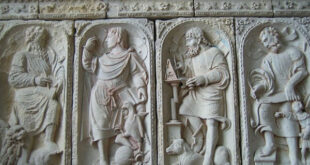
Few scenes in the Gospel possess such a piercing force, so charged with truth and so profoundly relevant today as the encounter between Jesus Christ and Pontius Pilate. This is not merely a historical episode: it is the eternal drama between truth and power, between conscience and convenience, between God and the human heart.
This passage, narrated especially in the Gospel of John (Jn 18–19), is not simply a trial… it is the trial. And not only of Christ, but of all humanity.
1. The Context: A Political Trial with Eternal Consequences
Jesus is brought before Pilate accused by the religious authorities. However, what was a religious accusation (blasphemy) is transformed into a political one: “He claims to be a king.”
Pilate, representative of the Roman Empire, is not interested in theological questions. He seeks stability, order, to avoid unrest. In other words: he wants to survive politically.
Here the tension begins:
- Christ represents absolute Truth.
- Pilate represents relative and fearful power.
And in between… the crowd.
2. The Decisive Dialogue: “What Is Truth?”
One of the most profound moments in all of Scripture occurs when Pilate asks:
“Are you the King of the Jews?” (Jn 18:33)
Jesus responds with a statement that transcends politics:
“My kingdom is not of this world” (Jn 18:36)
And then, the phrase that echoes through the ages:
“For this I was born and for this I came into the world, to testify to the truth. Everyone who belongs to the truth listens to my voice.” (Jn 18:37)
Pilate replies with skepticism:
“What is truth?” (Jn 18:38)
Deep Theological Key
Pilate does not wait for an answer.
The Truth is standing before him… and he does not recognize it.
This reveals something essential:
👉 Truth is not just an idea, it is a Person: Christ.
As Christian tradition affirms:
Christ does not merely teach the truth, He is the Truth (cf. Jn 14:6).
3. The Silence of Christ: The Language of Redemption
One of the most striking aspects of the account is Jesus’ silence before the accusations.
He does not defend Himself. He does not argue. He does not impose Himself.
Why?
Theological Dimension
Christ fulfills the prophecy of the Suffering Servant:
“Like a lamb led to the slaughter, he was silent and did not open his mouth” (Is 53:7)
His silence is not weakness… it is total surrender.
- He does not respond to power because His authority does not come from this world.
- He does not justify Himself because His mission is to redeem, not to defend Himself.
- He does not flee because He has come to save.
Spiritual Dimension
That silence speaks directly to us:
- Do we know how to remain silent when we are treated unjustly?
- Do we seek to be right… or to live in the truth?
- Do we react from ego… or from love?
4. Pilate: The Drama of a Divided Conscience
Pilate is not a monster. And that is precisely what is unsettling.
He recognizes Jesus’ innocence:
“I find no guilt in Him” (Jn 18:38)
And yet… he condemns Him.
Why?
Because he chooses convenience over truth.
- He fears losing power.
- He yields to social pressure.
- He washes his hands… but not his heart.
Pastoral Insight
Pilate represents the modern man:
- He knows what is right… but does not do it.
- He recognizes the truth… but does not follow it.
- He prefers security… over justice.
👉 Pilate’s greatest sin was not cruelty, but cowardice.
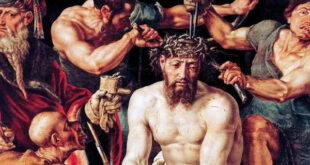
5. “Ecce Homo”: When God Is Revealed in Humiliation
Pilate presents Jesus, scourged and crowned with thorns, saying:
“Behold the man!” (Jn 19:5)
Without realizing it, he proclaims a profound truth.
Theological Meaning
That “man” is:
- The new Adam
- The true King
- The visible face of God’s love
Christ does not reign from a throne… but from the Cross.
Christian Paradox
- Weakness is strength
- Humiliation is glory
- Surrender is victory
6. The Choice of the People: Barabbas or Christ
The people choose to release Barabbas.
This is not merely a historical detail. It is a spiritual revelation:
👉 Every day we choose between Christ and Barabbas.
Barabbas represents:
- Violence
- Selfishness
- Sin
Christ represents:
- Love
- Truth
- Self-giving
An Uncomfortable but Necessary Question
Whom do you choose in your daily decisions?
7. Practical Applications for Today
This passage is not past. It is present.
1. Defend the truth, even when it costs
We live in a culture where truth is relativized. As Christians, we are called to be witnesses, not spectators.
2. Form your conscience
Pilate had a conscience… but not the strength.
We need both.
👉 Prayer, formation, and sacramental life.
3. Do not yield to social pressure
The crowd shouted. Pilate gave in.
Today, the pressure is no less: social media, ideologies, dominant culture.
4. Learn the value of silence
Not everything must be answered.
Sometimes, the strongest testimony… is silent fidelity.
5. Recognize Christ in weakness
Christ does not appear in success, but on the Cross.
8. Conclusion: The Trial Continues
The encounter between Christ and Pilate did not end 2,000 years ago.
It continues today… in your heart.
Every decision, every action, every silence… is a trial.
- Will you choose truth or comfort?
- Will you listen to Christ’s voice or the noise of the world?
Because in the end, it is not we who judge Christ…
👉 It is Christ who, in His silence, reveals the truth of our life.
Final Prayer
Lord Jesus,
may I not be like Pilate,
who sees the truth and rejects it.
Give me the courage to follow You,
the clarity to recognize You,
and the humility to love You even on the Cross.
Amen.