Related Articles

An ancient, luminous, and profoundly relevant feast that teaches us to recognize Christ, to offer ourselves with Him, and to live as children of the Light in the midst of the world.
1. What do we really celebrate at Candlemas?
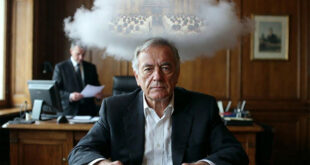
Every February 2nd, the Church celebrates one of the most beautiful—and paradoxically most forgotten—feasts of the liturgical calendar: The Presentation of the Lord, popularly known as Candlemas.
It is not a secondary devotion nor merely a folkloric tradition. It is a Christological, Marian, and profoundly eschatological feast. In it converge:
- The infancy of Jesus, still fragile and silent
- The faithful fulfillment of the Law of Moses
- The public manifestation of the Messiah in the Temple
- The prophetic announcement of the Cross and Redemption
- And the central symbol of all Christian life: the Light
Candlemas closes the Christmas cycle, like a final glow that illuminates everything that will come afterward.
2. Biblical foundation: the promised Light enters the Temple
The central account is found in the Gospel of Saint Luke:
“When the days were completed for their purification according to the law of Moses, they took him up to Jerusalem to present him to the Lord”
(Lk 2:22)
Here three profoundly theological acts take place:
a) The Presentation of the Firstborn
According to the Law (cf. Ex 13:2), every firstborn male belonged to God. Mary and Joseph, although they know that this Child is God, humbly submit themselves to the Law.
👉 God allows Himself to be offered by man.
👉 The Creator enters the Temple as a creature.
b) The Purification of Mary
Mary did not need purification. There was no sin in her. Yet she presents herself as one among many.
👉 Here the heart of the Virgin is revealed:
humility, obedience, and solidarity with sinners.
c) The encounter with Simeon and Anna
Simeon takes the Child in his arms and proclaims one of the most sublime prayers in history:
“Now, Lord, you may let your servant go in peace… for my eyes have seen your salvation, a light for revelation to the Gentiles”
(Lk 2:29–32)
Here the great title of this feast is born:
👉 Christ, the Light of the world
3. Why are candles blessed?
The tradition of blessing candles is not a late addition: it is living catechesis.
The candle symbolizes:
- Christ, the true Light
- Faith, which illuminates the darkness
- The Christian, called to be consumed by love
The wax burns slowly. It makes no noise. It does not defend itself. It gives light as it is consumed.
👉 Thus should the Christian life be.
That is why, for centuries, Christian people kept blessed candles:
- For moments of danger
- For the agony of the sick
- For storms, wars, and crises
Not out of superstition, but as a sign of trust in the Light that never goes out.
4. An uncomfortable prophecy: the sword and the Cross
Candlemas is not a “sweet” feast. Simeon warns Mary:
“This child is destined to be a sign that will be contradicted… and you yourself a sword will pierce”
(Lk 2:34–35)
Here, for the first time clearly, appears the shadow of the Cross.
👉 The Light does not eliminate suffering
👉 It illuminates and redeems it
From this day on, Mary knows that her motherhood will be co-redemptive, silent, and painful.
5. Theological relevance today: why is Candlemas more relevant than ever?
We live in times of:
- Moral confusion
- Spiritual darkness
- Constant noise
- Diluted faith and relativism
Candlemas reminds us of three urgent truths:
1. Christ remains the only Light
Not one light among many.
Not just another spiritual option.
👉 The only one that does not deceive.
2. Faith is not inherited, it is offered
Mary and Joseph present Jesus.
Today many parents do not present their children to God.
👉 Baptisms delayed
👉 Education without faith
👉 Fear of “imposing”
Candlemas asks us:
To whom do your children belong?
3. Authentic faith involves sacrifice
There is no light without the cross.
There is no comfortable Christianity.
6. Practical theological and pastoral guide to living Candlemas today
I. In personal life
1. Renew your offering to God
Repeat interiorly:
“Lord, all that I am and all that I have belongs to You.”
Do it consciously, not as a mere formula.
2. Examine your areas of darkness
- Hidden sins
- Resentments
- Lukewarmness
- Fears
Christ does not judge darkness: He pierces it with His Light.
II. In family life
3. Spiritually present your family
Even if your children are adults, present them to God in prayer.
An ancient practice:
- Light a blessed candle
- Pray together the Nunc Dimittis or an Our Father
- Ask for protection and fidelity
4. Recover visible signs of faith
A faith that is not seen grows weak.
👉 Crucifixes
👉 Candles
👉 Blessings in the home
III. In community and social life
5. Be light without arrogance
Not by imposing, but by witnessing:
- Coherence
- Mercy
- Truth without violence
6. Do not fear being a “sign of contradiction”
Christ was. The Church always will be.
👉 Not every rejection is failure
👉 Sometimes it is fidelity
7. Mary, the Woman who carries the Light
Mary does not speak in this scene.
She does not explain.
She does not demand.
👉 She presents, offers, and keeps everything in her heart.
She teaches us that:
- Mature faith does not need protagonism
- True devotion always leads to Christ
- The purest light is the one that reflects, not the one that dazzles
8. Conclusion: what will you do with the Light?
Candlemas is not just a feast that passes by.
It is a direct question to the soul:
👉 Do you recognize Christ when He enters humbly into your life?
👉 Do you offer Him, or do you appropriate Him for yourself?
👉 Do you allow His Light to reveal your shadows as well?
Like Simeon, only the one who waits, prays, and perseveres can say at the end:
“My eyes have seen your salvation.”
May Candlemas not be merely a candle lit…
but a life that burns, enlightens, and gives itself. 🕯️✝️