Related Articles

An uncomfortable… but deeply necessary question
In an increasingly globalized world, where we live alongside Christians from different traditions, a very concrete question arises:
Can a Catholic attend an Orthodox Mass?
And even more:
Is that Mass valid? Can one receive Communion? Is it right to do so?
The answer is not superficial. It is not enough to say “yes” or “no.”
We must enter into history, theology, and above all, into the heart of the Church.
1. A historical wound: the separation between East and West
To understand the issue, we must look back, specifically to the year 1054, when the so-called
East–West Schism
took place.
Until that moment, the Church was one, although with a diversity of rites (Latin, Byzantine, Syriac…).
But political, cultural, and theological tensions led to a rupture between:
- The Church of the West (Rome)
- The Churches of the East (Constantinople and others)
Since then, we speak of:
- The Catholic Church
- The Orthodox Church
But here is the key point:
👉 The Orthodox Church is not a sect nor a heresy in the full sense.
👉 It preserves apostolic succession and valid sacraments.
2. Is the Orthodox Mass valid?
The answer is clear and decisive:
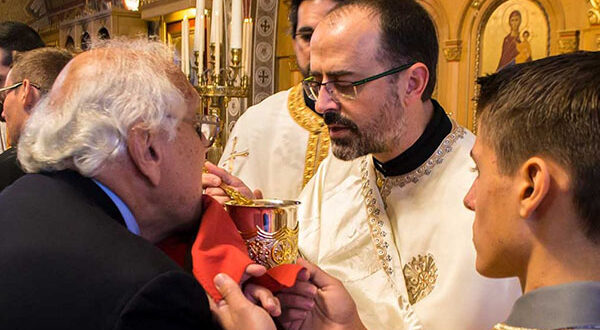
👉 Yes, the Orthodox Divine Liturgy is valid.
Why?
Because the Orthodox:
- Have a valid priesthood (unbroken apostolic succession)
- Celebrate the Eucharist with proper matter, form, and intention
- Maintain faith in the Real Presence of Christ
In other words, when an Orthodox priest consecrates…
Christ is truly present.
This is explicitly recognized by the Catholic Church, especially since the
Second Vatican Council.
3. So… can a Catholic attend?
👉 Yes, a Catholic may attend an Orthodox liturgy.
But with important nuances:
✔️ What is permitted
- Attending for reasons such as:
- family events (weddings, funerals)
- cultural or spiritual interest
- lack of a nearby Catholic church
- Participating with respect and recollection
❗ What it does NOT replace
👉 It does not fulfill the Sunday obligation (under normal circumstances)
A Catholic is obliged to attend Catholic Mass on Sundays and holy days of obligation, unless there is a serious reason preventing it.
4. The big question: can a Catholic receive Communion in an Orthodox Mass?
Here we enter delicate territory.
❌ Under normal conditions: NO
A Catholic should not receive Communion in an Orthodox liturgy.
Why?
Because Communion is not only receiving Christ…
👉 It is also a sign of visible unity in faith and in the Church.
And currently:
- There is no full communion between Rome and the Orthodox Churches
- There are doctrinal differences (e.g., the primacy of the Pope)
5. But there are exceptions (very important)
The Church, as a mother, also foresees extreme situations.
According to Canon Law, a Catholic may receive the sacraments from an Orthodox priest when:
✔️ These conditions are met:
- Physical or moral impossibility of accessing a Catholic priest
- A grave spiritual need
- The sacrament is valid (which it is)
- There is no danger of error or indifferentism
👉 A clear example:
- A Catholic in a country with no Catholic churches
- Situations of persecution
- Spiritual emergencies
In such cases, Communion could be received validly.
6. And can Orthodox Christians receive Communion in a Catholic Mass?
Interestingly:
👉 Yes, in certain cases, the Catholic Church permits it
If:
- They request it on their own initiative
- They are properly disposed
- They share the faith in the sacrament
This reveals something very profound:
👉 The Church recognizes the spiritual richness of the Christian East
7. A theological key: imperfect, but real unity
The
Catechism of the Catholic Church
teaches that there is a real, though imperfect communion with the Orthodox Churches.
This means:
- We are not completely separated
- But neither are we fully united
It is a situation of “brothers who are distant”
8. The Eucharist: a sign of unity, not division
Saint Paul expresses this with striking force:
“Because there is one bread, we who are many are one body”
(1 Corinthians 10:17)
The Eucharist does not only nourish unity…
👉 It visibly expresses it
For this reason, the Church is prudent:
- It does not deny validity
- But neither does it allow free intercommunion
9. Practical application: what should a Catholic do today?
Here is a clear and pastoral guide:
✔️ You may attend
- With respect
- With a spirit of prayer
- Appreciating the beauty of the Eastern liturgy
✔️ You should always prefer the Catholic Mass
- It is your spiritual home
- It is your place of full communion
❗ Do not habitually receive Communion in Orthodox liturgy
- Avoid confusion
- Respect the discipline of the Church
✔️ Exceptions: yes, but with discernment
- Real necessity
- Impossibility of attending Catholic Mass
10. A call to unity: Christ’s desire
Christ did not found multiple Churches. He founded one.
And He prayed for it:
“That they may all be one”
(John 17:21)
Every time a Catholic attends an Orthodox liturgy, it should be with a deep desire:
👉 That one day we may receive Communion together without restriction
Conclusion: neither indifference nor rigidity
The final answer is neither cold nor merely legalistic. It is deeply ecclesial:
- Yes, the Orthodox Mass is valid
- Yes, you may attend
- No, you should not normally receive Communion
- Yes, in exceptional cases it may be done
But above all:
👉 Love your faith, know your Church, and respect the mystery of unity
Because in the end, it is not only about “what is permitted”…
👉 But about living in truth, in charity, and in communion.