Related Articles
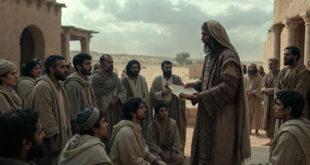
Many Christians imagine the birth of Christianity like this: first the Gospels were written, then the apostolic letters, and finally everything was gathered into the Bible.
But historical reality is far more fascinating.
In fact, the letters of Saint Paul are older than the Gospels.
Yes, you read that correctly.
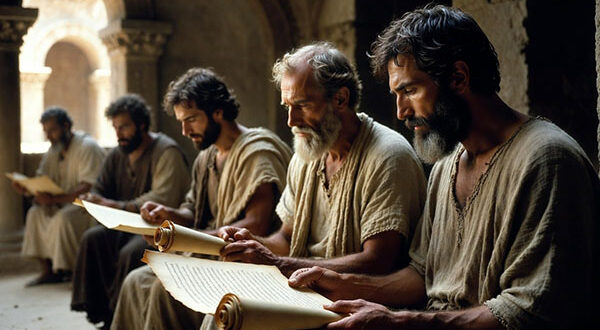
When the Gospels did not yet exist in written form, texts that today form part of the New Testament were already circulating among the first Christian communities: the letters of the great missionary apostle.
This fact is not merely a historical curiosity.
It has profound implications for understanding the Christian faith, apostolic tradition, and spiritual life today.
Let’s discover why.
⏳ Christianity Was Born… Without a New Testament
Today we are accustomed to having the complete Bible at home. But the first Christians did not have that experience.
When Jesus Christ died and rose again (around the year 30 A.D.), He did not leave behind any written book. His teaching was transmitted in another way:
- Oral preaching
- The living memory of the apostles
- Liturgy
- The witness of the communities
The disciples preached what they had seen and heard.
The New Testament itself confirms this. In the Gospel of John we read:
“There are also many other things that Jesus did; if every one of them were written down, I suppose that not even the whole world would have room for the books that would be written.”
— (Jn 21:25)
In other words: the Christian faith was first born as a living Tradition, not as a book.
✉️ The First Pages of the New Testament… Were Letters
Between the years 50 and 65 A.D., Saint Paul wrote several letters to Christian communities that he himself had founded.
Among them:
- Romans
- 1 and 2 Corinthians
- Galatians
- Ephesians
- Philippians
- Colossians
- 1 and 2 Thessalonians
- 1 and 2 Timothy
- Titus
- Philemon
The oldest of these, such as 1 Thessalonians, was probably written around the year 50 A.D.
To put this into perspective:
| Text | Approximate Date |
|---|---|
| Letters of Paul | 50–65 A.D. |
| Gospel of Mark | 65–70 A.D. |
| Gospel of Matthew | 70–80 A.D. |
| Gospel of Luke | 70–85 A.D. |
| Gospel of John | 90–100 A.D. |
This means something extraordinary:
👉 The earliest written words of Christianity that we possess come from Paul.
🌍 Why Did Paul Write Letters?
Early Christianity grew very rapidly.
Within a few decades there were already communities in:
- Asia Minor
- Greece
- Rome
- Syria
Saint Paul could not physically be everywhere, so he used the most effective means of communication in the ancient world: letters.
His letters had several purposes:
1. Correcting Doctrinal Errors
New communities could easily drift into confusion.
For example, in Galatians Paul warns:
“I am astonished that you are so quickly deserting the one who called you by the grace of Christ and are turning to a different gospel.”
— (Gal 1:6)
2. Resolving Conflicts
The first Christian communities were not perfect.
In Corinth there were:
- divisions
- moral problems
- liturgical confusion
Paul intervenes with apostolic authority.
3. Teaching Theology
The letters contain some of the most profound theological reflections in Christianity:
- justification by grace
- the mystery of the Church
- redemption in Christ
- life in the Holy Spirit
Much of what catechisms teach today was already formulated there.
📖 So… Why Were the Gospels Written Later?
For decades, the apostles preached orally about the life and teachings of Christ.
But over time several things happened:
- The direct witnesses began to die.
- Christian communities multiplied.
- It became necessary to preserve the message faithfully.
For this reason the Gospels began to be written.
The first was probably written by Mark the Evangelist, followed by those of Matthew the Apostle, Luke the Evangelist, and finally John the Evangelist.
But when these texts began to circulate…
Paul’s letters were already being read in the churches.
🕊️ The Letters Were Read… During the Liturgy
This is something many Christians do not know.
Paul’s letters were not private texts.
They were publicly read in the liturgical assemblies.
Paul himself asks for this:
“After this letter has been read to you, see that it is also read in the church of the Laodiceans.”
— (Col 4:16)
In other words:
📖 the letters functioned as living Scripture for the communities.
Over time, the Church recognized that these writings were inspired by the Holy Spirit.
🧠 What Do Paul’s Letters Teach Us Theologically?
The letters contain some of the most important doctrines of Christianity.
Let’s look at a few of them.
1️⃣ Salvation Is Grace
Paul insists again and again:
Salvation cannot be bought or earned; it is a gift from God.
“For by grace you have been saved through faith; and this is not your own doing, it is the gift of God.”
— (Eph 2:8)
This remains revolutionary today.
We live in a culture that believes everything must be deserved.
But Christianity reminds us:
👉 Salvation is a gift.
2️⃣ Christ Is the Center of the Universe
For Paul, everything revolves around Christ.
“All things were created through Him and for Him.”
— (Col 1:16)
This means that:
- history has meaning
- human life has purpose
- the world is not chaos
Christ is the center of reality.
3️⃣ The Church Is the Body of Christ
One of Paul’s most powerful images.
“Now you are the body of Christ and individually members of it.”
— (1 Cor 12:27)
This changes how we understand faith.
Being a Christian is not merely something individual.
It means belonging to a living organism.
🔥 Why Is This Important Today?
In an age where many people say:
“I follow Jesus, not the Church.”
Paul’s letters show the opposite.
From the very beginning:
- communities existed
- apostolic authority existed
- doctrinal teaching existed
The Christian faith has always been communal and ecclesial.
🧭 Spiritual Applications for Our Lives
This historical discovery can transform our spiritual life.
1️⃣ Rediscover Paul’s Letters
Many Christians read only the Gospels.
But the letters contain practical wisdom for daily life:
- how to live charity
- how to face suffering
- how to live marriage
- how to overcome sin
2️⃣ Understand the Importance of Tradition
Christianity did not begin with a book.
It began with:
- Christ
- the apostles
- the Church
That is why apostolic Tradition is fundamental.
3️⃣ Live a Missionary Faith
Saint Paul crossed half the world to proclaim Christ.
He was:
- persecuted
- imprisoned
- beaten
- misunderstood
And yet he wrote:
“I can do all things through Him who strengthens me.”
— (Phil 4:13)
🌟 An Astonishing Detail That Almost No One Notices
Probably the oldest Christian words we possess are found in Paul’s letters.
This means:
📜 when you read Romans or Corinthians you are reading some of the Christian texts closest to the years immediately following the Resurrection.
They are almost direct echoes of apostolic preaching.
✨ Conclusion: Before the Gospels… Faith Was Already Burning
The history of Christianity is more alive than we often imagine.
Before the written Gospels existed:
- communities already existed
- liturgy already existed
- theology already existed
- apostolic letters were already circulating
And in the midst of all this, the passionate voice of Saint Paul reminded Christians of something that remains true today:
“For to me, to live is Christ.”
— (Phil 1:21)
That is the heart of everything.
Not a book.
Not an idea.
A living Person.