Related Articles
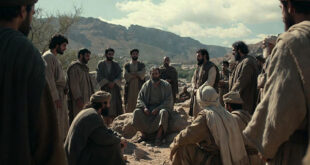


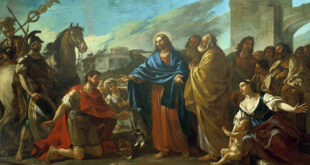
In the Gospel, we find scenes that do not merely recount an event, but open a direct window into the mystery of God’s heart. One of these—intense, unsettling, and profoundly human—is the encounter between Jesus and the Canaanite woman (cf. Matthew 15:21–28).
At first glance, it may seem like a harsh episode. But when read attentively and through the faith of the Church, it becomes one of the most powerful lessons on prayer, perseverance, and divine mercy.
This passage is not just history: it is a mirror in which every Christian can see themselves reflected.
1. The Story: A Mother, a Cry, and a Troubling Silence
The Gospel places us in pagan territory, outside of Israel. There appears a Canaanite woman—foreign, religiously excluded—who cries out from her suffering:
“Have mercy on me, Lord, Son of David! My daughter is severely possessed by a demon.” (Mt 15:22)
From the very beginning, something deeply revealing emerges:
this woman recognizes in Jesus the Messiah (“Son of David”), something many in Israel had not yet done.
But then something unexpected happens:
“He did not answer her a word.”
Silence.
A silence that hurts.
A silence that many believers have experienced at some point.
The disciples, uncomfortable, ask Jesus to send her away. And He responds with a phrase that seems to close all hope:
“I was sent only to the lost sheep of the house of Israel.”
Yet the woman does not give up. She comes closer, kneels, and pleads:
“Lord, help me!”
Then comes the most unsettling response:
“It is not right to take the children’s bread and throw it to the dogs.”
But here the miracle happens before the miracle.
2. The Decisive Moment: A Faith That Does Not Take Offense
Far from being scandalized, offended, or walking away, the woman responds with extraordinary humility and spiritual intelligence:
“Yes, Lord, yet even the dogs eat the crumbs that fall from their masters’ table.”
This sentence is a theological jewel.
Why?
Because in it are united three essential attitudes of authentic faith:
1. Radical humility
She does not demand rights. She does not consider herself deserving.
She accepts her smallness… yet does not doubt God’s goodness.
2. Total trust
She believes that even a “crumb” from Christ is enough to transform her reality.
3. Invincible perseverance
She does not give up, even when everything seems closed.
And then Jesus reveals the meaning of the entire dialogue:
“O woman, great is your faith! Let it be done for you as you desire.”
And her daughter was healed at that very moment.
3. Theological Key: Why Does Jesus Act This Way?
This passage has been the subject of deep reflection in the Church’s tradition. It is not a real rejection, but a divine pedagogy.
a) A faith tested, not denied
God tests not to humiliate, but to purify and elevate.
Like gold in the furnace, faith grows through difficulty.
b) A foreshadowing of the universality of salvation
Jesus begins His mission in Israel, but this episode announces something immense:
salvation is for everyone, even for those “far away.”
The Canaanite woman represents the Gentiles… and, in a sense, all of us.
c) Persistent prayer
This passage connects with other teachings of Christ:
- The persistent widow (Lk 18:1–8)
- The friend at midnight (Lk 11:5–8)
God wants us to persevere, not because He does not hear, but because He desires a living, trusting, and persevering relationship.
4. Spiritual Application: When God Seems Silent
This episode touches on a very real and current experience.
How many times have we prayed… and seen no answer?
How many times have we felt the “silence of God”?
The Canaanite woman teaches us how to live in those moments.
1. Do not interpret silence as abandonment
God’s silence is not absence.
It is often a deeper form of presence.
God is at work even when we do not perceive it.
2. Persevere when everything invites you to give up
Mature faith is not the one that believes only when it sees results,
but the one that remains when it does not.
3. Pray with humility, not entitlement
We live in a culture of rights, but the spiritual life is built on gift.
We do not “deserve” grace… we receive it.
4. Trust that “a crumb” is enough
A small gesture from God can completely transform a life.
We do not need everything solved, but His grace at work.
5. A Lesson for Our Time
In a society marked by immediacy, frustration, and the quick abandonment of what does not work, the Canaanite woman offers us a spiritual counterculture:
- Against haste → perseverance
- Against pride → humility
- Against despair → trust
Today, many abandon prayer because they “feel nothing” or “see no results.”
But faith is not a contract of results, but a relationship of love.
6. Pastoral Dimension: How to Live This Teaching Today
Here are some concrete practices to embody this Gospel:
🔹 1. Keep a fixed intention in your prayer
Like the Canaanite woman, present to God a concrete need (your own or that of a loved one) and persevere in it.
🔹 2. Establish a daily time of prayer, even if you “feel nothing”
Fidelity is worth more than emotion.
🔹 3. Repeat a short prayer
For example:
“Lord, have mercy on me”
“Jesus, I trust in You”
🔹 4. Accept God’s timing
Not everything comes when we want it, but everything comes when it is fitting for our salvation.
🔹 5. Learn to see the “crumbs”
Be grateful for the small signs of grace: inner peace, unexpected help, light in the midst of confusion.
7. A Faith That Moves the Heart of Christ
The Gospel does not often say that Jesus praised someone’s faith… but here He does:
“Great is your faith!”
It is not the faith of an apostle, nor of a scholar, nor of a religious leader.
It is the faith of a foreign mother, wounded, desperate… yet trusting.
This is profoundly hopeful.
Because it means you do not need to be perfect to reach God.
You only need not to give up.
Conclusion: Your Story Can Be Like Hers
At some point, we are all that woman:
- When we pray for a child, a family member, or an impossible situation
- When we feel that God does not respond
- When everything seems closed
But this Gospel leaves us with a firm certainty:
Persevering faith is never left unanswered.
Perhaps not always as we expect.
Perhaps not at the time we desire.
But always at the right moment and for our good.
Today, Christ continues to seek that faith.
That faith that is not scandalized.
That faith that insists.
That faith that, even from poverty, dares to say:
“Lord, even if it is only a crumb… it is enough for me.”