Related Articles

An uncomfortable question…
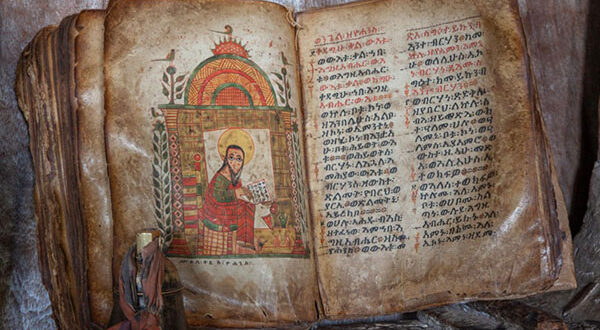
What if I told you that there exists a Bible that is older, larger, and contains books you have never read… yet have been venerated for centuries by real Christians?
This is not a conspiracy theory. It is a historical reality: the Ethiopian Bible.
And understanding it does not just expand your knowledge…
it can deeply shake the way you live your faith.
What is the Ethiopian Bible, really?
The so-called Ethiopian Bible belongs to the tradition of the Ethiopian Orthodox Tewahedo Church, one of the oldest Christian communities in the world, with roots that go back almost to apostolic times.
Unlike the Bible you know — the Catholic one, with 73 books — the Ethiopian Bible contains 81 books.
Yes, you read that right: 81.
Among them are texts that are not part of the Catholic or Protestant canon, such as:
- The Book of Enoch
- The Book of Jubilees
- The complete Ethiopian Book of Enoch
- Other ancient writings with strong symbolic and apocalyptic content
An ancient… and radically serious Christianity
To understand this Bible, you must first understand the soul of Ethiopia.
Christianity arrived there very early, probably in the 4th century, under the reign of King Ezana. Since then, the faith has been lived with an intensity that today might feel almost… uncomfortable.
Strict fasting.
Deeply symbolic liturgy.
And a supernatural worldview that has not been diluted by modernity.
Why does it have more books? The question of the canon
Now we enter serious ground.
The biblical canon — that is, the official list of inspired books — did not fall from heaven already closed. It was discerned by the Church over the centuries.
In the Catholic Church, this canon was definitively defined at the Council of Trent, confirming the 73 books we know today.
But the Ethiopian Church followed a different tradition, preserving texts that in other regions were considered:
- useful but not inspired
- or directly excluded due to doctrinal doubts or uncertain origin
This does not automatically mean that those books are “wrong”…
but neither does it mean they have the same authority as Sacred Scripture recognized by the Church.
The Book of Enoch: fascinating… but dangerous if misinterpreted
One of the most striking texts is the Book of Enoch.
This book speaks about:
- Fallen angels
- Heavenly mysteries
- Divine judgment
- Secrets of the spiritual universe
It is even indirectly referenced in the Letter of Jude (cf. Jude 1:14).
But this is where caution is needed.
From a traditional Catholic perspective:
- It is not part of the inspired canon
- It may contain elements of truth… mixed with symbolic or non-revealed content
- Reading it without guidance can lead to doctrinal errors or unhealthy curiosity
So… is the Ethiopian Bible “better”?
Short answer: no.
Deeper answer: no, but it challenges us.
The Catholic Church holds that the biblical canon is closed and protected by the Holy Spirit. We do not need “more books” for salvation.
As Scripture says:
“All Scripture is inspired by God and useful for teaching…” (2 Timothy 3:16)
The question is not whether we are missing books…
but whether we are living what we already have.
How do they describe Jesus… and how is it different?
Here comes one of the most important points.
In the Ethiopian tradition, Jesus Christ is:
- True God and true Man
- Savior of the world
- Eschatological Judge
But there are important nuances.
The Ethiopian Church belongs to a non-Chalcedonian tradition, meaning it does not fully accept the formulations of the Council of Chalcedon.
This implies differences in how the union of Christ’s natures is expressed:
- The Catholic Church clearly teaches:
👉 two natures (divine and human) in one Person - Ethiopian theology emphasizes a more unified (miaphysite) expression
⚠️ This does not mean they “deny Christ,” but their formulation can be ambiguous from a Catholic perspective.
What can we learn today from the Ethiopian Bible?
This is where the topic stops being historical… and becomes personal.
1. Hunger for the sacred
Ethiopian Christians treat Scripture with real reverence.
And us?
Do we have Bibles gathering dust?
2. Awareness of the spiritual world
They have not reduced faith to morality or psychology.
They believe in:
- Angels
- Demons
- Judgment
- Eternity
And they live accordingly.
3. Seriousness in faith
For them, Christianity is not cultural.
It is radical.
Practical application: how to live this daily
If you want to bear real fruit from all this, start here:
📖 1. Read your Bible… for real
You do not need 81 books.
Start with the 4 Gospels.
🙏 2. Recover the sense of the sacred
Be silent.
Pray with reverence.
Care for your relationship with God.
🕊️ 3. Do not seek the “extraordinary”… live the essential
The danger of texts like Enoch is distraction.
What matters has already been revealed in Christ.
✝️ 4. Love Christ more than the mystery
It is not about knowing more…
but loving better.
A necessary (and pastoral) warning
In the age of the internet, many Christians are fascinated by:
- hidden books
- ancient secrets
- “lost truths”
But be careful.
The Catholic faith is not esoteric.
It is revealed, public, and sufficient.
Conclusion: the real “hidden treasure”
The Ethiopian Bible is not an enemy…
but neither is it the center.
The center is Christ.
And He has already been fully given to us.
“I am the way, the truth, and the life” (John 14:6)
You do not need to look further.
You need to go deeper.