Related Articles


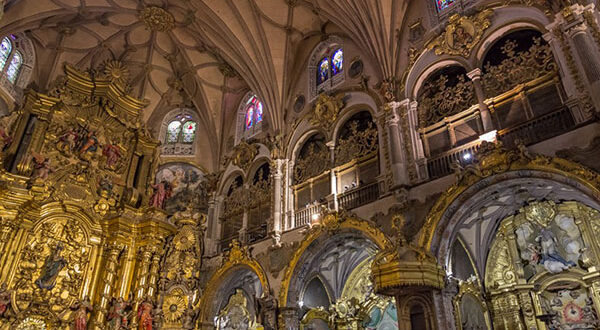
There was a time when Spain did not respond to crisis with lukewarmness, but with beauty. It did not answer heresy with silence, but with gold, incense, carved wood, and the blood of martyrs. That time was the Spanish Baroque.
Many see it merely as an overly ornate artistic style. But the Baroque was not an aesthetic whim. It was a theological, pastoral, and spiritual response to one of the greatest crises in the history of the Church: the Protestant fracture of the 16th century. It was art turned into catechism. It was architecture made apologetics. It was sacred imagery transformed into silent preaching.
And today, in the 21st century — amid relativism, secularization, and the loss of the sense of the sacred — the Baroque speaks to us again.
1. The Context: Crisis, Heresy, and Response
The Baroque was born in the context of the Protestant Reformation and the Catholic response articulated at the Council of Trent. There, the Church not only defined dogmas; she also reaffirmed the value of sacred art as a catechetical instrument.
While in Northern Europe images were being destroyed, churches whitewashed, and symbols removed, Catholic Spain did the opposite: it filled its temples with glory, drama, and real presence.
Why?
Because the Church understood that man is not only reason. He is also imagination, sensitivity, affection. And faith must reach the whole person.
As Scripture says:
“Faith comes from what is heard” (Romans 10:17).
And the Baroque turned art into visible preaching.
2. The Baroque as Incarnate Theology
In Spain, the Baroque was not merely an Italian imitation. It was a deeply mystical, penitential, and Eucharistic expression.
The Centrality of the Eucharist
After Protestant denials of the Real Presence, the Spanish Baroque responded with monumental monstrances, gilded altarpieces, and exalted tabernacles.
Churches were structured to direct the gaze toward the altar. Everything converges on the Tabernacle.
Because if Christ is truly present, everything must burn around Him.
It is no coincidence that during this era saints flourished such as:
- John of the Cross
- Teresa of Ávila
- Ignatius of Loyola
The Baroque is the visual language of that burning mysticism.
3. Dramatic Intensity: A Pedagogy of Redemptive Suffering
The Spanish Baroque is intense. Images of Christ crucified are not idealized. They bleed. They sleep in death. They bear real wounds.
Artists such as Gregorio Fernández or Juan Martínez Montañés created images that still move souls today.
Why such realism?
Because the Baroque understood that salvation is not abstract. It is concrete. Christ truly suffered.
“But He was pierced for our transgressions” (Isaiah 53:5).
The faithful do not contemplate an idea. They contemplate a wound.
And that wound speaks.
4. Sacred Theatricality: Heaven Invades Earth
The Baroque breaks ceilings — literally.
Painted vaults reveal open heavens, angels in motion, overflowing glory. The architecture wants to proclaim something very clear: the liturgy is participation in heaven.
It is not a simple social act.
It is not a community gathering.
It is the Sacrifice of Calvary made present.
The Baroque proclaims this without embarrassment.
5. Theological Relevance for Today
We live in a time when:
- The liturgy is trivialized.
- Faith is reduced to feeling.
- The sense of mystery is eliminated.
- Sacred beauty is ridiculed.
The Baroque reminds us of something essential: beauty saves because it leads to God.
As taught by Pope Benedict XVI, beauty is a privileged path to truth.
The Baroque understood that when doctrine is attacked, one must respond with clarity… but also with splendor.
It is not enough to be right.
One must show it.
6. Practical Applications for Your Spiritual Life
Here lies what matters most: the Baroque is not a museum piece. It is a path.
1️⃣ Recover the Sense of the Sacred
Care about how you dress for Mass.
Make a conscious genuflection.
Keep silence in church.
The Baroque teaches us that before God, nothing is improvised.
2️⃣ Love Beauty as a Spiritual Path
Care for your home.
Place a dignified sacred image.
Light a candle.
Pray before a crucifix.
Beauty orders the soul.
3️⃣ Embrace Redemptive Drama
The Baroque does not flee from suffering. It illuminates it.
When the cross comes, do not trivialize it.
Unite it to Christ.
Offered suffering becomes an altar.
4️⃣ Live the Faith with Intensity
The Baroque is not lukewarm.
It is fire.
Lukewarmness is the great modern evil.
The Baroque cries out: All for God!
7. A Pastoral Warning
The danger is reducing the Baroque to aesthetic nostalgia. It is not about copying external forms without spirit.
Authentic Baroque is born from:
- Solid Eucharistic faith.
- Intense sacramental life.
- Love for doctrine.
- A penitential spirit.
Without this, there is only decoration.
With this, there is holiness.
8. Spain and Its Spiritual Mission
The Spanish Baroque was also missionary. While gilded altarpieces were rising in Seville or Salamanca, America was being evangelized.
Art accompanied evangelization.
Beauty prepared the heart.
Today Spain undergoes profound secularization. But its spiritual DNA is not dead. It is asleep.
The Baroque reminds us that crises are not overcome by diluting identity, but by intensifying it.
9. Conclusion: The Baroque as a Spiritual Program
The Spanish Baroque is not a style of the past.
It is a permanent lesson:
- That faith must be visible.
- That the liturgy must be heavenly.
- That beauty is apologetics.
- That suffering can redeem.
- That Christ in the Eucharist is the center.
In a minimalist world that empties, the Baroque fills.
In a cold world, the Baroque burns.
In a superficial world, the Baroque deepens.
Perhaps today we cannot build gilded cathedrals.
But we can make of our soul an altarpiece.
We can make of our life a monstrance.
We can make of our suffering a sculpture offered to God.
Because in the end, the true Baroque is not in carved wood.
It is in a heart that, like the great saints of the Golden Age, decides to live without measure for the glory of God.
And that decision… is still in your hands.