Related Articles


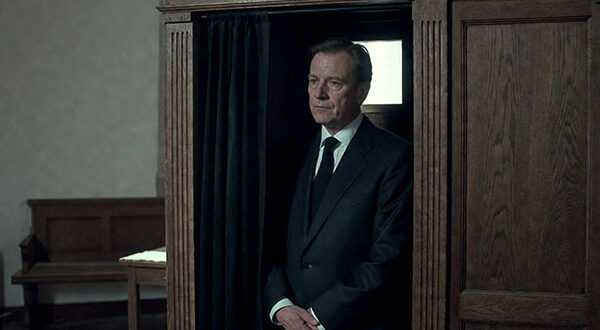
We live in an age that has lost the sense of sin… and therefore has also lost the sense of mercy. There is much talk about self-esteem, authenticity, and self-acceptance. But there is almost no talk about conversion, repentance, or reparation. And yet, one of the greatest treasures Christ left to His Church was precisely the sacrament of Penance, also called Reconciliation or Confession.
It is not a medieval invention. It is not a mechanism of control. It is not merely a “psychological relief.” It is a supernatural act in which the soul, dead through sin, returns to life by the grace of God.
This article seeks to help you understand, love, and live this sacrament deeply, both theologically and pastorally, so that it will not be something occasional, but a pillar of your spiritual life.
1. Divine Institution: Not a Human Tradition
Penance did not arise through historical evolution. It is the direct will of Christ.
After His Resurrection, the Lord appears to the Apostles and says to them:
“Receive the Holy Spirit. If you forgive the sins of any, they are forgiven them; if you retain the sins of any, they are retained.” (John 20:22–23)
Here lies the sacramental foundation. Christ did not simply say, “God forgives you.” He gave them real power to forgive or retain sins. This implies:
- A judgment.
- A confession of sins.
- An effective absolution.
The Church has always understood this text as the institution of the sacrament. Already in the second century, writers such as Tertullian spoke of the public confession of grave sins. Later, Augustine of Hippo clearly taught that the Church has authority to reconcile sinners.
2. The History of Penance: From Severity to Frequent Mercy
In the first centuries, penance for grave sins (apostasy, homicide, adultery) was public and could be received only once in a lifetime. It was a long and austere process.
Over time—especially thanks to the Irish monks—private and repeatable confession developed. This model spread throughout Europe.
At the Council of Trent (1545–1563), the Church dogmatically defined:
- That sacramental confession is necessary for the forgiveness of mortal sins.
- That the priest acts in persona Christi.
- That absolution is not symbolic, but effective.
From then on, frequent confession became a constant recommendation, especially promoted by saints such as Charles Borromeo and later John Vianney, who spent hours daily in the confessional saving souls.
3. What Really Happens in Confession?
Theologically, Penance produces several effects:
1. Forgiveness of sins
Especially mortal sins, which destroy sanctifying grace.
2. Reconciliation with God
The soul returns to a state of friendship with Him.
3. Reconciliation with the Church
Because every sin wounds the Mystical Body.
4. Remission of eternal punishment
Although temporal punishment may remain (hence the importance of penance and indulgences).
5. Specific sacramental grace
A supernatural help not to fall again.
Absolution is not a psychological declaration. It is a judicial and sacramental act in which Christ Himself forgives through the priest.
4. The Forgotten Drama: Sin in the Modern World
The problem today is not that people sin more than before. It is that they no longer recognize sin.
Moral relativism.
Subjectivism.
Constant self-justification.
Normalization of evil.
But Scripture is clear:
“If we say we have no sin, we deceive ourselves, and the truth is not in us.” (1 John 1:8)
Without awareness of sin, there is no need for salvation. And without salvation, the Cross loses its meaning.
Penance is profoundly countercultural. It is an act of radical humility in a world dominated by pride.
5. Matter and Form of the Sacrament
From a classical theological perspective, the sacrament has:
Proximate matter:
- Acts of the penitent:
- Contrition (sorrow for sin).
- Confession (verbal manifestation).
- Satisfaction (fulfilling the penance).
Form:
The words of absolution pronounced by the priest.
Perfect contrition (out of love for God) can reconcile the soul even before confession, but it requires the firm intention to confess as soon as possible.
Imperfect contrition (out of fear of punishment) is also valid within the sacrament.
6. Pastoral Dimension: Why Is It So Hard to Confess?
There are several obstacles:
- Shame.
- Fear of judgment.
- Pride.
- Spiritual routine.
- Lack of formation.
But experience shows something surprising: the priest is rarely scandalized. He has heard thousands of confessions. What he sees is not morbid curiosity, but suffering and the need for grace.
Confession does not humiliate—it liberates.
Many spiritual problems—moral anxiety, chronic guilt, lukewarmness—find their solution in a well-made confession.
7. How to Make a Good Confession (Practical Guide)
1. Serious examination of conscience
In light of the Ten Commandments and one’s personal state of life.
2. Genuine sorrow
Not only for the consequences, but for having offended God.
3. Firm purpose of amendment
It is not enough to say, “I will try to improve.” There must be a concrete decision.
4. Integral confession
Confess mortal sins in number and kind.
5. Fulfill the penance
It is an essential part of the process of reparation.
Practical recommendation: go to confession at least once a month, even if there are no mortal sins. The grace of frequent confession strengthens the soul.
8. Penance and Spiritual Combat
The Christian life is not neutral. It is a struggle.
Sin creates habits. Frequent confession breaks spiritual chains. It is medicine against lukewarmness.
Saints such as Ignatius of Loyola insisted on daily examination and regular confession as weapons in the interior battle.
In times of strong temptation, a confession can radically change the direction of a soul.
9. Eschatological Dimension: Penance and Eternal Salvation
Let us not forget something fundamental: mortal sin, if unrepented, leads to eternal condemnation.
Divine mercy is infinite, but not automatic. It requires conversion.
Penance is the tribunal of mercy before the tribunal of justice.
He who judges himself here will not be condemned later.
10. Practical Applications for Your Daily Life
In today’s context—fragmented families, hypersexualized culture, identity crisis—Penance offers:
- Interior restoration.
- Moral clarity.
- Strength against addictions.
- Deep peace.
- Constant spiritual renewal.
Concrete proposal:
- Establish a fixed day each month for confession.
- Make a brief examination each night.
- Do not postpone confession after a grave sin.
- Accompany confession with spiritual direction if possible.
11. Rediscovering the Forgotten Beauty
Penance is not a formality. It is an encounter.
It is the embrace of the Father as in the parable of the Prodigal Son.
It is the certainty that, no matter how low you have fallen, grace is stronger.
It is the most accessible sacrament and, paradoxically, the most neglected.
Conclusion: Return to the Confessional
In a culture that justifies everything, daring to kneel is revolutionary.
To confess is not a sign of weakness, but of spiritual greatness.
The world needs reconciled Christians, not perfect ones.
Humble souls, not self-sufficient ones.
Clean hearts, not hardened ones.
Penance is the second plank of salvation after the shipwreck of sin.
And today, more than ever, we need to return to it.
Perhaps not tomorrow.
Perhaps not when you “feel ready.”
But this week.
Because your soul is worth more than any excuse.