

Related Articles
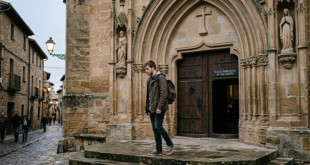


We live in an age where everything is shared, published, and displayed. Generosity, helping others, and even faith itself can easily become visible, measurable, and applauded content. Yet the Gospel proposes a radically different path: a silent, humble, and hidden charity whose value does not depend on human recognition, but on the gaze of God.
The phrase “let not your left hand know what your right hand is doing” is one of Christ’s most profound teachings on purity of intention, spiritual authenticity, and true charity. It is not merely moral advice, but a call to interior conversion.
In this article, we will explore its historical, theological, and pastoral meaning, its relevance today, and how to live it concretely in our daily lives.
📖 The biblical origin: a radical teaching of Jesus
This expression comes from the Gospel of Matthew, within the Sermon on the Mount:
“When you give alms, do not let your left hand know what your right hand is doing, so that your almsgiving may be in secret; and your Father who sees in secret will reward you.” (Mt 6:3–4)
In the same passage, Christ also warns against praying in order to be seen:
“And when you pray, you must not be like the hypocrites; for they love to stand and pray in the synagogues and at the street corners, that they may be seen by others.” (Mt 6:5)
Here Jesus denounces a permanent spiritual temptation: using good works to feed the ego.
The historical context: almsgiving in ancient Judaism
To understand the radical nature of this teaching, we must understand its context.
In first-century Judaism there were three great religious practices:
- almsgiving
- prayer
- fasting
They were fundamental expressions of piety and justice. Almsgiving was considered both a religious and social duty. However, some practiced it publicly to gain prestige.
Jesus does not criticize almsgiving or public prayer themselves — the Church in fact maintains both — but rather the corrupt intention of the heart: doing good in order to be admired.
What is revolutionary in the Gospel is the shift of the center of religious life from the visible to the interior.
The profound theological meaning: purity of intention
1. True charity is born from love, not recognition
From Catholic theology, charity is a theological virtue: participation in God’s own love.
Saint Thomas Aquinas teaches that the moral value of an act depends primarily on its intention. If the goal is personal glory, the act loses its supernatural value.
Christ’s teaching demands:
- interior rectitude
- genuine humility
- detachment from human recognition
The left hand’s ignorance of what the right hand does symbolizes a heart so pure that it does not even seek to please itself.
2. God sees the heart
The phrase contains a profound theology about God:
- God does not look at appearances.
- God looks at what is hidden.
- God knows intentions.
The divine reward is not a material prize, but communion with Him.
Christian spirituality insists:
holiness takes place in what is invisible.
3. The struggle against spiritual vainglory
The Fathers of the Church identified here a subtle danger: spiritual vainglory, more dangerous than obvious sin.
Saint John Chrysostom warned that even the holiest act can be corrupted if it seeks applause.
This teaching is a remedy against:
- religious pride
- spiritual narcissism
- performative religiosity
Praying to be seen: religion as spectacle
Jesus strongly criticizes those who pray in order to be admired.
This does not mean that praying in public is wrong. The Church celebrates public liturgies, processions, and communal prayer. What is condemned is the motivation:
- praying to appear holy
- displaying spiritual superiority
- seeking social approval
Authentic prayer is an intimate encounter with God, not a theatrical act.
The danger of spirituality as image
Today this warning is especially relevant:
- faith turned into personal branding
- religiosity displayed on social media
- charity turned into content
The Gospel proposes the opposite: intimacy with God before human visibility.
The spiritual dimension: hidden charity shapes the soul
Silent charity produces profound effects:
✔ it purifies the heart
✔ it frees us from ego
✔ it strengthens humility
✔ it unites the soul with God
When no one sees our works, only love remains.
And that transforms the heart.
The relevance of the message today: an antidote to the culture of appearances
Never has this teaching been more relevant than today.
We live in a culture based on:
- constant exposure
- social validation
- public recognition
- image construction
The Gospel proposes a silent revolution: doing good without witnesses.
This challenges:
- the cult of the self
- the search for approval
- the need for immediate recognition
Practical applications for daily life
1. Practice invisible charity
- help without announcing it
- donate without publicizing it
- serve without expecting gratitude
- make hidden sacrifices
Small daily acts have enormous spiritual value.
2. Examine your intention before doing good
Ask yourself:
- Do I seek God or recognition?
- Would it bother me if no one knew?
- Would I do this if there were no applause?
This examination purifies charity.
3. Cultivate secret prayer
Jesus teaches:
“Go into your room, close the door, and pray to your Father in secret.”
Spiritual life requires spaces where only God is the witness.
4. Live interior humility
Humility is not self-contempt, but:
- recognizing that all good comes from God
- not claiming ownership of good works
- not seeking spiritual prominence
5. Educate the heart in discretion
Christian tradition values interior silence:
- avoiding boasting about sacrifices
- avoiding comparison with others
- avoiding judging others’ faith
Pastoral perspective: a spirituality of authenticity
From a pastoral perspective, this teaching calls for a mature and authentic faith.
The Church proposes:
- a deep interior life
- coherence between faith and life
- concrete and silent charity
- humble witness
The world needs witnesses, not religious actors.
The evangelical paradox: hidden good transforms the world
There is a profound paradox:
What is done in secret has greater spiritual impact than what is visible.
Why?
Because it transforms the heart and participates in God’s pure love.
The saints changed the world through hidden acts, silent sacrifices, and invisible love.
A final invitation: living before the gaze of God
“Let not your left hand know what your right hand is doing” is an invitation to live:
- before God
- for God
- from God
It means moving from religion as appearance to faith as encounter.
It is discovering that the true reward is not human applause, but union with the Father who sees in secret.
In a world that demands constant visibility, the Gospel proposes the most revolutionary path: to love without being seen.
And there, in what is hidden, true holiness begins.