Related Articles


We live in an age of technological progress, globalization, and constant discourse about human rights. Yet there is a painful reality that many people are unaware of or prefer to ignore: millions of Christians are still being persecuted today because of their faith.
This is not an ancient story from the Roman Empire. It is not merely the memory of the first martyrs. It is a contemporary reality.
This article seeks to help you understand — from a theological, historical, and pastoral perspective — what the persecution of the Church means today, where it occurs, who carries it out, what Catholic theology teaches about it, and how Christians should respond spiritually.
✝️ The persecuted Church: a global reality today
The figures are staggering.
- More than 388 million Christians suffer persecution or discrimination because of their faith worldwide.
- Nearly 5,000 Christians were killed in a single year for religious reasons.
- Around 1 in 7 Christians worldwide is persecuted.
- Africa and Asia concentrate the highest levels of hostility.
This reality affects not only Catholics but Christians of all denominations, although the Catholic Church is one of the most affected communities due to its universal presence.
Persecution takes various forms:
- killings and kidnappings
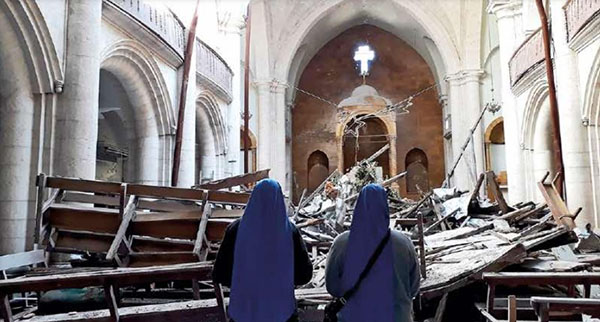
- destruction of churches
- legal discrimination
- imprisonment for professing the faith
- social or family pressure
- prohibition of worship
- state surveillance
It is not always visible. Many times it is silent.
🌍 Where are Christians most persecuted today?
🔴 Totalitarian regimes and state control
🇰🇵 North Korea (extreme case)
It is considered the most dangerous place to be a Christian.
- Faith is punished with imprisonment or execution.
- Tens of thousands of Christians are in labor camps.
- Religion is considered treason against the State.
Here we see the phenomenon of radical political atheism, where the State seeks to replace God.
🇨🇳 China
- Churches monitored or closed.
- State control of worship.
- Persecution of unregistered communities.
🇪🇷 Eritrea
- Mass imprisonment of believers.
- Detention without trial.
👉 Ideological root: totalitarianism, absolute political control, cult of the State.
☪️ Regions with Islamist extremism or religious pressure
Many countries where radical political Islam dominates public life experience severe persecution.
Sub-Saharan Africa
Particularly serious.
- 🇳🇬 Nigeria — accounts for nearly 70% of recorded Christian killings globally.
- 🇲🇱 Mali
- 🇸🇴 Somalia
- 🇸🇩 Sudan
- 🇲🇿 Mozambique
Hostile groups include:
- jihadist groups
- armed militias
- radicalized tribes
Middle East
- 🇦🇫 Afghanistan — conversion to Christianity may result in death.
- 🇾🇪 Yemen — faith lived in secrecy.
- 🇮🇷 Iran — arrests and surveillance.
- 🇸🇾 Syria — communities drastically reduced by war.
👉 Ideological root: religious extremism, apostasy laws, tribal pressure.
🇮🇳 Religious nationalism and social violence
In some countries, persecution does not come only from the State but from cultural majorities.
India
- attacks by Hindu nationalist groups
- social pressure to abandon Christianity
- anti-conversion laws
👉 Ideological root: religious nationalism and cultural identity.
🇵🇰 Pakistan and blasphemy laws
- frequent false accusations
- imprisonment or death penalty for alleged religious offenses.
🇸🇦 Saudi Arabia
- total prohibition of public Christian worship.
Latin America and other contexts
In some places, persecution takes different forms:
- state pressure (e.g., Nicaragua, Cuba)
- criminal violence against religious leaders
- cultural or ideological hostility.
⚠️ Who persecutes the Church today?
Persecution does not have a single cause. There are different actors:
1. Totalitarian states
They seek to replace God with political power.
2. Religious extremism
It sees Christianity as a threat to cultural identity.
3. Ideological nationalisms
They reject religions considered “foreign.”
4. Organized crime or militias
They attack vulnerable communities.
5. Radical secularism
In some contexts it seeks to expel faith from the public sphere.
Persecution has many faces, but a common root: rejection of God’s sovereignty over human life.
📖 Biblical foundation: Christ announced persecution
The Church is not surprised by this reality.
Jesus himself announced it:
“If the world hates you, know that it has hated me before it hated you.” (Jn 15:18)
He also said:
“Blessed are those who are persecuted for righteousness’ sake, for theirs is the kingdom of heaven.” (Mt 5:10)
Persecution is not a historical accident: it is part of the mystery of the Church.
🕊️ Theology of martyrdom and Christian suffering
The Church as the Body of Christ
Persecution continues Christ’s Passion throughout history.
The Church teaches:
- Christ continues to suffer in his members.
- martyrdom is the supreme witness of faith.
- the blood of martyrs fertilizes the Church.
Since the first centuries, Christianity has understood suffering as participation in the redemptive cross.
The redemptive dimension of suffering
Suffering united to Christ:
- purifies faith
- strengthens hope
- evangelizes the world
- reveals the truth of the Gospel
It is not a search for pain, but fidelity to love.
The Christian paradox
History shows a constant phenomenon:
👉 the more the Church is persecuted, the more it grows.
This has been seen:
- in Rome
- in the Middle Ages
- in communist regimes
- today in Africa and Asia.
❤️ Pastoral dimension: what does this mean for us?
Even though many Christians live in free countries, the persecuted Church profoundly challenges us.
1. Rediscover the value of faith
When we see believers die for Christ:
- it questions our lukewarmness
- calls for coherence
- awakens gratitude.
2. Pray for the persecuted Church
Christian tradition insists on:
- intercessory prayer
- spiritual communion
- universal awareness of the Church.
3. Defend religious freedom
The Christian faith defends universal human dignity.
Believers must:
- promote justice
- reject religious violence
- defend fundamental rights.
4. Live daily witness
Not all of us will be martyrs in blood, but we are called to martyrdom in fidelity.
Practical examples:
- living the faith publicly without fear
- defending truth with charity
- persevering in the face of ridicule or cultural pressure
- educating the family in the Christian faith.
5. Concrete solidarity
The Church invites us to:
- help persecuted communities
- support missions
- inform and raise awareness.
⛪ The persecuted Church as a prophetic sign for the world
Persecution reveals a profound truth:
👉 Christianity remains a transforming force.
If faith had no spiritual power, it would not generate such opposition.
The persecuted Church reminds the world:
- that God exists
- that truth demands fidelity
- that love is stronger than fear.
🌟 Christian hope in the face of persecution
Christians do not respond with hatred or violence.
They respond with:
- forgiveness
- charity
- fidelity
- eschatological hope.
History shows that empires pass away, but the Church endures.
✨ Conclusion: the witness that challenges our faith
The persecuted Church today is not merely a geopolitical drama.
It is a spiritual mystery.
It is:
- participation in the cross of Christ
- witness to truth
- a call to the conversion of the world
- an invitation to live an authentic faith.
The final question is not only who persecutes the Church.
The question is:
👉 How do we live our faith in light of the example of those who give it up even unto death?