Related Articles

When the Heart Seeks God… and When It Only Seeks Security
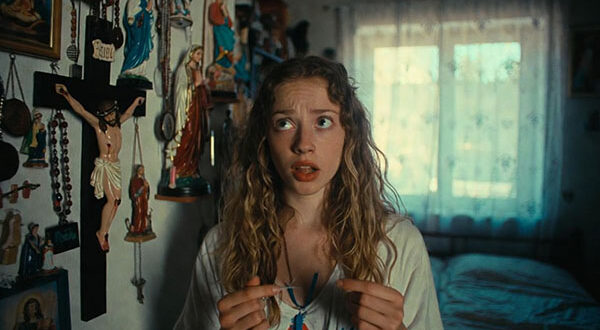
We live in a paradoxical age. On the one hand, religious indifference is growing; on the other, all kinds of supposedly spiritual objects, practices, and “rituals” are multiplying. It is not uncommon to find people whose cars are filled with holy cards, whose necks are loaded with medals, whose wrists are covered with religious bracelets, whose homes are saturated with images… and yet whose interior life is poor—without real prayer, without the sacraments, without conversion.
The question is urgent and deeply pastoral:
Where does authentic devotion end and where does superstition begin?
This is not a secondary issue. It is a matter of truth, of salvation, and of love for God.
1. What Is Authentic Devotion?
The word devotion comes from the Latin devotio, meaning dedication, consecration, total surrender. In its deepest sense, devotion is not a feeling nor an accumulation of external practices: it is an attitude of the heart that gives itself to God with love, faith, and obedience.
Saint Thomas Aquinas defines devotion as a readiness of the will to give oneself to the things of God. It is not magic, not a passing emotion, not religious aesthetics. It is an interior disposition that moves one to concrete action.
Authentic devotion:
- Is born of faith.
- Is nourished by grace.
- Is expressed in prayer.
- Is verified in conversion.
- Is strengthened through the sacraments.
- Produces fruits of charity.
As Our Lord says:
“This people honors me with their lips, but their heart is far from me” (Mk 7:6).
Here lies the core of the problem. God looks first not at the exterior, but at the heart.
2. What Is Superstition?
The Catechism of the Catholic Church teaches that superstition is a deviation of the worship we give to the true God. It attributes to external practices an efficacy they do not have in themselves, as if they worked automatically, without faith or conversion.
Superstition is not only something found among pagans or in esoteric circles. It can infiltrate Catholic life.
For example:
- Wearing a medal “so that nothing bad happens to me,” but without any intention of living in grace.
- Praying a novena as if it were a mechanism that “forces” God to grant something.
- Thinking that because I have holy water at home I am already protected, even though I live in mortal sin.
- Placing many images in the house but never kneeling before them to truly pray.
Superstition turns the sacred into a charm.
Devotion turns the heart into a temple.
3. The Current Problem: Exterior Religiosity Without Interior Conversion
In today’s context, we witness a curious phenomenon: people who declare themselves “very believing” because:
- They have many images.
- They collect holy cards.
- They wear religious bracelets.
- They share pious phrases.
- They are moved during processions.
Yet their moral life does not change.
There is no frequent confession.
There is no struggle against sin.
There is no stable sacramental life.
There is no obedience to the Church’s teaching.
There is no real charity.
It is possible to have a house full of crucifixes… and a heart empty of Christ.
This is not a harsh criticism. It is a pastoral call. Because the danger is real: believing we are close to God when in reality we are only close to religious objects.
4. The Theological Foundation: The Primacy of Grace and of the Heart
Theologically, we must remember something essential:
Grace does not act automatically through physical contact with a sacred object.
Sacramentals (medals, holy water, scapulars, images) are helps. They are signs that dispose the soul to receive grace. But their efficacy depends on faith, on interior disposition, and on living in the state of grace.
They are not magic.
They are not talismans.
They do not replace conversion.
God cannot be manipulated.
In Sacred Scripture we see a clear example in the Old Testament: when the people of Israel carried the Ark of the Covenant into battle thinking it would automatically guarantee victory (1 Sam 4). But because there was no fidelity, they were defeated.
The object was holy.
The heart was not.
5. Hidden Idolatry
When someone places their security in the object rather than in God, they risk a subtle form of idolatry.
The image is not worshiped.
The psychological security the image provides is worshiped.
God is not sought.
Protection without conversion is sought.
This is spiritually dangerous because it creates an illusion of religiosity.
A person may say:
“I wear the scapular, so I am protected.”
But if they live in mortal sin, reject the sacraments, and do not love God, the scapular is not a magical shield. It is a call that has been ignored.
6. How to Distinguish Authentic Devotion from Superstition
Here are some practical and theological criteria:
1️⃣ Authentic devotion leads to conversion
If your religious practice does not lead you to change your life, to abandon sin, to forgive, to grow in humility… something is not working.
2️⃣ Authentic devotion leads you to the sacraments
Whoever truly loves God seeks:
- Frequent confession.
- The Eucharist.
- A daily life of prayer.
Superstition avoids confession but accumulates objects.
3️⃣ Authentic devotion produces charity
The final criterion is love.
If a person prays much but is proud, resentful, unjust, cruel, or indifferent to others, they must examine their spiritual life.
4️⃣ Authentic devotion accepts the will of God
Superstition demands results.
Devotion says:
“Lord, if You will, You can heal me… but Your will be done.”
7. The Empty Heart: The Greatest Spiritual Tragedy
We can decorate our religious life and yet remain interiorly empty.
The empty heart reveals itself when:
- Prayer is nonexistent.
- Faith does not influence moral decisions.
- God does not occupy the center.
- Sin is not a concern.
- The world weighs more than the Gospel.
Jesus warns us:
“For what does it profit a man to gain the whole world and forfeit his soul?” (Mk 8:36).
Authentic devotion saves the soul.
Superstition lulls it to sleep.
8. Practical Applications for Your Daily Life
This topic is not theoretical. It is deeply practical.
✔ Examine your religious objects
Ask yourself:
- Do they truly help me to pray?
- Do they remind me of my commitment to Christ?
- Or do they simply calm me?
If an image does not lead you to prayer, it is decoration.
✔ Recover personal prayer
It is not enough to have a crucifix.
One must kneel before it.
Establish:
- 10–15 minutes of silent prayer daily.
- Reading of the Gospel.
- A nightly examination of conscience.
✔ Live in grace
Without frequent confession, spiritual life dries up.
Authentic devotion loves confession because it loves the cleansing of the soul.
✔ Reduce in order to deepen
Perhaps you do not need twenty religious bracelets.
Perhaps you need one… and coherence.
Faith is not measured by the quantity of objects, but by the quality of surrender.
9. The Catholic Balance: Visible Signs and Invisible Faith
Catholicism is profoundly sacramental: the visible points to the invisible. Images, medals, and sacramentals are valuable when they fulfill their pedagogical and spiritual function.
But they must never replace interior faith.
The image must lead to the Original.
The sign must lead to the Mystery.
The object must point to God.
If it remains in itself, it loses its meaning.
10. Conclusion: Returning to the Heart
The decisive question is not:
How many holy cards do you have?
But rather:
Does your heart love God?
God does not need your bracelets.
He needs your will.
He does not need your collection of images.
He wants your conversion.
True devotion is silent, deep, constant.
It is not always visible.
But it transforms life.
Let us ask for the grace of an authentic faith—clean of superstition, mature, obedient, humble.
May our images not be charms, but windows to heaven.
May our sacred objects not be psychological securities, but reminders of a living covenant.
And may we never forget that the most important temple is not the one we decorate outwardly…
… but the one we must purify within.