Related Articles

The Book of Numbers is probably one of the most misunderstood texts of the Old Testament. At first glance, it seems to be merely a record of censuses, laws, and marches through the desert. However, in its theological and spiritual depth, it reveals itself as one of the most realistic and relevant works of all Sacred Scripture: the account of the struggle between God’s faithfulness and human fragility.
Numbers is not just ancient history. It is a portrait of our spiritual life today. It is the book of the interior desert, of crises of faith, of murmuring, of trial, of punishment, and above all, of divine mercy.
This article offers a rigorous, accessible, and deeply theological explanation of the book, showing its relevance for contemporary Christians and its concrete application in spiritual life.
1. What Is the Book of Numbers? Historical and Biblical Context
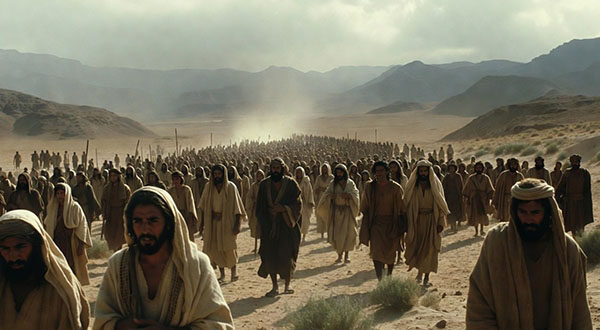
The Book of Numbers is the fourth book of the Pentateuch (Torah), traditionally attributed to Moses, and narrates the events of the people of Israel during their 40 years of wandering in the desert, from Sinai to the gates of the Promised Land.
Meaning of the Name
- In Hebrew: Bemidbar (“in the desert”).
- In Greek (Septuagint): Arithmoi (“numbers”), due to the censuses of the people.
Interestingly, the Hebrew name better expresses its spiritual essence: God’s pedagogy in the desert.
General Structure
The book can be divided into three major stages:
1️⃣ Preparation at Sinai (Num 1–10)
- Censuses of the people.
- Organization of the tribes.
- Religious norms.
- Preparation for the journey.
2️⃣ Rebellion and purification in the desert (Num 11–21)
- Murmurings of the people.
- Divine punishments.
- Leadership crises.
- Trials of faith.
3️⃣ The journey toward the Promised Land (Num 22–36)
- The episode of Balaam.
- New generations.
- Preparation to enter Canaan.
2. The Great Theological Message of Numbers: God Educates His People
The core of the book is not a census. It is divine pedagogy.
God forms His people spiritually through:
- trials
- corrections
- infinite patience
- unbreakable faithfulness
The desert is a school.
The Desert as a Universal Spiritual Experience
In the Bible, the desert symbolizes:
- purification
- dependence on God
- spiritual combat
- interior transformation
Jesus Himself would live this experience:
“Jesus was led by the Spirit into the desert” (Mt 4:1).
Numbers anticipates this spiritual logic.
3. The Drama of the Human Heart: Murmuring Against God
One of the central themes of the book is the constant murmuring of the people.
Israel:
- complains about hunger
- rejects the manna
- longs for Egypt
- doubts God’s power
- distrusts the future
A Key Example
“If only we had died in Egypt! Why has the Lord brought us to this desert?” (Num 14:2–3).
This passage reveals something profoundly human:
👉 Man fears the freedom that God offers.
👉 He prefers known slavery to the risk of faith.
Current Spiritual Application
Today murmuring is still alive:
- constant complaints
- distrust in providence
- resistance to conversion
- nostalgia for sin
- rejection of the cross
The book denounces an interior attitude: the heart that resists God.
4. The Holiness of God and the Seriousness of Sin
Numbers also emphasizes something often forgotten in modern culture: the absolute holiness of God.
Divine punishments — plagues, serpents, exclusions — are not arbitrary cruelty. They reveal:
- the seriousness of sin
- the gravity of the covenant
- divine justice
The Rebellion of Korah (Num 16)
A dramatic example is the rebellion against Moses and Aaron, in which the earth opens and the rebels are punished.
The theological message:
- God establishes mediations.
- Spiritual authority is not negotiable.
- Rebellion against God has consequences.
This sheds light today on themes such as:
- authority in the Church
- spiritual obedience
- humility before God
5. The Bronze Serpent: One of the Deepest Symbols of Christ
One of the most important passages in the book is the episode of the serpent.
The Event
The people sin and God allows venomous serpents. He then commands Moses to raise a bronze serpent to heal those who look at it.
“Anyone who has been bitten and looks at it will live” (Num 21:8).
Christological Interpretation
Jesus Himself explains its meaning:
“Just as Moses lifted up the serpent in the desert, so must the Son of Man be lifted up” (Jn 3:14).
The cross already appears foreshadowed here.
Theological Meaning
- sin wounds
- God offers a remedy
- salvation requires faith
- healing comes through what seemed to be the cause of death
It is one of the clearest prophecies of redemption.
6. God’s Faithfulness in the Face of Human Unfaithfulness
If there is a dominant theme in Numbers, it is this:
👉 Man constantly fails.
👉 God remains faithful.
The people:
- distrust
- rebel
- sin
- fear
God:
- guides with cloud and fire
- provides food
- corrects without abandoning
- renews the covenant
This is one of the great revelations of the Old Testament: the persevering mercy of God.
7. The Communal Dimension of Faith
Numbers insists that salvation is not individualistic.
Israel is:
- an organized people
- an ordered community
- a united body
- a priestly nation
Faith is lived in community.
Current Application
This sheds light on:
- parish life
- the Church as the people of God
- Christian co-responsibility
- the importance of community in faith
8. The Divine Pedagogy of Time: The 40 Years
The people take 40 years to reach Canaan because of their unbelief.
Spiritual Meaning of the Number 40
- time of trial
- purification
- preparation
- interior transformation
It appears throughout the Bible:
- 40 days of the flood
- 40 days of Moses on Sinai
- 40 days of Jesus in the desert
- 40 days of Lent
God acts in time, not in haste.
9. Spiritual Teachings for Contemporary Life
The Book of Numbers offers extremely relevant guidance.
1️⃣ The Christian life is a journey, not a state
We are pilgrims toward holiness.
2️⃣ The desert forms the heart
Trials purify.
3️⃣ Murmuring destroys spiritual life
Gratitude opens us to grace.
4️⃣ God corrects because He loves
Divine discipline is mercy.
5️⃣ Salvation requires active faith
Looking at the serpent required a decision.
6️⃣ God’s faithfulness surpasses our falls
He never abandons.
10. Pastoral Reading: The Interior Desert of Modern Man
The Book of Numbers describes with surprising precision the situation of contemporary humanity:
- existential anxiety
- search for meaning
- rejection of God
- fear of the future
- desire for security
- crisis of authority
- temptation to return to the “slavery” of sin
The biblical desert is also the spiritual desert of the 21st century.
11. Numbers as Preparation for Christ
From a traditional Christian reading, the book is profoundly Christological:
- the serpent → the cross
- the manna → the Eucharist
- the pilgrim people → the Church
- the Promised Land → heaven
- Moses → figure of Christ the mediator
Everything points to fulfillment in Christ.
12. How to Live Today the Message of the Book of Numbers
Concrete Spiritual Practices
✔ Accept trials as a path of purification
Do not flee from the interior desert.
✔ Combat murmuring
Practice daily gratitude.
✔ Cultivate spiritual obedience
Docility to God and to the Church.
✔ Trust in providence
God guides even in darkness.
✔ Live faith in community
Do not walk alone.
✔ Look to Christ crucified
The remedy against sin.
Conclusion: The Desert That Leads to the Promised Land
The Book of Numbers is not simply an ancient chronicle. It is a mirror of the human soul and a manual for spiritual growth.
It teaches us that:
- God guides even when we do not understand.
- Trial is a path of transformation.
- Human unfaithfulness does not overcome divine mercy.
- The Christian life is a pilgrimage toward full communion with God.
The desert is not the final destination. It is the path toward the Promised Land.
And this is the great Christian hope: God always leads His people, even through weakness, toward the fullness of His promise.