
Related Articles


What Traditional Theologians Say About the Apparitions of Souls from Purgatory
Introduction: Between Modern Fear and Forgotten Faith
The word ghost today awakens more morbid curiosity than spiritual reflection. Series, films, and popular stories have reduced the supernatural to spectacle or horror. However, the Catholic faith —especially in its most solid tradition— offers a very different, sober, and profoundly hopeful interpretation.
The question we are addressing is neither frivolous nor sensationalist:
Can a soul from the afterlife manifest itself to ask for a Mass?
And even more importantly: What does this teach us about Purgatory, the Communion of Saints, and our responsibility toward the dead?
Far from superstition, the great theologians, saints, and pastors of the Church have reflected seriously on this topic for centuries. And their answers, surprisingly, are very relevant today.
1. First, let us clarify terms: it is not a “ghost”
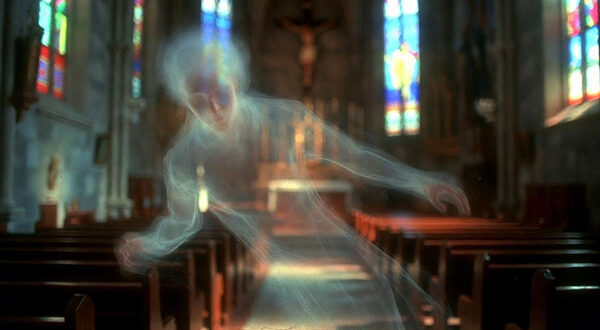
From the Catholic faith’s perspective, “ghosts” do not exist in the popular sense: wandering souls, trapped between two worlds for mysterious reasons. What Christian tradition contemplates —with great prudence— are possible extraordinary apparitions of souls from Purgatory, always by divine permission and with a specific spiritual purpose.
Saint Thomas Aquinas explains this clearly:
“Separated souls do not wander freely through the world; if they appear, it is by a special disposition of God, for the benefit of the living.”
(Summa Theologica, Supplement, q. 69)
That is to say:
- They do not act by absolute personal initiative
- They do not seek to frighten
- They are not “trapped”
- There is always a purpose: to ask for help, to warn, or to edify
2. Biblical foundation: prayer for the dead
Although Sacred Scripture does not describe apparitions in modern language, it firmly establishes the reality of Purgatory and the help that the living can give to the dead.
The key text is:
“It is therefore a holy and wholesome thought to pray for the dead, that they may be loosed from sins.”
(2 Maccabees 12:45)
This passage, accepted by the Church since the earliest centuries, is the doctrinal foundation of:
- Masses for the dead
- Indulgences
- The spiritual communion between the living and the dead
If the living can help the dead…
👉 why could God not allow a soul to ask for that help?
3. The Fathers of the Church and the first testimonies
Saint Augustine relates in The City of God cases of the deceased who manifested themselves to ask for suffrages. He does so not lightly, but with pastoral caution, always emphasizing that God allows this to move people to charity and conversion.
Saint Gregory the Great, in his Dialogues, records numerous testimonies of souls who:
- Appeared to relatives
- Begged for Masses
- Disappeared after receiving the necessary suffrages
For these Fathers, it was neither something ordinary nor something to be sought, but neither was it impossible.
4. Can a soul explicitly ask for a Mass?
The answer of traditional theology is clear:
👉 Yes, it can happen, if God permits it.
But under very precise conditions:
- It never contradicts the faith or morals
- It introduces no new doctrines
- It always refers to the ordinary means of salvation (Mass, prayer, penance)
- It produces spiritual fruits (conversion, charity, growth in faith)
Saint Alphonsus Maria de Liguori, Doctor of the Church, states:
“God sometimes permits the souls in Purgatory to manifest themselves in order to awaken charity in the living and to remind them of eternity.”
In other words: it is not curiosity, it is mercy.
5. Discernment: not everything supernatural comes from God
Here the Church is absolutely firm. The vast majority of supposed apparitions are not authentic, which is why prudence is essential.
Tradition teaches us:
- Not to seek them
- Not to invoke them
- Not to dialogue with spirits
Any attempt at voluntary contact with the beyond (spiritism, Ouija boards, mediumship) is gravely illicit and condemned by the Church.
“There shall not be found among you anyone who consults the dead.”
(Deuteronomy 18:11)
When a manifestation is authentic, the initiative always belongs to God, never to man.
6. Why ask for a Mass and not for something else?
Because the Holy Mass is the greatest act of charity that can be done for a deceased person.
The Council of Trent teaches that:
- The Sacrifice of the Mass has propitiatory value
- It is applied to the living and the dead
- It relieves and liberates the souls in Purgatory
A single Mass offered with faith can do more for a soul than years of suffering.
That is why, if a soul could speak, it would ask for what is most effective.
7. Contemporary relevance: the forgotten Purgatory
We live in an era that speaks little of:
- Judgment
- Eternity
- Purgatory
The result:
- Deceased persons without Masses
- Funerals without prayer
- Sentimental remembrance, but little supernatural charity
These stories —whether real or not— challenge us powerfully:
👉 Do we pray for our dead?
👉 Do we offer Masses for them?
👉 Do we live as if eternity truly exists?
8. A practical spiritual guide for today
You do not need to see a soul to live this teaching. It is enough to:
- Have Masses celebrated for your deceased
- Pray the Rosary for the souls in Purgatory
- Gain indulgences applicable to them
- Remember the forgotten souls daily
As Saint Paul says:
“Whether we live or die, we are the Lord’s.”
(Romans 14:8)
And in Christ, death does not break communion — it purifies it.
Conclusion: not fear, but hope
The question is not so much whether a soul can ask for a Mass.
The real question is:
Are we willing to offer one, even if no one asks us?
Purgatory is not a horror story.
It is a story of mercy… waiting for our response.