

Related Articles

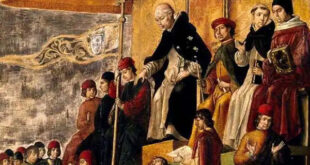

In the history of the Church, few figures combine spiritual depth with such decisive historical influence as Saint Bernard of Clairvaux. His sweetness, ascetic firmness, and theological clarity not only transformed monastic life in the 12th century but also marked a turning point in the defense of the faith. Among his many contributions, perhaps one of the most fascinating and least understood is his role in legitimizing the Knights Templar, that “militia of Christ” that emerged in response to the spiritual and temporal challenges of medieval Christendom.
This article seeks to explore not only the history of Saint Bernard and the Templars but also the theological meaning of his action and its practical implications for spiritual life today.
1. Historical Context: The Crusade and the Rise of the Templars
In 1095, Pope Urban II called for the First Crusade in Clermont, France, with the goal of reclaiming the Holy Places in Jerusalem. The idea of defending the Holy Land was not merely military: it was, above all, spiritual. Pilgrims traveling to the Holy Sepulcher were in constant danger from bandits and hostile soldiers. It was in this context that the first knights decided to dedicate their weapons to protecting Christians, adopting a religious life that combined prayer and combat. This is how the Knights of the Temple, popularly known as the Templars, were born around 1119.
Even so, this idea posed a radical dilemma: how could theologically justify violence within Christian life? The Church had always held that voluntary homicide was a grave sin, and war, except in very specific cases, had to be morally regulated. This is where Saint Bernard of Clairvaux comes in.
2. Saint Bernard: The Saint of Sweetness
Bernard of Clairvaux (1090–1153) was a Cistercian monk whose spirituality profoundly influenced the Church of his time. His epithet, “the saint of sweetness,” reflects not only his personal character but also the way he defended truth with mercy and charity. He was an tireless reformer, preacher of the Second Crusade, and counselor to popes and kings. His spiritual focus centered on the perfection of love for God and the imitation of Christ.
In 1129, Saint Bernard drafted and promoted the Rule of the Knights of the Temple, the first spiritual formulation of this militia. He did so at the Council of Troyes, gathering the necessary ecclesiastical authority to grant legitimacy to this peculiar form of Christian life that united prayer with combat.
3. The Theological Justification of the Templars
Saint Bernard did not see the Templars as mere warriors; he saw them as instruments of divine providence. His central argument was that the defense of pilgrims and the Holy Places constituted an act of charity and obedience to God, not of personal ambition or bloodlust. As he himself wrote:
“He who with the sword defends the temple of God and protects the pilgrims thereby fulfills an act of mercy, and his sword is an instrument of divine love.”
This approach was based on clear principles:
- Just war in the service of faith: Inspired by Saint Augustine’s doctrine of just war, Bernard recognized that defending the innocent and the sacred places could be morally permissible if it was oriented toward good and not personal interests.
- The spiritualization of the militia: The Templars were to live as monks: obedience, chastity, and poverty, combined with armed defense. Their fight was not for fame or fortune but for the glory of God.
- The protection of pilgrims as an act of mercy: Caring for travelers to the Holy Land was an act of active charity, and the sword could be used as an extension of charity, defending the vulnerable.
- Obedience to the Church: Saint Bernard insisted that the Templars were subject to the authority of the Pope, ensuring that military force was always subordinated to divine and ecclesiastical law.
4. The Three Dimensions of the “Militia of Christ”
Saint Bernard conceptualized Templar life in three complementary levels:
a) Spiritual Dimension
The Templars practiced constant prayer and attended Mass daily. Bernard taught them that without a deep inner life, all external action lacks merit before God. His spirituality was based on Psalm 144:1:
“Blessed be the Lord, my rock, who trains my hands for war and my fingers for battle.”
This passage reflected the synthesis Bernard made between physical combat and spiritual strength.
b) Military Dimension
The defense of the Holy Places and pilgrims justified military formation. But it was not aggressive war: it was protection and discipline, always in the service of justice and the Church.
c) Pastoral Dimension
The Templars were to be a moral example and guide for Christians, promoting justice, piety, and social order. Their existence reminded Christendom that faith could involve all human life, even the physical protection of others.
5. Current Theological Relevance
Although the Templars officially disappeared in 1312, Saint Bernard’s teaching retains profound relevance today:
- Integration of action and contemplation: Spirituality is not limited to passive prayer; it involves acting in the world with righteousness. Every Christian is called to be a “templar” in their own context: defending the truth, protecting the vulnerable, and serving the common good.
- The role of moral discernment: Saint Bernard reminds us that not every powerful or influential action is legitimate. Strength must be subordinated to justice, charity, and God’s authority.
- Sacramental and communal dimension: Just as the Templars lived in community and obedience, modern Christian life requires active participation in the Church and the sacraments to correctly guide our actions.
6. Theological and Pastoral Practical Guide
Inspired by Saint Bernard’s teaching, we can apply Templar principles in a spiritual and practical way in our daily life:
a) Defense of the Faith
- Educate yourself in doctrine and Scripture to be able to “defend the faith that is in you with gentleness” (1 Peter 3:15).
- Do not fear commitment in areas of justice, truth, and protection of the vulnerable.
b) Personal Discipline
- Practice obedience and humility in daily life.
- Foster chastity and sobriety in modern habits: social media, entertainment, relationships.
c) Active Charity
- Seek concrete opportunities to protect and serve those most in need.
- Consider the “spiritual battle” as part of everyday service: combating injustice, lies, and selfishness.
d) Community and Spirituality
- Join prayer groups, formation programs, and service initiatives.
- Take the sacraments as the primary source of strength for any good action.
7. Conclusion
Saint Bernard, with his sweetness and wisdom, taught us that true Christian strength combines contemplation, obedience, and just action. The Templars, far from being mere warriors, were a living example of how faith could shape even the most powerful sword to serve God’s love and the good of one’s neighbor.
Today, although we do not wield weapons, we are called to be spiritual templars: defenders of truth, guardians of justice, and servants of charity, following the path Saint Bernard showed us almost a thousand years ago. As the Apostle wrote:
“Be strong in the Lord and in the strength of his power” (Ephesians 6:10), reminding us that our most powerful armor is faith and virtue.
Saint Bernard teaches us that every Christian life can be a “militia of Christ,” not with a sword, but with a willing heart, a serving hand, and a soul surrendered to the Lord.