
Related Articles

The Fifteen Candles of Darkness
There are rites in the Catholic liturgy that need very few words to preach. It is enough to live them. The Office of Tenebrae is one of them. Ancient, sober, profoundly biblical, and deeply moving, this rite leads us—candle by candle—into the very heart of the mystery of Christ’s Passion. It is not a simple historical remembrance nor a pious reenactment: it is a spiritual experience that educates the soul, shakes the conscience, and prepares the believer for the great explosion of light that is Easter.
In an age saturated with noise, screens, and haste, Tenebrae presents itself as a fast from light and sound, a silent catechesis that speaks directly to the heart.
1. What is the Rite of Tenebrae?
Tenebrae is the traditional name of the Divine Office of Matins and Lauds for Holy Thursday, Good Friday, and Holy Saturday, which in former times was celebrated in the late afternoon or evening of the preceding day. Its name comes from the first antiphon:
“Tenebrae factae sunt, dum crucifixissent Jesum”
“Darkness came when they crucified Jesus” (cf. Mt 27:45)
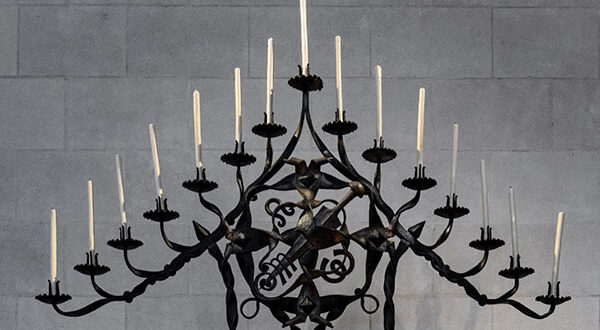
The most striking sign of the rite is the use of a triangular candlestick with fifteen candles, traditionally called the candles of darkness. Throughout the office, fourteen candles are extinguished one by one, while the last—representing Christ—is not extinguished, but hidden, leaving the church in almost total darkness.
This is not theatre. It is theology made gesture.
2. The Fifteen Candles: symbolism and spiritual depth
🔥 The number fifteen is not accidental
The 15 candles traditionally represent, according to a long-standing and widely accepted interpretation:
- 11 faithful Apostles (all except Judas)
- 3 Marys (the Virgin Mary, Mary Magdalene, and Mary of Cleophas)
- Christ, the true Light
Each extinguished candle is a loss, a flight, a betrayal, a silence.
“I will strike the shepherd, and the sheep will be scattered” (Zech 13:7)
🕯️ The central candle: Christ is not extinguished
The last candle, which is not blown out but hidden, proclaims a fundamental truth of the Christian faith:
Christ is not defeated by death.
The Light does not disappear: it remains, though hidden.
Even when everything seems lost, even when the Church is plunged into darkness, God continues to act in the silence of the tomb.
3. History of Tenebrae: a liturgy forged through centuries
The Office of Tenebrae reached its full development in the Middle Ages, though its roots lie in the most ancient structure of the Divine Office. For centuries it was one of the most well-attended liturgical moments of the year, even by simple faithful who might not usually attend the Office.
In cathedrals and monasteries, Tenebrae was celebrated with striking solemnity:
- Penitential psalms
- The Lamentations of the Prophet Jeremiah
- Responsories of extraordinary theological and musical beauty
The rite concluded with a powerful gesture: the strepitus, a loud noise (a sharp knock) symbolizing the earthquake at Christ’s death, the chaos of a world without God… and also the trembling of the human conscience.
4. Theological relevance: the divine pedagogy of darkness
We live in times that seek a comfortable faith, always luminous, without the Cross. Tenebrae reminds us of an uncomfortable but essential truth:
There is no Easter without Good Friday.
There is no Resurrection without night.
Theologically, the rite teaches us that:
- The felt absence of God does not mean His real absence
- God’s silence is also revelation
- The Church truly shares in Christ’s abandonment
“My God, my God, why have you forsaken me?” (Ps 22:1; Mt 27:46)
This cry is not despair, but prayer. And Tenebrae teaches us to pray even when we feel nothing.
5. Tenebrae today: why is it still relevant?
In a world marked by:
- Crises of faith
- Scandals
- Doctrinal confusion
- Empty churches
- Tired or wounded Christians
The Office of Tenebrae becomes dramatically relevant. Many times we feel that:
- The light is fading
- Faith is growing cold
- God remains silent
Tenebrae answers us: this was already foreseen. The night is not the end of the story.
6. A practical theological and pastoral guide to living Tenebrae
📿 1. How to prepare interiorly
- Prior silence: avoid distractions before the office
- Examination of conscience: each extinguished candle can represent a personal infidelity
- An attitude of humility: you do not come to “feel something,” but to accompany Christ
🕯️ 2. During the rite: spiritual keys
- Do not fight the darkness: accept it
- Listen to the Lamentations as if they were the lament of your own soul
- Identify yourself with the disciples who flee… and return with Peter
“Before the cock crows, you will deny me three times” (Mt 26:75)
✝️ 3. Pastoral application in daily life
Tenebrae teaches us to:
- Remain faithful when faith brings no emotional consolation
- Accompany others in their spiritual night
- Not flee from suffering, but offer it
Concrete practice:
- Dedicate a weekly moment of prayer in total silence
- Learn to pray the psalms of lament
- Accept your own “darkness” without despair
7. From Tenebrae to Easter: learning to wait
The rite does not end in darkness. It ends in waiting. The hidden candle will return. The light will come back. Christ will rise.
But only those who have accepted the night can truly recognize the dawn.
“The light shines in the darkness, and the darkness has not overcome it” (Jn 1:5)
Conclusion: a liturgy that forms mature Christians
Tenebrae is not liturgical nostalgia. It is spiritual medicine. It forms Christians who do not abandon the faith when night falls, who do not confuse silence with absence, and who know how to wait for God even when everything seems lost.
In a world that flees from suffering, the Office of Tenebrae teaches us to remain, to keep watch, to believe against all hope.
Because only those who have walked through darkness can recognize, with tears in their eyes, that the Light has returned. 🕯️✝️