
Related Articles


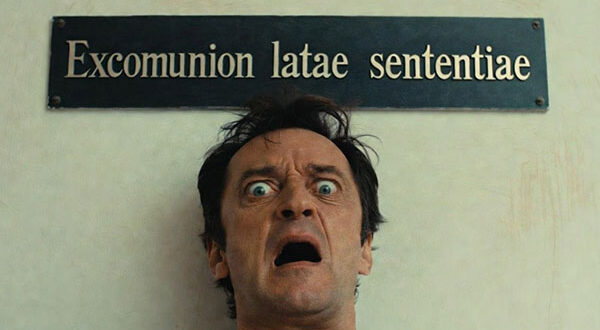
Talking about excommunication almost always causes a shiver. For many, it sounds like a medieval punishment, a banishment with no return, a public condemnation. Others, on the contrary, live convinced that “the Church no longer excommunicates anyone.”
The reality — as so often happens — is deeper, more serious… and also more merciful.
There exists a little-known but very real figure in Canon Law: automatic excommunication, technically called latae sententiae excommunication. It does not require a trial, a decree, or a public announcement. It occurs at the very moment the gravely prohibited act is committed.
This article does not seek to frighten, but to awaken consciences, clarify misunderstandings, and above all serve as a spiritual guide to live the faith with responsibility, love for the truth, and full communion with the Church.
1. What Is Automatic Excommunication, Really?
Excommunication is not a social expulsion, nor an eternal condemnation, nor a “go away and never come back.”
It is a medicinal penalty, not a vindictive one. The Church applies it as a last resort to provoke a deep interior conversion.
The Code of Canon Law states it clearly:
“The Church has the innate and proper right to coerce offending members of the Christian faithful with penal sanctions.” (cf. CIC, c. 1311)
Excommunication breaks visible communion, but it does not eliminate God’s love nor close the door to forgiveness. In fact, it presupposes that the sin committed is so grave that it endangers not only the soul of the faithful person, but also the entire ecclesial community.
2. Biblical Foundation: When the Rupture Is Real
Although the term “excommunication” is later, the spiritual reality is already present in Sacred Scripture.
Saint Paul writes with severity, but with pastoral intent:
“Do you not know that a little leaven leavens the whole batch of dough? Remove the evil person from among you.”
(1 Corinthians 5:6,13)
And also:
“Hand this man over to Satan for the destruction of the flesh, so that his spirit may be saved on the day of the Lord.”
(1 Corinthians 5:5)
This is not revenge, but spiritual medicine: a strong shock to prevent a greater evil.
3. Why Are Some Excommunications Automatic?
The Church reserves latae sententiae excommunication for most serious offenses, where the harm is immediate and objective.
Not because God is harsher, but because the gravity of the act itself de facto breaks communion.
These penalties exist to:
- Protect the Eucharist
- Defend human life
- Safeguard the unity of the Church
- Preserve legitimate spiritual authority
- Protect the Sacrament of Reconciliation
4. The 5 Actions That Incur Automatic Excommunication
1. Procured Abortion (and Direct Cooperation)
The Code of Canon Law is unequivocal:
“A person who procures a completed abortion incurs a latae sententiae excommunication.”
(CIC, c. 1397 §2)
Not only the one who has the abortion, but also those who directly cooperate (doctors, healthcare personnel, anyone who knowingly pays for or pressures) incur this penalty.
Why such gravity?
Because abortion directly attacks the fundamental right to life, innocent and defenseless.
Scripture illuminates this powerfully:
“Before I formed you in the womb I knew you.”
(Jeremiah 1:5)
⚠️ Key pastoral note:
Excommunication is not irreversible. Today, any priest with faculties can absolve this sin if there is sincere repentance. The Church punishes… but runs even faster to forgive.
2. Profaning the Eucharist
This includes stealing, discarding, consecrating for sacrilegious purposes, or using the Eucharist for profane rituals.
The Eucharist is not just another symbol. It is Christ Himself:
“This is my Body… this is my Blood.”
(Luke 22:19–20)
To attack the Eucharist is to attack the very heart of the Church. That is why the penalty is immediate.
In a world where “artistic,” ideological, or satanic sacrileges are increasing, this norm is not medieval: it is urgently contemporary.
3. Absolving an Accomplice in a Sin Against the Sixth Commandment
A priest who has sexual relations with someone and then absolves that person commits one of the gravest offenses that exist.
Why?
Because he corrupts the sacrament of mercy, using God’s forgiveness to cover up his own sin.
Jesus was extremely severe with those who cause scandal:
“Whoever causes one of these little ones who believe in me to sin, it would be better for him if a great millstone were hung around his neck.”
(Matthew 18:6)
The penalty is automatic, precisely to protect the faithful and the holiness of the sacrament.
4. Consecrating a Bishop Without Papal Mandate
This may seem distant, but it is essential for the unity of the Church.
A bishop ordained without the mandate of the Pope breaks apostolic communion and generates schisms.
Christ wanted a Church that is one, not fragmented:
“That they may all be one.”
(John 17:21)
For this reason, both the one who consecrates and the one who receives illicit consecration are automatically excommunicated.
5. Breaking the Sacramental Seal
The seal of confession is absolute.
A priest may never reveal, under any circumstance, what he has heard in confession.
Not to help, not to denounce, not to protect himself.
Why?
Because the penitent does not speak to the priest: he speaks to God.
Breaking the seal destroys trust in the sacrament and endangers the salvation of many souls.
5. A Practical Theological and Pastoral Guide
🔹 For Lay Faithful
- Do not trivialize grave sin: mercy does not eliminate truth.
- Be formed: many fall through culpable ignorance.
- Live in a state of grace: communion is not automatic; it is a gift that must be cared for.
- Go to confession frequently and sincerely.
🔹 For Those Who Have Fallen Into Any of These Sins
- Do not despair: excommunication is not the end.
- Seek out a priest with humility and repentance.
- Trust in the mercy of Christ, who died precisely for the gravest sins.
“Where sin increased, grace abounded all the more.”
(Romans 5:20)
🔹 For the Church Today
In a culture that trivializes evil, automatic excommunication is a silent cry that says:
“Your soul matters. Truth matters. Communion matters.”
It is not a weapon of exclusion, but a spiritual alarm.
6. Conclusion: Not Fear, but Love for Communion
Automatic excommunication does not exist to frighten, but to shake awake sleeping hearts.
It is a clear boundary that protects what is sacred in a world that no longer believes in the sacred.
Whoever truly loves, sets limits.
And the Church, as a Mother, wounds only in order to heal.
If this article has made you uncomfortable, perhaps it was necessary.
If it has enlightened you, share it.
And if it has led you to examine your conscience… then it has already fulfilled its mission.