Related Articles

There are questions many believers ask themselves in silence, almost afraid to say them out loud:
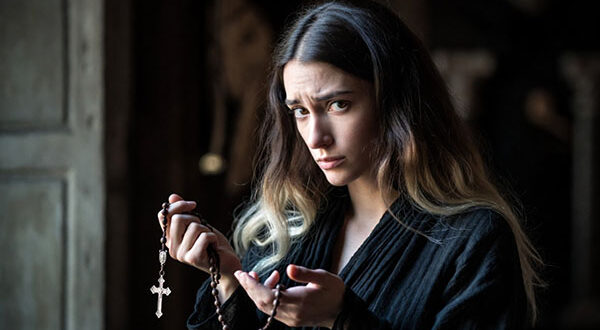
What should I do with a broken rosary? Can I throw away a damaged religious image? Is it a sin? Does it bring bad luck?
These doubts are not born of superstition, but of love and respect for what is sacred. Precisely for that reason, they deserve a clear, calm, and deeply Catholic answer. In this article we will walk through history, theology, and pastoral practice to learn how to treat religious objects when they break—without fear, without superstition, and with an authentically Christian spirit.
1. Religious objects: what makes them “special”?
Before answering what to do when they break, it is important to understand what religious objects really are.
A rosary, a medal, a holy card, or a religious image is not magical, nor does it contain power in itself. The Church teaches that these are sacramentals, that is:
“Sacred signs instituted by the Church, by which spiritual effects are signified and obtained through the intercession of the Church”
(Catechism of the Catholic Church, no. 1667)
Sacramentals:
- Help us raise our hearts to God
- Remind us of truths of the faith
- Dispose the soul to receive grace
👉 They do not act automatically, nor do they produce effects on their own. Their value lies in their relationship to the faith of the believer, not in the material itself.
2. A bit of history: how the Church has treated sacred objects
From the earliest centuries of Christianity, the faithful have shown respect for objects used for worship and devotion. Already in antiquity:
- Worn sacred vessels were buried or melted down
- Damaged images were removed from public worship
- Blessed objects were not treated as ordinary trash as long as they retained their use
But attention: respect was never confused with superstition. The Church has always fought against the idea that a broken object “attracts misfortune” or “breaks spiritual protection.”
Saint Paul makes this clear when he says:
“We know that an idol is nothing in the world”
(1 Corinthians 8:4)
The Christian does not fear objects, because his trust is in God, not in things.
3. What happens when a religious object breaks?
When a religious object breaks or is irreparably damaged, something very simple happens:
👉 It ceases to fulfill its devotional function.
God is not “offended”
No spiritual protection is lost
No misfortune is unleashed
A broken rosary is not a negative sign. A damaged image is not a bad omen. Thinking this way would be falling into superstition, something the Church clearly rejects:
“Superstition is a deviation of the religious feeling and of the practices this feeling imposes”
(Catechism, no. 2111)
4. So… can I throw a rosary or a religious image in the trash?
Short answer:
👉 Yes, you can, if it can no longer be used and it is done with respect.
Complete and pastoral answer:
The Church does not forbid throwing away a damaged religious object, but it recommends doing so in a dignified way, precisely to educate the heart and avoid involuntary contempt for what is sacred.
It is not a sin
It does not bring bad luck
It is not a lack of faith
What matters is not the material gesture, but the interior attitude.
5. Rigorous practical guide: how to dispose of damaged religious objects
Here is a clear, theological, and pastoral guide, intended for any member of the faithful.
🔹 1. Blessed objects (rosaries, medals, scapulars)
Recommended options:
✔ Bury them in the ground
- In a garden, a large flowerpot, or the countryside
- It symbolizes returning to the earth what is material
✔ Burn them respectfully (if the material allows)
- Especially fabric or paper scapulars
- The ashes can be buried
✔ Bring them to your parish
- Many parishes know how to handle them appropriately
❌ Avoid:
- Throwing them away in a showy or mocking manner
- Using them for profane purposes
🔹 2. Broken or badly damaged religious images
✔ If they can be repaired:
- Restore or reuse them in a dignified way
✔ If they cannot be repaired:
- Bury them
- Bring them to a parish
- In some cases, destroy them respectfully (break them further and then dispose of them)
👉 Important: they are not “idols.” They are representations that helped us pray. When they no longer serve that purpose, they can be set aside without fear.
🔹 3. Bibles, holy cards, or damaged religious books
✔ Holy cards and papers:
- Burn them respectfully
✔ Books:
- If they are unreadable, they may be recycled
- Or given to a parish or community
The Word of God is not destroyed, because it is alive in the Church, not only on paper.
“The grass withers, the flower fades, but the word of our God will stand forever”
(Isaiah 40:8)
6. What we should NOT think: dismantling fears and superstitions
It is worth saying it clearly and without detours:
❌ It does not bring bad luck
❌ It is not a warning of misfortune
❌ It does not mean God is moving away
❌ It is not a sin
God does not bless or punish according to the condition of our objects, but according to the disposition of the heart.
Jesus Himself warns us against a religiosity based solely on externals:
“This people honors me with their lips, but their hearts are far from me”
(Matthew 15:8)
7. A spiritual opportunity: when something breaks
Paradoxically, a broken religious object can become:
- An act of gratitude for the years it accompanied your prayer
- A moment to renew your devotion
- A silent catechesis on what is essential
Perhaps that worn rosary prayed with you through difficult moments. Saying goodbye to it with respect can also be a form of prayer.
8. Conclusion: mature faith, without fear and with reverence
Treating religious objects well is not a matter of fear, but of well-ordered love.
Neither contempt nor superstition.
Neither fear nor indifference.
The Catholic faith is incarnate, sensible, and profoundly free.
👉 Use religious objects as long as they help you love God more.
👉 When they no longer can, part from them with respect and peace.
Because in the end, we do not worship things.
We worship the living God.
And that—never—breaks. ✝️